
Why Your Luxury Candle Isn't Smelling: Singapore Pro Tips

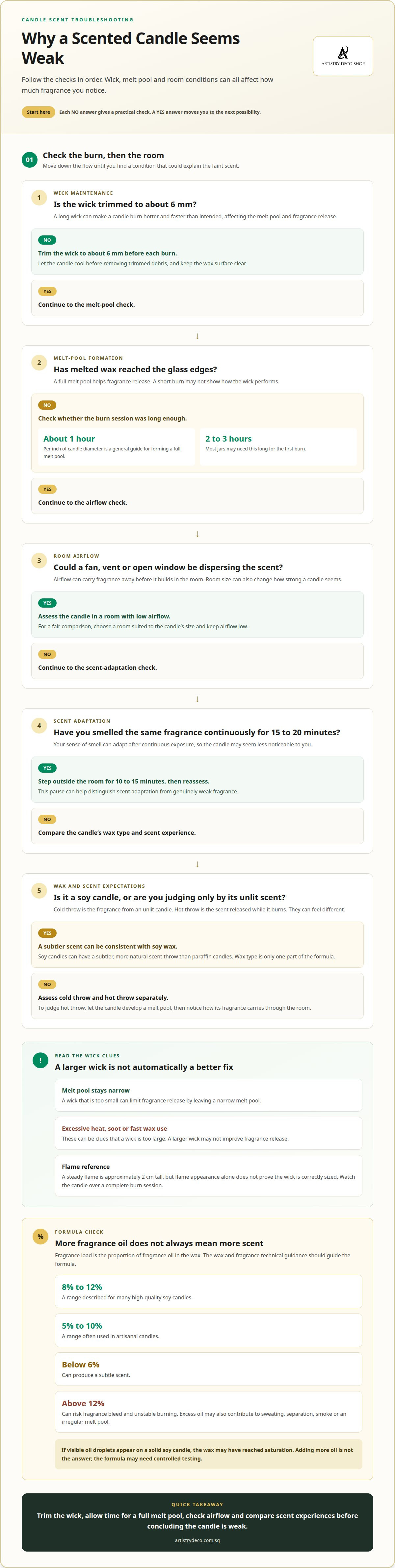
A candle can be beautifully made yet seem scentless if its wick leaves wax unmelted around the edges. If you’re wondering why your luxury candle isn’t smelling, check the wick, airflow and whether the first burn created a full melt pool. As a general guide, a candle needs about one hour per inch of diameter to form one, while most jars may need two to three hours for the first burn.
It’s easy to expect a premium candle to fill a room with fragrance straight away, but scent throw depends on how the wax, wick and burn work together. This guide explains how fragrance load affects scent, why wick size matters and how tunneling can limit fragrance release. You’ll also learn what to consider in Singapore’s warm, air-conditioned homes, where fans and vents can disperse fragrance before it settles into a room.
Key Takeaways
- Compare fragrance load with the wax and fragrance’s technical guidance; excess oil can lead to sweating, separation, or an unstable burn.
- Trim the wick to about 6 mm before each burn, and look for clues that it may be too small or too large rather than assuming a bigger wick is better.
- Set scent expectations with the wax in mind: soy candles can have a subtler, more natural throw than paraffin candles.
- Watch for tunneling after the first burn. The way wax melts across the candle’s surface can affect how much fragrance it releases later.
What Is Fragrance Load, and Why Does It Decide Everything?
Fragrance load matters, but wax type, temperature, storage and room conditions also shape scent throw. If a candle smells faint, how well its formula works matters more than simply adding extra oil.
Fragrance Load and Scent Intensity
Fragrance load is the proportion of fragrance oil in a candle’s wax, usually expressed as a percentage. Fragrance load is one factor in a candle’s scent throw, and a higher percentage does not necessarily mean a stronger scent. Many high-quality soy candles are described as having an 8 to 12% fragrance load; artisanal candles often use 5% to 10%. Below 6% can produce a subtle scent, while above 12% can risk fragrance bleed and unstable burning. The wax and fragrance technical data should guide the formula.
Wax and Fragrance Ingredient Quality
Wax and fragrance quality depend on how well the chosen materials work together in a candle formula. If fragrance oil is added when the wax is too cool, it may not blend fully. Excessive heat can burn off delicate top notes before pouring. Either can change the finished candle’s scent, even when its fragrance load seems substantial. Testing one formula at a time helps reveal whether the wax, fragrance or mixing temperature is affecting the result.
Storage matters, too. Candles retain their fragrance for 12 to 18 months under correct storage conditions. Keep a candle away from direct sunlight and temperature swings, which can affect the wax and fragrance over time. Some synthetic fragrance components are volatile, meaning they can evaporate into the air. A changing balance of scent notes may affect what you notice when lighting the candle.
Fragrance Load and Wax Saturation
Wax saturation is the amount of fragrance oil a particular wax formula can hold evenly. Adding more oil beyond that point won’t necessarily make the candle smell stronger. On a solid soy candle, visible oil droplets can signal that the wax has reached saturation. Excess fragrance can also contribute to sweating, separation, smoke or an irregular melt pool. If droplets appear, don’t add more oil. The formula may need adjustment through controlled testing rather than guesswork.
Why does a scented candle not smell?
A candle may release little fragrance if its wick cannot create a broad, even melt pool. Wick size, trimming and room conditions all affect its performance.
Wick Sizing and Flame Performance
Wick sizing is the match between the wick and the candle’s diameter, wax, and container. A wick that’s too small can leave a narrow melt pool, limiting fragrance release. A wick that’s too large can create excess heat, soot, or rapid wax consumption. A steady flame is approximately 2 cm tall, though flame appearance alone doesn’t prove the wick is correctly sized. Watch how the candle burns over a complete session.
Wick Choice and Melt-Pool Behavior
Wick choice affects how heat spreads across the wax and whether the surface forms a full melt pool. A correctly sized wick should allow melted wax to reach the glass edges within a few hours. The candle’s diameter matters: a wider container needs heat distributed across more wax. As a general guide, a candle needs about one hour per inch of diameter to form a full melt pool, so a short burn may not reveal how the wick performs.
Wick Trimming and Maintenance
Wick maintenance means trimming the wick to about 6 mm before every burn. A long wick can make a candle burn hotter and faster than intended, affecting the melt pool and fragrance release. Let the candle cool before removing trimmed debris, and keep the wax surface clear. If the flame still seems excessive after trimming, or the melt pool stays narrow, note those signs rather than compensating with a larger wick.
Requesting Help for Weak Scent
Contact the candle brand if the scent remains weak after you’ve trimmed the wick and allowed enough time for a melt pool to develop. Describe the candle’s diameter, burning conditions, flame behavior and how the wax melted. If it arrived damaged or has a persistent burning problem, explain that clearly and ask about a replacement. These details can help the brand distinguish a wick issue from a candle defect and offer relevant guidance.
Does a larger wick always improve scent throw?
No. A larger wick can create excessive heat, soot or faster wax consumption without improving fragrance release. Soy and paraffin candles can also differ in how noticeable their scent seems.
Cold Throw and Hot Throw
Cold throw is the fragrance you notice from an unlit candle; hot throw is the scent released as it burns. A candle may smell pronounced in its jar yet seem faint once lit, or the reverse. These are different scent experiences, so assess them separately. To judge hot throw, let the candle burn long enough to develop a melt pool, then notice how its fragrance carries through the room.
Soy Versus Paraffin Scent Throw
Soy candles often have a subtler, more natural scent throw than paraffin candles. That doesn’t mean a soy candle is defective or that paraffin is always stronger. Wax type is only one part of the formula, along with fragrance and how the candle burns. If you prefer a noticeable fragrance, compare its scent unlit and while burning instead of relying on just one impression.
Assessing Scent in the Room
Room size and airflow can change how strong a candle seems. A small candle may struggle in a large, open-plan living and dining area, while its scent may gather more readily in a smaller room. Fans, air vents and open windows can disperse fragrance before it builds. For a fair comparison, assess the candle in a room suited to its size and keep airflow low.
When Your Nose Adjusts
Your sense of smell can adapt after 15 to 20 minutes of continuous exposure to one fragrance. You may stop noticing the candle even while another person still can. Step outside the room for 10 to 15 minutes, then return and assess the scent again. This simple pause can help distinguish olfactory fatigue from a genuinely weak hot throw.
Candle tunneling and first-burn technique
The first burn helps establish the candle’s melt pattern. If wax melts only around the wick, an outer ring can remain, creating a tunnel that limits the candle’s exposed surface and fragrance release.
How long should a luxury candle burn before it releases its full fragrance? Most candle jars need a first burn of two to three hours to develop an even melt pool. A 9 cm diameter candle may also take approximately two to three hours to melt wax to the edges.
Burning a candle for an hour alone isn’t enough to assess its full life. The goal is an even melt across the top surface, not simply a longer flame. If wax remains unmelted at the edges, tunneling may deepen during later burns, leaving less wax exposed to heat.
What are safe candle-burning steps to improve fragrance without overheating the candle? Trim the wick to about 6 mm before each burn, and follow the candle maker’s burn guidance. Don’t use a larger wick to force a faster melt pool, since excessive heat can produce soot or unstable burning.
For the first burn, place the candle away from draughts that can disturb the flame, then observe how the wax melts. Stop if the flame becomes excessive or the candle produces soot. Once the surface has melted evenly to the edges, let the wax cool and set before lighting it again.
In Singapore homes, fans and air vents can disperse fragrance before it builds in a room. Keep airflow low while the candle burns, and assess its scent in a room suited to its size. Nothing is gained by overheating the wax to make fragrance arrive sooner.
Artistry Deco Shop: Functional Living Room Decor
Artistry Deco Shop offers functional living room decor for people shaping a considered home atmosphere around their daily rituals. After checking your candle’s fragrance load, wick and first-burn technique, consider how the surrounding room contributes to the atmosphere. Decor won’t change a candle’s scent throw, but it can help make the space feel inviting.
Explore functional dining table centerpieces, modern artistic sculptures and world globes for study and work desks. Each can bring character and purpose to a room, whether as an expressive focal point or a useful accent for a workspace.
For thoughtfully curated functional decor, contact Artistry Deco Shop or visit artistrydeco.com.sg.
Make Your Space Feel Intentionally Yours
If you’re still wondering why your luxury candle isn’t smelling as expected, take a calm, deliberate next step: observe how it performs, then decide what would make the room feel complete. A welcoming atmosphere involves more than fragrance. The objects around you can bring rhythm, character and a sense of occasion to everyday rituals.
Artistry Deco offers functional living room decor, functional dining table centerpieces and modern artistic sculptures. A sculptural accent can create a focal point, while a centerpiece can give the dining table a considered finish. These pieces won’t change a candle’s scent, but they can help make the space feel thoughtfully composed.
Explore a considered approach to your home at your own pace.
May your next quiet evening feel welcoming, personal and entirely your own.
Frequently Asked Questions
Can room size make a candle seem weak?
Yes, a candle can seem faint in a large or open room because its fragrance disperses through more space. Compare it in a smaller enclosed room and your usual living area, away from open windows and strong airflow. If the scent is easier to notice in the smaller room, the space may be affecting your impression more than the candle itself.
Does the type of wax change scent intensity?
Yes, wax type can influence how a candle’s fragrance feels. Soy candles often have a subtler, more natural scent throw than paraffin candles, so a softer aroma doesn’t automatically indicate a fault. Compare the fragrance while the candle is unlit and while it’s burning. The difference can help you understand whether the scent is more noticeable before lighting or during use.
How is the melt pool related to scent throw?
The melt pool is the wax warmed around the wick, and its shape affects how fragrance is released as the candle burns. If only a narrow area melts, less wax is heated, which can make the aroma seem faint. Check whether the wax surface melts evenly. A persistent ring of unmelted wax can also leave part of the candle unused.
What Is Cure Time, and What Happens When Brands Skip It?
Cure time is the rest period after a candle is made, before it is assessed or used. For 100% botanical soy wax, the recommended minimum is 10 to 14 days. A candle should also be fully cooled and set before lighting. Assessing it too soon can make it harder to judge the finished fragrance accurately.
Why does my luxury candle have a weak scent throw?
If you’re wondering why your luxury candle isn’t smelling as expected, consider the formula, wick, room and whether you’ve adapted to the fragrance. Notice whether the scent seems faint from the unlit candle or only while it’s burning. A short break from the room can help you tell the difference between a subtle fragrance and one you’ve simply stopped noticing.
How do wick size and wick trimming affect candle scent throw?
Wick size affects how the wax melts, while trimming helps the candle burn as intended. A wick that’s too small may leave a narrow pool; one that’s too large can create excess heat or soot. If you’re still asking why your luxury candle isn’t smelling right, note the flame and melt pattern after trimming the wick to about 6 mm.