
Understanding Candle Notes: A Guide for Singapore Scent Lovers

A candle’s fragrance is a composition, not one unchanging scent. Understanding candle notes, from top to middle to base, means following its layers: the first impression, the heart that develops as the wax warms, and the deeper notes that linger. The middle and base notes matter especially when you want a scent that feels balanced from its opening to its finish.
If you’ve noticed that a candle smells different once it’s burning, you’re already sensing how its fragrance develops. The key is not only to recognise each note, but also to see how the middle notes support and soften the base, shaping the candle’s character as a whole.
This guide explains what fragrance notes are, how top, middle and base notes unfold, and how to choose or pair scents for different moods and spaces in Singapore. You’ll also learn what to notice when assessing a candle, so the scent you bring home feels considered from its bright first impression to its quieter, lasting finish.
Key Takeaways
- Read a candle’s scent as it unfolds: the first impression gives way to a fuller heart and a more lasting base.
- Choose a fragrance to suit the mood and setting, such as a bright, fresh profile for a lively space or softer floral notes for a restful room.
- Pair middle notes with base notes that complement them, so the fragrance feels cohesive rather than competing.
- Give a candle time to warm before judging its full character; its scent can change as the wax releases deeper notes.
What Are Fragrance Oil Notes?
Fragrance notes are the distinct scent impressions that make up a candle’s fragrance. They unfold in layers, so a candle can smell different when unlit and while burning.
The Olfactory Pyramid
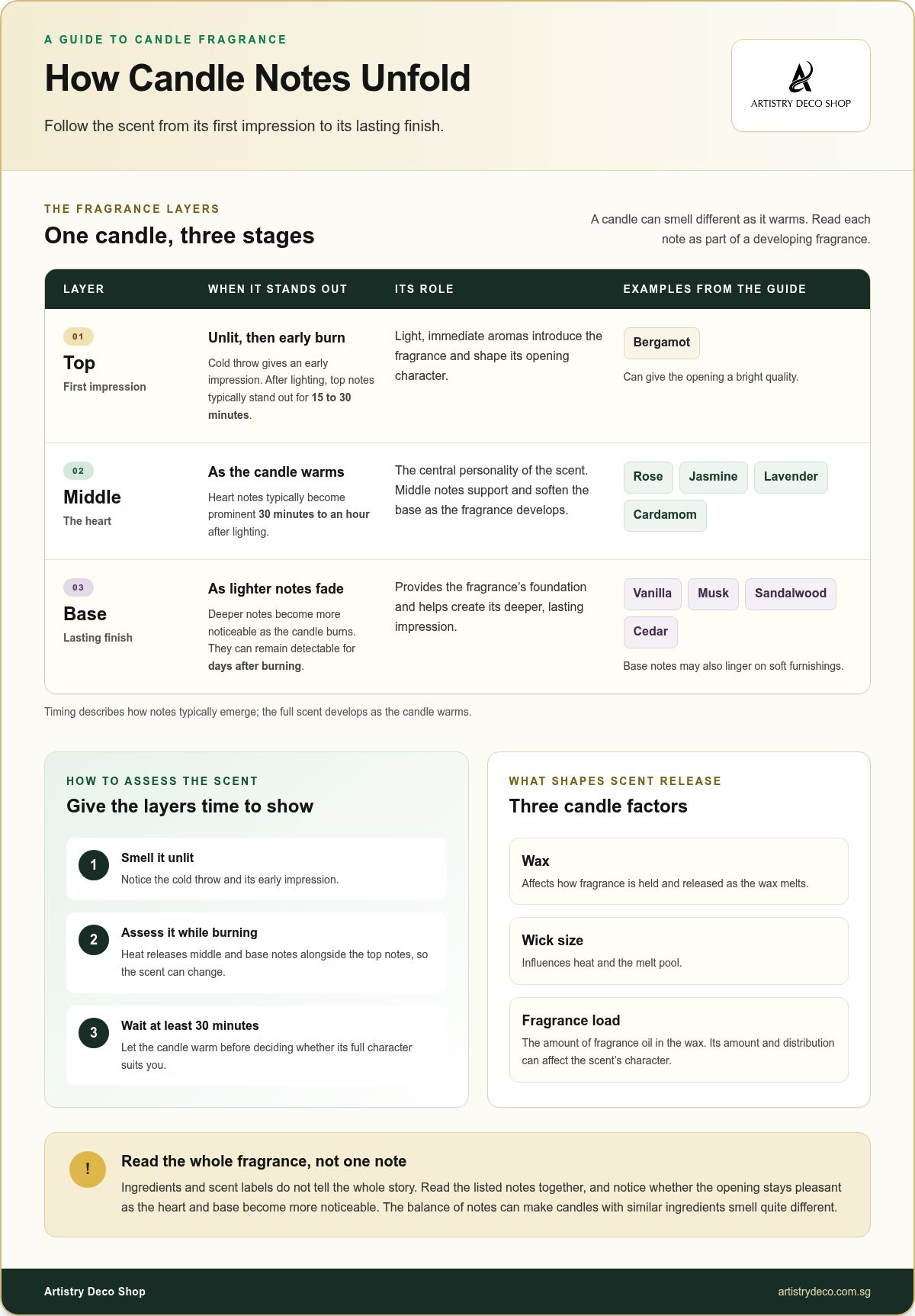
The olfactory pyramid describes how top, middle and base notes emerge as a fragrance develops. Top notes create the first impression, with bright examples such as bergamot. Heart notes form the scent’s central personality, while base notes provide its foundation. These layers help explain why a candle’s fragrance changes over time.
In Singapore, treat top, heart and base as descriptive scent terms, not a promise of one uniform label format. The pyramid explains how fragrance develops; it doesn’t establish what must appear on candle labels.
Factors That Shape Scent Release
Wax, wick size and fragrance load all influence how a candle releases its scent. Wax affects how fragrance is held and released as it melts, while wick size influences heat and the melt pool. Fragrance load refers to the amount of fragrance oil in the wax; its amount and distribution can affect the scent’s character.
Cold throw is the fragrance you notice from an unlit candle, when top notes are usually most apparent. As the candle burns, heat releases middle and base notes alongside top notes, so the fragrance can smell different. Let the candle warm before judging its full scent profile.
Balancing Notes in Candle Blends
Balancing notes means choosing fragrance oils that complement one another as the candle develops. A practical blending order is to choose base notes first, then select heart notes that support them, and finally add top notes to shape the first impression. This establishes a foundation before refining the brighter opening.
Consider how each oil affects the whole blend, not just its individual aroma. For example, a bright citrus top note such as bergamot can introduce a blend, while its heart and base notes add depth and continuity. Test a small batch, then adjust the proportions if one layer overwhelms the others.
Choosing candles based on scent preferences and occasion
Start with the mood you want, then consider how a scent’s layers support it. Citrus can feel bright and lively in a kitchen, while lavender may suit a quiet evening. Cinnamon brings a warmer, spiced character to a festive gathering. These are starting points, not fixed rules: the balance of notes can make candles with similar ingredients smell quite different.
Consider the room as well as the occasion. Floral or herbal middle notes, such as jasmine or lavender, can create a softer impression in a bedroom. In a living room, warm base notes such as amber or vanilla lend a cosy feel. For a woodier profile, look for sandalwood. Notice whether the top notes remain pleasant as they fade and the heart and base become more noticeable.
Ingredient descriptions can also guide your choice. Candle makers may use essential oils, aroma compounds and natural extracts to create a desired scent profile. “Natural” describes an ingredient’s source, but it doesn’t tell you exactly how the finished candle will smell. A natural lavender note, for example, can feel different depending on the oils and other notes blended with it. Read the listed notes together rather than choosing based on one ingredient alone.
To judge a candle’s changing character, smell it unlit, then assess it during burning. Give it at least 30 minutes before deciding whether the fragrance suits you; a candle’s warmer scent can differ from its cold impression. Match your choice to the moment: try fresh citrus for an energising kitchen, floral notes for a restful bedroom, or cinnamon for a gathering. In Singapore homes, consider the room where you’ll enjoy the candle and the atmosphere you want it to create.
What are Top, Middle, and Base Notes?
A candle’s fragrance unfolds in stages rather than staying fixed. Understanding candle notes (top, middle, base) helps explain why its first impression may differ from its lasting scent.
Top Notes as First Impressions
Top notes are the light, immediate aromas that introduce a candle’s fragrance. An unlit candle can offer an early impression of its fragrance before burning begins. Citrus, such as bergamot, can give the opening a bright quality. A top note’s quick appearance makes it useful for judging the fragrance’s first character, not its full development.
Top notes typically last 15 to 30 minutes after lighting, though the scent continues to evolve. Treat that opening like the first moment of a perfume: notice whether it feels fresh, sharp or soft, then allow the candle to warm. A bright opening alone won’t tell you how the middle and base will smell.
Base Notes and Lasting Impressions
A base note is the deeper layer that gives a fragrance a lasting impression. Examples include vanilla, musk, sandalwood and cedar. These notes evaporate slowly, becoming more noticeable as the candle burns and the lighter opening fades. They help you judge whether a candle’s final character feels warm, woody or soft, rather than relying only on its immediate aroma.
Base notes can remain detectable for days after burning and may linger on soft furnishings. That lasting quality matters when choosing a candle for a room where you want its fragrance to remain after you extinguish it. A sandalwood base, for instance, offers a different finish from creamy vanilla.
Between the opening and the dry-down, middle notes form the fragrance’s heart. Rose, jasmine, lavender and cardamom are examples. They typically become prominent 30 minutes to an hour after lighting, so assess them separately from the candle’s first impression.
To understand how top, middle and base notes work together, smell an unlit candle, then notice its fragrance while it burns and after you extinguish it. Base notes can linger after a candle is extinguished, while the changing balance of all three layers gives the candle its distinctive scent.
Pairing middle notes with base notes
Pairing a middle note with a base note means shaping a fragrance that feels coherent as it develops. Choose the base first because it sets the fragrance’s foundation and lasting character. Then select a heart note that complements its texture, rather than simply adding another favourite aroma. Jasmine can soften woody cedarwood, while lavender can bring a gentler quality to warm vanilla.
Consider the effect of each pairing. Rose and sandalwood can create a floral-woody profile, while cardamom with vanilla brings spice against a creamy base. These combinations are examples, not fixed formulas. The balance depends on how each oil interacts, since the same middle note can feel different over musk, amber or cedarwood.
A balanced blend lets the middle note emerge clearly without overpowering the base. If lavender dominates vanilla, the fragrance may feel more herbal than warm; if the base overwhelms jasmine, its floral character can disappear. Choose oils for how they work together, then assess the whole blend. Top notes evaporate quickly, so they won’t carry the fragrance through its later stages.
For a crafted blend, make a small test batch and adjust the proportions if needed. Let the blend sit, as this can influence its final scent, and record each version in a fragrance journal. Compare how the heart and base develop together rather than judging each oil alone. The practical takeaway is simple: establish the base, support it with a compatible middle note, then refine the balance through testing.
Artistry Deco Shop: Functional Living Room Decor
Artistry Deco Shop offers functional living room decor for creating a considered home atmosphere around your chosen scents. Once you’ve found a candle fragrance that suits your space, the surrounding objects can add visual character to the setting.
A functional dining table centerpiece can create a focal point for shared meals, while modern artistic sculptures add form and presence to a living room. World globes for study and work desks offer a distinctive detail in a more personal setting. Choose pieces that complement the room’s mood without competing with the quiet ritual of enjoying a candle.
Explore Artistry Deco Shop’s home decor when you’re ready to bring thoughtful accents into your space. Visit artistrydeco.com.sg to discover the collection.
Let Scent Shape Your Space
A deeper understanding of candle notes, from top through middle to base, can make choosing a fragrance feel more personal. Start with the mood you want to create, then consider how the objects around it contribute to the room’s atmosphere. Scent and decor can work together quietly, giving an everyday space a sense of intention without making it feel overworked.
As you refine your home, Artistry Deco Shop offers a considered range of decorative pieces to complement your surroundings. Explore the options at a pace that suits you, and choose details that feel at home in your space.
May your next discovery bring a little more character and pleasure to your home rituals.
Frequently Asked Questions
How long do top notes last in a candle?
Top notes typically remain prominent for about 15 to 30 minutes after lighting. Lemon or grapefruit may give the opening a bright, crisp quality before deeper parts of the fragrance become clearer. To compare a candle’s first impression with its later character, note the scent shortly after lighting, then smell it again as the room fragrance develops.
What is the olfactory pyramid?
The olfactory pyramid describes a fragrance’s top, middle and base layers. Think of it as a guide to how a scent is perceived, not a strict timetable: a candle’s warmth and fragrance blend affect what you notice. It can help you interpret a scent description and decide whether you prefer a fresh opening or a deeper finish.
What are top, middle, and base notes in candle fragrance?
Top notes are the first aromas, middle notes form the fragrance’s heart, and base notes provide depth. For example, eucalyptus can create a fresh opening, neroli can bring a floral heart, and patchouli can give the dry-down an earthy tone. These examples show how different scent families can contribute distinct qualities to one candle.
How do top, middle, and base notes differ in scent and evaporation rate?
Top notes tend to be lighter and evaporate faster, while base notes have larger molecules and evaporate more slowly. Middle notes sit between those extremes as the fragrance develops. A citrus opening, floral heart and woody base can therefore feel like distinct stages, rather than one aroma staying unchanged throughout a candle’s use.
What is the typical note structure of a candle fragrance pyramid?
A typical structure moves from a bright top note to a defining middle note, then a deeper base. Imagine lemon, rose and cedarwood in those roles: citrus introduces the blend, rose shapes its heart, and cedarwood adds a woody finish. It’s a useful example for reading a scent profile, though each candle has its own composition.
How long does each candle fragrance note last when burning?
Top notes typically last 15 to 30 minutes. Middle notes can become prominent 30 minutes to an hour after lighting and tend to last 2 to 4 hours. Base notes may become noticeable after 30 to 60 minutes and typically last 4 or more hours. These stages can overlap, and base aromas may remain detectable after extinguishing.