
Soy Wax vs Paraffin vs Beeswax: Best Candles for SG Homes

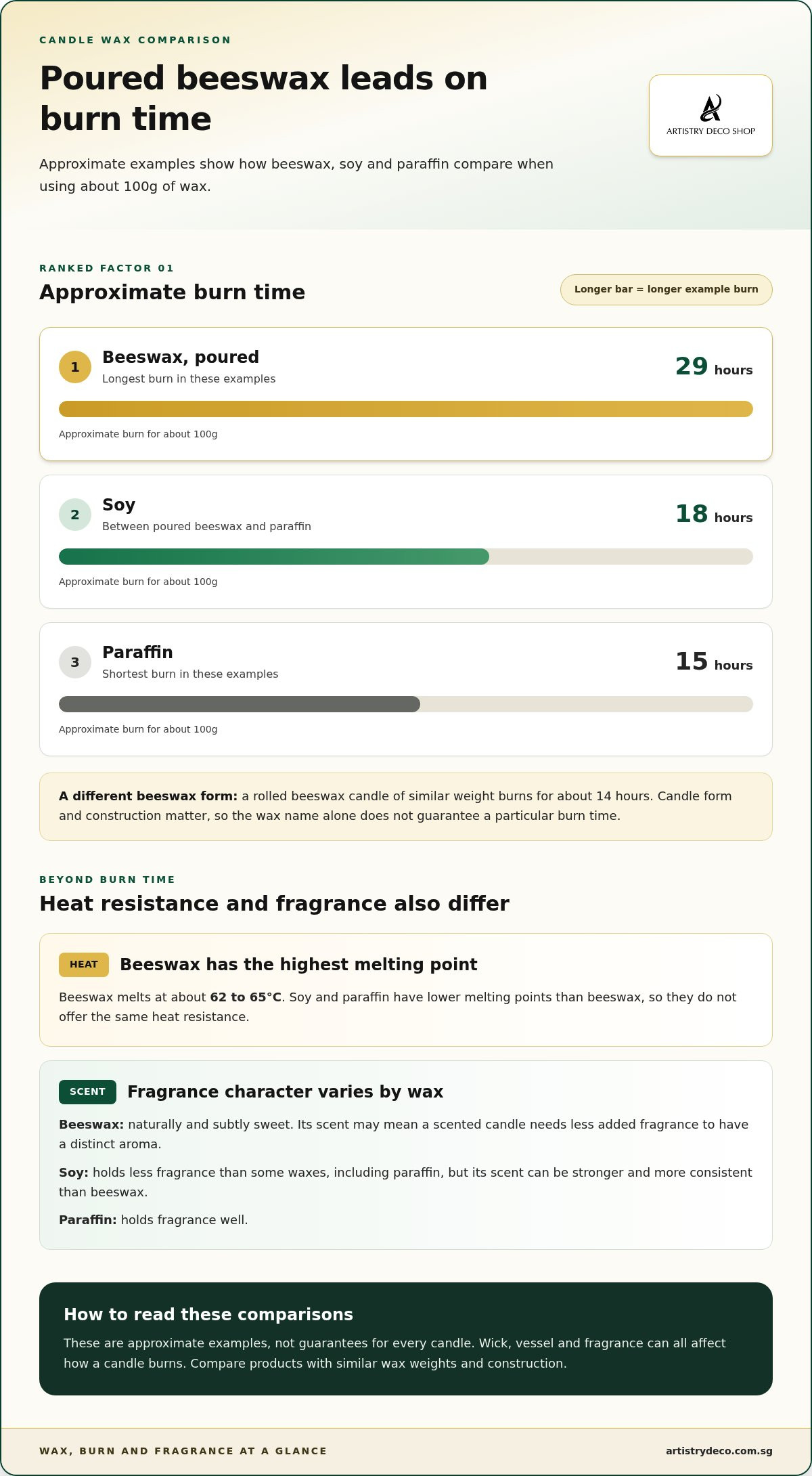
Beeswax isn’t automatically the best candle for every Singapore home. In a soy wax vs paraffin vs beeswax candles comparison, beeswax stands out for burn time: about 100g of poured beeswax can burn for approximately 29 hours, compared with 18 hours for soy and 15 for paraffin. It also has the highest melting point of the three, around 62 to 65°C, but ingredients, scent and sensitivity considerations may make another wax a better fit.
It’s understandable to favour beeswax for its longer burn and natural origins, yet “better” depends on what matters most in your home. This guide compares how each wax is made, how long it burns, how it responds to heat, and what to consider if you have sensitive airways. You’ll come away with a clearer way to choose, whether you’re drawn to beeswax’s gentle natural scent, soy’s plant-based origin or paraffin’s ability to carry fragrance.
Key Takeaways
- Choose wax by the candle’s purpose: scent strength, finish, and burn behaviour can matter as much as the material itself.
- Look beyond “natural” on the label and consider the wax’s source, added fragrance, dyes, and other ingredients.
- For sensitive airways, pay attention to fragrance and wick care as well as wax type, and burn candles in a well-ventilated space.
- Match your candle to your home’s setting, then place it safely and follow the maker’s care instructions.
Burn time, melting point, and heat resistance
For homes in Singapore, candle safety, labelling and import requirements depend on the specific product, not just its wax. A wax name or estimated burn time alone does not establish whether a candle meets applicable requirements.
Burn time offers a useful comparison, but wax type, fragrance and candle construction shape the experience. These figures compare approximate examples using about 100g of wax.
Beeswax Burn Characteristics
Beeswax is made by honeybees for their hive combs and collected when beekeepers remove the caps from honeycomb cells. Its dense structure supports a naturally slower burn and a subtly sweet scent, so a scented candle may need less added fragrance to have a distinct aroma.
Beeswax has the highest melting point of these three waxes, at about 62 to 65°C. A poured candle using approximately 100g can burn for about 29 hours, while a rolled beeswax candle of similar weight burns for about 14 hours.
Soy Wax Burn and Scent
Soy wax is made from processed soybean oil and burns slowly and steadily. A candle containing approximately 100g of soy wax burns for about 18 hours, longer than the paraffin example but shorter than poured beeswax.
Soy holds less fragrance than some waxes, including paraffin, but its scent can be stronger and more consistent than beeswax. Its melting point is lower than beeswax’s, so it doesn’t offer the same heat resistance. A sustainable choice for some shoppers, soy is not automatically 100% additive-free.
Comparative Candle Burn Life
In these approximate 100g examples, poured beeswax burns the longest at 29 hours, followed by soy at 18 hours and paraffin at 15 hours. Beeswax’s density helps explain its longer burn compared with soy, while paraffin tends to burn more quickly.
These are comparisons, not guarantees for every candle. Wick, vessel and fragrance all affect how a candle burns, so compare products with similar wax weights and construction. Coconut wax blends are another option, but they aren’t included in these burn-time comparisons.
| Wax | Approximate burn time for about 100g | Melting point and heat comparison | Fragrance character |
|---|---|---|---|
| Beeswax, poured | 29 hours | Highest; about 62 to 65°C | Subtly sweet naturally |
| Soy | 18 hours | Lower than beeswax | Less fragrance capacity than some waxes |
| Paraffin | 15 hours | Lower than beeswax | Holds fragrance well |
Choose beeswax for the longest burn in these examples, soy for a middle ground or paraffin when fragrance strength matters most.
What Type of Candle Wax Should You Use?
Choosing between soy wax, paraffin and beeswax candles can also depend on the candle’s shape, finish and intended display spot. Match the wax formulation to how you plan to use the candle, then consider whether its appearance suits the room.
Soy Wax Candle Choice
Pure soy wax can develop frosting or an uneven surface as it cools. These visible changes may matter if you want a smooth, uniform candle for a dining table or shelf. They don’t reveal the full ingredient list, so treat appearance as a style detail, not proof of purity.
Before choosing, consider the candle’s format and intended setting. A container candle is designed to sit within its vessel, while a pillar is made to stand on its own. Check that the product description matches how you plan to display it.
Beeswax Candle Choice
For beeswax, consider the candle’s form as well as its material. A taper suits a candleholder, while a pillar can serve as a standalone accent on a stable surface. The holder and placement determine how the candle fits into a dining or living space.
If the wax’s appearance matters to your room, compare the candle’s colour and finish with nearby decor before buying. A well-chosen shape can look intentional on a table rather than compete with the objects around it.
Paraffin Candle Choice
Paraffin works across many candle styles, while soy and paraffin blends combine characteristics of both waxes. A blend may suit shoppers weighing burn qualities alongside environmental considerations. Read the product description for the stated wax composition instead of relying on a broad label such as “wax blend.”
Consider the candle’s purpose before choosing its format. A small accent candle, a pillar used as a centrepiece and a container candle each create a different visual effect. Wax formulation matters, but the intended shape and setting can help narrow your options.
For a practical choice, picture where the candle will sit and how it will be held. Then compare the listed wax type, blend and finish. This makes choosing between soy wax, paraffin and beeswax candles a more considered fit for your home.
What About Asthma, Allergies, or Sensitive Airways?
No wax is automatically safest for every person. An Ökometric study from 2007 found emissions from properly made and burned paraffin, soy, stearin and palm candles within established indoor air quality standards.
Paraffin Candle Soot
Paraffin is derived from petroleum industry byproducts, unlike soy wax, which is made from soybean oil, or beeswax, which is produced by honeybees. Paraffin’s petroleum origin raises environmental concerns, while soybean production has also been associated with deforestation, habitat damage, fertilisers and pesticides.
Paraffin candles tend to produce more soot than some alternatives. A 2009 South Carolina State University study detected toluene and benzene in paraffin candle emissions. That finding doesn’t establish that every candle creates the same exposure, but it helps explain why wax type alone can’t settle an indoor-air question.
Soy Candle Air Quality
A properly burned soy candle produces less soot than a paraffin candle, but “cleaner” doesn’t mean emission-free. A 2025 study published in Frontiers in Public Health found lung inflammation in rats exposed to scented candle emissions. The study’s animal result doesn’t prove the same effect in people.
Fragrance matters across wax types. More than 60 volatile organic compounds have been detected in scented candle emissions, and fragrance sensitivity can trigger headaches with any wax. For sensitive airways, an unscented candle avoids added fragrance oils, though it still burns wax and a wick.
Beeswax Candle Air Quality
A candle’s wax type or natural scent alone is not a reason to assume it purifies indoor air. There’s no scientific evidence that burning beeswax cleans the air. Like soy and paraffin, beeswax can still produce emissions, and its natural origin doesn’t rule out trace pesticide residues.
For any wax, reduce soot by trimming the wick, keeping the candle away from drafts and extinguishing it if smoke continues. Wick size and trimming affect soot alongside wax type. Check candle ingredient labels for added fragrance, especially if scents have caused symptoms before.
What beeswax, soy wax, and paraffin candles are made from
The wax name is only one part of a candle’s composition. Blends, additives, colour and fragrance can change what the finished candle contains, so read the ingredient details instead of relying on appearance or a broad front-label claim.
Beeswax Candle Materials
A beeswax candle may contain beeswax alone or combine it with other waxes and candle ingredients. Beeswax isn’t vegan because bees produce it during honey-making. If you avoid animal-derived materials, keep this distinction in mind when reading labels; if you’re seeking beeswax, look for it in the stated composition.
Colour or scent alone can’t establish whether a candle is pure beeswax. Added fragrance, dyes or other waxes may alter the finished candle, so check the full ingredient description for these additions.
Soy Wax Candle Materials
Soy oil is typically bleached and deodorized during soy-wax production. This processing changes the oil before it becomes candle wax, and the finished candle may also contain fragrance oils, dyes or other additives.
Some soy candles are made entirely from plant-derived soy wax and are described as 100% vegan and cruelty-free. Others may include paraffin or stearic acid, especially formulations intended for votive and pillar candles. Look for blend details instead of assuming every candle labelled soy has the same composition.
Paraffin Candle Materials
A paraffin candle may use paraffin as its main wax or combine it with other candle materials. The front label may name a blend without explaining its proportions, so ingredient details are more useful when comparing formulations.
Fragrance and colour are additional ingredients, not wax types. A candle’s appearance or scent cannot establish whether it contains paraffin alone, soy, beeswax or a blend.
To identify a candle’s wax, read the ingredient list for the named wax and any stated blend or additives. Treat claims such as “natural” as broad descriptions, not proof that the candle contains no fragrance oils, dyes or other materials. For example, a pillar labelled “soy” may still include paraffin or stearic acid.
Artistry Deco Shop: Functional Living Room Decor
Artistry Deco Shop offers functional living room decor for homes where candles share space with carefully chosen objects. Once you’ve selected a wax for its burn, scent and ingredients, consider how the candle fits into the room’s wider arrangement. Functional decor can help create a considered setting without drawing attention away from the candle.
For a dining table, functional dining table centerpieces bring visual interest to a gathering space. Modern artistic sculptures and one-of-a-kind sculptures offer expressive accents, while world globes for study and work desks add character to a work area. Choose pieces suited to the room’s scale, and place candles on a stable, uncluttered surface.
Explore Artistry Deco Shop’s functional living room decor and home accessories when you’re ready to refine your space. Visit Artistry Deco Shop online to discover the collection.
Make Your Candle Choice Part of a Considered Home
Think of a candle as one part of a room’s atmosphere, not merely a source of fragrance. When weighing soy wax against paraffin and beeswax candles, consider the mood you want to create, when you’ll light the candle and how it will sit among the objects already in your space. A quiet evening, a shared meal and a welcoming entry each call for a different balance.
That same care can guide the details around the candle. Choose a spot where it feels intentional, then let the surrounding decor bring harmony without crowding the moment. Artistry Deco Shop offers distinctive home accents to help shape a living space that feels personal.
Choose at your own pace and let the pieces you love make home feel unmistakably yours.
Frequently Asked Questions
Is Beeswax Really Better Than Soy?
Beeswax suits shoppers looking for a naturally scented candle with a longer burn, while soy appeals to those who prefer plant-derived wax. Neither is best for every setting. For a subtle honey-like note without added fragrance, beeswax may fit; for a plant-based candle with a more noticeable fragrance, soy may be preferable. Your priorities determine which trade-off matters most.
Is beeswax the healthiest candle option?
No candle wax is established as the healthiest choice for everyone. A 2007 Ökometric study found that properly made and burned candles made from paraffin, soy, stearin and palm wax produced emissions within established indoor air quality standards. If fragrance triggers headaches, choose an unscented candle, since sensitivity can occur with any wax type.
Are soy candles environmentally friendly?
Soy wax is plant-derived and is generally considered more environmentally friendly than paraffin, which comes from oil industry byproducts. But its agricultural footprint matters too: soybean production has been associated with deforestation, habitat damage, fertilisers and pesticides. To make a more informed choice, look beyond the wax name and consider the candle’s full ingredient list and sourcing information.
Do paraffin candles release harmful chemicals?
Paraffin candles release emissions during burning, as scented candles made with other waxes do. A 2009 South Carolina State University study detected toluene and benzene in paraffin candle emissions. That finding doesn’t mean every candle creates the same exposure. Fragrance, wick condition, drafts and how the candle is burned all affect emissions and soot.
Do soy candles last longer?
Soy candles generally burn longer than paraffin candles of the same weight, but beeswax candles can outlast both. For a fair comparison, compare wax weight rather than candle height: a wide container may look larger without holding more wax. Wick and vessel design also influence how steadily a candle burns.
What Are the Main Candle Wax Types?
The main candle wax types include paraffin, soy and beeswax, along with stearin, palm and coconut wax. Some candles combine waxes, so a label may describe a blend rather than a single material. Gel candles are another option, made from mineral oil thickened with polymer resin. Check the listed ingredients to understand what the candle contains.