
Small Touches That Make Guests Feel Welcome: A Thoughtful Hosting Checklist

What helps guests settle in without having to ask? The small touches that make guests feel welcome are often practical: a clear place to put a bag, a glass of water, or Wi-Fi details they can find easily. These gestures show you’ve thought about their comfort without making the visit feel staged.
Hosting doesn’t mean buying new things or preparing every room to look perfect. A clean, calm space and a few personal details can go a long way. A comfortable seat, fresh towels, soft lighting and a warm greeting often matter more than elaborate extras.
This checklist covers simple touches for different visits, from a short stop to an overnight stay. Make essentials easy to find, offer comfort without fuss, and add character where it feels right. The aim isn’t perfection. It’s a home where guests can relax and enjoy being with you.
Key Takeaways
- Small touches that make guests feel welcome begin with practical care, not a perfect home or elaborate setup.
- Make shared spaces guest-ready by clearing a surface, setting out essentials and explaining what guests can use.
- Choose personal details that suit your guest, and keep scent and other extras optional.
- Adapt your hosting checklist to the visit, whether guests are stopping by, staying for dinner or spending the night.
- Use functional decor to add character without taking attention away from comfort and conversation.
Small Touches That Make Guests Feel Welcome: Start With the Basics
A warm welcome doesn’t depend on a perfect home, a spare guest room or an elaborate plan. Notice what will help someone feel comfortable, then make it easy to find and use. The small touches that make guests feel welcome often begin before the door opens: a clear place for a bag, a comfortable seat and room to settle in.
A welcoming home helps guests feel comfortable, find what they need and enjoy thoughtful attention without having to ask for it.
Hospitality can take different forms across cultures and households. The concept of hospitality offers useful context for this long-standing practice of welcoming guests. At home, the idea can be simple. Start with the essentials, then add personal details if they suit the visit.
- Arrival: Keep the route from the entrance to the shared space clear. Set aside an obvious place for bags or outerwear. A small tray for keys is optional.
- Comfort: Check that there’s a usable place to sit, suitable lighting and clean essentials for the visit. A cushion or throw can add comfort, but it can’t replace a supportive seat.
- Useful information: Show guests where to find the bathroom, drinking water and anything they’re welcome to use. A short note can help overnight guests settle in.
- Personal touches: Offer a familiar drink or choose a small detail that suits the guest or occasion. Fresh flowers or a decorative object are optional.
Before guests arrive: a quick comfort check
Walk through the shared areas as if you’re arriving for the first time. Is the route from the entrance to a seat clear? Is there a place for a bag or jacket? Prepare clean essentials that fit the visit, such as a drinking glass for a short stop or fresh towels for an overnight guest. Then check the seating, lighting and room temperature. A quick check helps you spot practical issues before guests do.
The first few minutes set the tone
Greet guests warmly and show them where they can settle. Offer water or another suitable refreshment without making it a formal ritual. Give them time to put down their things and get comfortable before moving into conversation or a meal. A calm start helps guests feel at ease instead of waiting for instructions.
Prioritise a clear arrival, basic comfort and useful information. Once those are in place, choose an optional detail or two that feels natural in your home. This order keeps hosting manageable and makes the welcome feel personal rather than staged.
Make Shared Spaces Comfortable, Even Without a Spare Guest Room
A separate guest room isn’t essential for a thoughtful stay. In compact Singapore homes, the living room or another shared area may need to serve more than one purpose. That can work well when guests have a clear place to settle. A small, uncluttered area is often more welcoming than extra furniture or decor that makes the room harder to use.
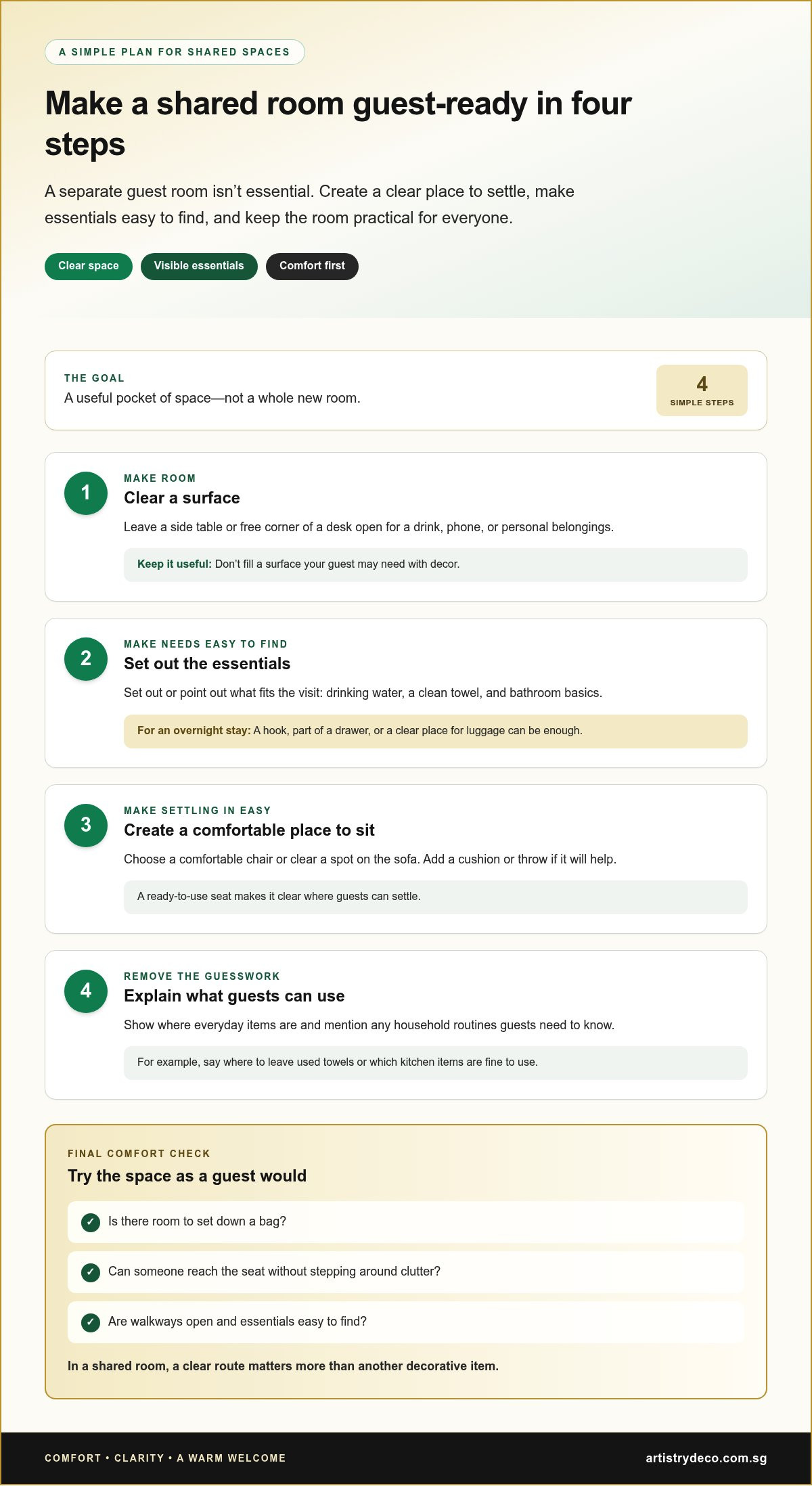
To make a shared room guest-ready, clear a surface and make essentials easy to reach.
Use this simple plan to prepare a flexible space without turning your home upside down:
- Clear a surface. Make room for a drink, phone or personal belongings on a side table or free corner of a desk.
- Make essentials visible. Set out or point out water, towels and bathroom basics that suit the visit.
- Create a place to sit. Choose a comfortable chair or clear a spot on the sofa. Add a cushion or throw if it will help.
- Explain what guests can use. Show them where to find everyday items and mention any household routines they’ll need to know.
Turn one corner into a comfortable place to settle
Think of a guest’s corner as a small landing spot, not a new room. A cleared side table gives someone space for a glass or phone. A ready-to-use chair can make it clear where they can sit. Keep walkways open, and don’t move frequently used household items so far that you or your guests have to search for them. The goal is a useful pocket of space that fits naturally into the room.
Before guests arrive, sit in the place you’ve prepared. Is there room to set down a bag? Can someone reach the seat without stepping around clutter? In a shared space, a clear route matters more than another decorative item. If you add an accent, choose one that doesn’t take up a surface your guest may need.
Make the essentials easy to find
Guests shouldn’t have to guess which towel is for them or whether they can help themselves to water. Point out where to find a clean towel, drinking water and bathroom basics. For an overnight visit, a hook, part of a drawer or a clear place for luggage can be enough. Mention simple routines, too, such as where to leave used towels or which kitchen items are fine to use.
Keep the arrangement modest and clear. A short explanation as you show someone around often works better than filling a shared room with baskets and labels. These small touches that make guests feel welcome give them room to relax while keeping the home practical for everyone who lives there.
For a functional decor accent that fits a shared space, talk with our team about decor for your home.
Thoughtful Personal and Sensory Details Guests Will Notice
Once the basics are in place, a personal detail can make a welcome feel meant for this guest rather than prepared for anyone. It might be a short note beside their place at the table, familiar music playing softly or an object linked to an interest they’ve shared. The gesture doesn’t need to be grand. A carefully chosen detail can add warmth while leaving the focus on the people in the room.
Personal details feel most welcoming when they suit both the guest and the setting. Choose one or two, then leave room for conversation and comfort. A collection of decorative touches can feel staged if it takes over the space or demands attention.
Choose one personal detail rather than staging the room
A handwritten welcome note can be as simple as a few warm words and a helpful detail, such as where to leave a bag or find a drink. For family celebrations, small DIY favors or customized touches inspired by creators like Hanging with the Kiddos can provide an easy way to make guests feel remembered. If you know your guest’s interests, reflect them in a small way. You could play music they enjoy or leave a book they’ve mentioned where they can browse it. If you’re unsure what they’d like, a sincere greeting is personal enough.
A vase or sculptural object can add character to a side table, dining area or entryway, as long as it doesn’t crowd a useful surface. For a piece that combines form and function, explore a designer vase and votive vessel candle holder as a possible finishing detail. Place it with care so the surface still has room for a drink, phone or other belongings.
Use gentle sensory cues with care
Soft lighting can make an evening gathering feel relaxed. Familiar music at low volume can add ease without competing with conversation. These are options, not rules. Adjust the light to suit the activity, and turn the music down or off if guests would rather talk in a quieter room.
Scent deserves the same care. A scented candle is an optional decorative accent, not a hosting essential, and it shouldn’t be used to cover stale air or make up for poor ventilation. Guests may have different preferences, so keep fragrance subtle or leave it out. Handcrafted scented candles can also serve as a visual detail when unlit. A room doesn’t need added scent to feel welcoming.
Before guests arrive, ask yourself whether each detail adds comfort, reflects the guest or supports the room’s purpose. If it does none of these, leave it aside. One well-placed object, a gentle change in lighting or a familiar tune can be enough. The small touches that make guests feel welcome are often memorable because they feel natural, not because there are many of them.
A Flexible Hosting Checklist for Different Guests and Visits
A quick visit, an evening together and an overnight stay call for different kinds of preparation. Use the checklist below to decide what will help most, then add a personal or decorative detail if it suits your guest and your home. In a Singapore home where shared rooms often serve several purposes, a clear, useful living area can feel more welcoming than a space filled with extra decor.
Keep the distinction simple: essentials help guests settle in or meet a practical need; optional details add character but can be left out without affecting comfort.
| Type of visit | Useful essentials | Optional finishing details |
|---|---|---|
| Short visit | A warm greeting, a place to sit, an easy-to-accept drink and a clear route to the bathroom. | A small vase or a familiar tune at low volume. |
| Evening gathering | Usable shared space, comfortable seating, refreshments and a simple place for guests to leave their belongings. | Soft lighting or one decorative accent that doesn’t take up serving space. |
| Overnight stay | Clean sleep and bathroom essentials, water, a place for belongings and directions to household basics. | A welcome note, a spare cushion or a reading light if it suits the room. |
For a short visit or evening gathering
Make it easy to join in. Offer a seat and a drink without making guests feel they must accept, and point out the bathroom or a place for their belongings. Before an evening gathering, clear enough space for people to sit, talk and share refreshments. Functional living-room decor can add character, but choose pieces that leave surfaces and walkways useful.
A quick visit doesn’t call for overnight supplies or a special display. A tidy, usable room and a relaxed greeting are enough. For a longer gathering, check that guests can move between seating and refreshments without shifting decorative objects or household items. For celebratory get-togethers or dinner parties, subtle details like custom drinkware from Personalised Glasses Australia can offer an inviting, personalised touch without cluttering the space.
For an overnight stay
Think through sleep and bathroom needs based on the room and the guest. Set out clean towels and suitable bedding, then show where they can find water, toiletries or other household basics. Make a modest place for belongings, such as a clear corner or a hook. Offer to help, then give guests space to settle in privately. This lets them know you’re available without hovering.
These small touches that make guests feel welcome should suit the person and the visit, rather than follow a fixed hosting formula. Keep what’s useful, skip what isn’t, and let your home remain comfortable for everyone who lives there.
Let Functional Decor Add the Finishing Touch to a Warm Welcome
Practical care is what helps a guest feel at ease. Decor gives that care a visual expression: one well-chosen object can make a room feel more personal without making it look staged or asking guests to admire a display. Think of decor as a finishing touch, not a hosting requirement. The small touches that make guests feel welcome start with how a space works, then gain character through details that belong there.
Select a finishing touch that belongs in the room
Before choosing an accent, consider the room’s purpose, the surface space available and whether the object supports everyday use. A unique clock can serve a practical role in a shared living area, while a world globe may add interest to a study or work desk. A sculpture can create a focal point where it won’t interrupt movement, and a candle can be an optional decorative feature. The store’s functional decor and home accessories include sculptures, globes, clocks and handcrafted scented candles. You don’t need to buy anything to make your home welcoming.
Scale and placement matter. On a side table, leave enough clear space for a guest to set down a drink or phone. On a dining surface, keep the centrepiece low or place it where it won’t get in the way of serving or conversation. In a narrow walkway, don’t add a floor-standing accent. The right object feels considered while letting the room do its job.
Keep the welcome personal, calm and uncluttered
Take a final look around from a guest’s point of view. Remove anything that blocks movement or takes up a useful surface, even if it’s decorative. Keep the details that feel like part of your home and that you’re comfortable sharing. A familiar object with a story can be a natural conversation point, while a simple, open room may suit a quieter visit better.
There’s no need to match every accessory or create a complete display. A single sculptural piece can bring texture and interest. A functional accent can offer both purpose and character. Keep comfort and conversation at the centre. If an item competes for attention, crowds the room or makes guests unsure where to put their things, it may be better placed elsewhere.
Good hosting is thoughtful, not elaborate. Clean, usable spaces and a few personal choices create a calm, genuine welcome. Choose decor with care, leave room for people and let your home’s character show naturally.
Make Your Next Welcome Your Own
Let each visit guide your choices. A friend dropping by after work may value an easy place to sit and unwind, while a relative staying overnight may appreciate small signs that they can settle in at their own pace. You don’t need to prepare every detail in advance. Notice what helps your guests feel at ease and carry that thought into your next visit.
The small touches that make guests feel welcome aren’t a fixed set of objects or rules. They come from the care behind each choice: keeping the home comfortable to use, making room for conversation and adding personal details only when they feel right. Over time, these choices become part of the way you welcome people into your home.
A warm welcome doesn’t have to be perfect or elaborate. Start with what feels natural, and let your home make space for good company.
Frequently Asked Questions
How can I make guests feel welcome if I do not have a spare room?
You can make guests feel welcome without a spare room by agreeing how the shared area will work before they arrive. In a compact Singapore home, tell an overnight guest where they can sleep and when the living area is usually in use. If you use a folding screen or curtain you already have, position it to offer privacy without blocking the route through the room. Clear expectations help everyone feel more at ease.
What should I prepare before guests arrive for a short visit?
Prepare for the activity rather than staging the whole home. If a guest is coming for a quick chat, clear the seat you plan to use together and put away items that could interrupt conversation. If rain is likely, set aside a place for a wet umbrella. A brief message with entry details can also prevent an awkward wait at the door.
Should I use scented candles when welcoming guests?
Scented candles are optional, not a requirement for a warm welcome. If you don’t know whether your guest enjoys fragrance, a neutral room is a thoughtful default. If you light a candle, keep the scent gentle and extinguish it before leaving it unattended. A candle can add atmosphere, but it shouldn’t mask stale air or replace a comfortable, well-kept space.
How do I make guests feel comfortable without making my home look staged?
Leave a few familiar signs of daily life in place instead of arranging every object for display. A family photo, well-used book or favourite mug can make a space feel like yours. Before guests arrive, put away only what gets in the way of movement or everyday use. The aim isn’t to create a showroom. It’s to make a home where both host and guest can settle.
What information should I share with overnight guests?
Share details that help overnight guests manage the home independently. Along with the bathroom location, let them know the Wi-Fi details, which light switches they may need and how to lock the door when they come and go. If there’s a household routine that affects their stay, explain it simply. A short message or note can be useful if you’re busy when they arrive.
How can I welcome guests in a small Singapore home?
Explain your household habits while keeping the welcome flexible. For example, if your home has a shoes-off routine, show guests where footwear can go rather than leaving them to guess. Make room for the visit in one shared area, and avoid moving more than you need to. A calm explanation of how your home works can feel more personal than buying extra decor or storage.
Do small decorative touches matter more than practical comforts?
Practical comforts come first because they shape how guests use the room. Decor is an extra. For a meal, make sure everyone has a comfortable place to sit and can reach what they need before adding a centrepiece. One modest object can add character if it leaves the table useful. Let decor be a finishing choice, not the measure of how well you’ve hosted.