
Should a Clock Be the Focal Point of Your Singapore Home?

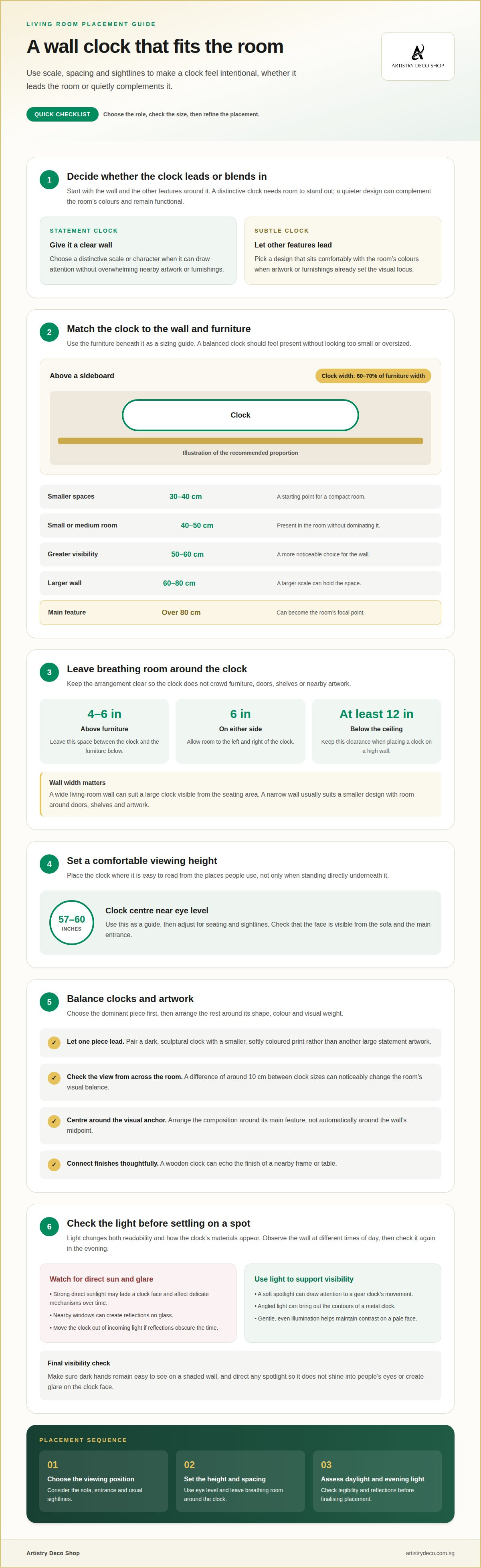
A clock should be the focal point of a room when its size and character feel intentional, rather than competing with the space. As a useful guide, a wall clock can span around 60–70% of the width of the furniture beneath it. So, should a clock be the focal point of a room? A clock can be the focal point of a home, especially when the living room gives it a clear place to stand out.
A striking clock can bring personality to a wall, while a quieter design can sit comfortably alongside art and treasured objects. The right balance depends on the whole composition: the clock’s scale and colour, nearby artwork, and the light that falls across it throughout the day.
This guide explores when a clock deserves centre stage, how to pair it with art without creating visual clutter, and where to place it in a living room for both presence and practical use. You’ll also see how lighting can shape its impact, helping you choose a focal point that feels considered, harmonious and distinctly your own.
Key Takeaways
- Use a clock as a focal point when its scale and colour feel intentional; a discreet design suits a room where other features already lead.
- Balance a standout clock with artwork and decor by coordinating tones and leaving enough visual breathing space around it.
- Choose a placement where the clock is easy to see, and consider how daylight or directed lighting will affect its appearance.
- In a living room, give a statement clock a clear wall and a comfortable viewing position so it adds character without competing with the seating area.
1. Should a wall clock blend in or become the focal point?
Whether a clock should be the focal point of a room depends on its scale and the wall around it. Choose a statement clock when it can draw attention without overwhelming nearby artwork or furnishings. For a quieter effect, pick a design that complements the room’s colours while staying functional, rather than becoming its visual anchor. An uncluttered living-room wall gives a distinctive clock room to stand out.
Use the furniture below the clock to guide its size. A wall clock can span 60–70% of a sideboard’s width, creating a balanced composition rather than appearing too small or oversized. For smaller spaces, 30–40 cm is a starting point; 40–50 cm suits a small or medium room where the clock should remain present but not dominate. Choose 50–60 cm for greater visibility, or 60–80 cm for a larger wall. A clock over 80 cm can become a main feature.
On a wide living-room wall, position a large clock where it’s visible from the seating area, such as above a sideboard. A narrow wall usually suits a smaller design, with enough room to avoid crowding doors, shelves or artwork. Leave 4–6 inches between the clock and furniture below, plus six inches on either side. On a high wall, allow at least 12 inches between the clock and ceiling.
For feng shui-inspired placement, keep a clock visible with clear space around it; it does not have to be the focal point. Modern wall clocks also suit contemporary interiors: a minimalist design can blend in, while a sculptural shape or bold colour adds character.
In Singapore, large decorative wall clocks can be found through home décor retailers. Their prices vary with factors such as size, materials, finish and design, so compare clocks with similar dimensions and visual detail before choosing.
2. Clocks and Art - How to Keep the Balance?
A clock and artwork can share a wall when one leads and the other supports. Choose the dominant piece first, then arrange the rest around its shape, colour and visual weight. For example, pair a dark, sculptural clock with a smaller, softly coloured print instead of another large statement artwork. The contrast adds interest without making the composition feel crowded.
Scale matters from across the room as well as up close. A difference of around 10 cm between clock sizes can noticeably change a room’s visual balance, so consider how the clock reads from the sofa or doorway. On a broad wall, a larger piece can hold its own; on a narrow wall, a compact design leaves space for surrounding furniture and art. Keep the arrangement centred on its visual anchor, not automatically on the wall’s midpoint.
Height affects how the clock relates to other elements. A wall clock is easier to read and more visually effective at eye level, with its centre around 57–60 inches from the floor. Rooms with 10-foot ceilings can accommodate slightly higher placement, while 8-foot ceilings suit traditional positioning. If you’re arranging a wooden clock beside furniture, echo its finish in a nearby frame or table for a considered connection.
Alternatives to a clock as the room’s focal point include a picture window, fireplace, painting, sculptural lamp or modern sculpture. These features can establish character while a clock takes a quieter role. For a distinctive timepiece, explore unique wall and tabletop clocks that can complement an existing arrangement.
A clock above a sofa can look balanced when positioned with comfortable clearance and aligned with the seating; around 20 cm above the sofa’s top is one suggested placement. Above a fireplace, it can form a central feature, but keep the clock away from direct heat to protect its materials and mechanism. Visual balance comes from proportion and spacing; safe placement also depends on secure hanging and avoiding heat exposure.
3. How Do Lighting Conditions Affect Your Clock Placement Strategy?
Light affects both how easily you can read a decorative clock and how its materials look. Strong direct sunlight may fade a clock face and affect delicate mechanisms over time, so avoid placing one where the sun falls directly on it. In a Singapore living room, observe the wall at different times of day before deciding where the clock belongs. A face that looks clear in the morning may catch glare later.
Set the clock at eye level for a comfortable view. A useful guide places its centre 57–60 inches from the floor, then adjusts for the room’s seating and sightlines. For example, check the face from the sofa and the main entrance, not only while standing beneath it. If the clock sits above a sideboard, align it with that furniture and keep its hands visible from across the room.
Next, consider nearby windows and light sources. A window beside the clock may create reflections on glass, while a shaded wall can make dark hands harder to see. Check the face from the places where people usually sit or walk past. If reflections obscure the time, move the clock out of the incoming light’s direct path rather than raising it beyond comfortable viewing height.
Lighting can also make a clock feel like a deliberate feature. A soft spotlight can draw attention to a gear clock’s movement, while even ambient light suits a quieter design. Direct the spotlight to highlight the mechanism without shining into people’s eyes or creating glare on the face. Angled light can bring out the contours of a metal clock; gentle, even illumination helps maintain contrast on a pale face.
Use a simple placement sequence: choose where you’ll view the clock from, position its centre near eye level, then assess daylight and artificial light. Check how it looks during the day and in the evening before making a final adjustment. This helps keep the clock legible and well placed, whether it is a subtle detail or a statement piece.
4. Using a clock as a living-room focal point
To choose a living-room focal point, notice what first catches your eye from the entrance. A picture window, fireplace or striking wall clock can anchor the arrangement. If the clock takes centre stage, let that wall carry the visual emphasis instead of pairing it with a large painting. In an open-plan Singapore home, this clear choice can help define the living area without adding more objects.
Scale the clock to the room and viewing distance. A diameter of 12–24 inches suits many standard-sized living rooms, while an oversized clock can ground a larger space when placed at eye level. From a sofa across the room, the face should remain visible and its design should read clearly. A clock that appears small from the main seating position may lose its impact, even if its finish looks striking up close.
Consider the clock’s relationship to the seating as well as the wall. If it sits directly behind a sofa or chair, viewers may need to turn or tilt their necks to check the time. Instead, choose a prominent wall that is visible from the main seats, such as the wall opposite the sofa. Keep the clock visually connected to the seating group, with enough open wall around it for its shape to stand out.
Choose a clock that works with the room’s existing style. A wooden design can complement traditional or rustic decor, while matte black creates a restrained contrast against pale walls. Mid-century shapes and colours can add a playful note to a neutral living room. Treat the clock as the anchor and keep nearby decor simple, so its character does not compete with several other statement pieces.
Use a considered focal point to shape your living-room decor. Arrange an appointment to explore home decor
Artistry Deco Shop: Functional Living Room Decor
Artistry Deco offers functional living-room decor for homes where useful objects can also add character. If you want a clock to stand out, its unique and playful clocks offer decorative options for a living-room wall. Modern artistic sculptures can add another sculptural element, while functional dining table centrepieces can carry a considered decorative style into the dining area.
Choose each piece according to the role you want it to play. A distinctive clock can anchor a wall, while a sculpture or centrepiece brings interest elsewhere without crowding it. This approach suits Singapore homes, where each decorative choice benefits from a clear place in the room.
Contact Artistry Deco Shop to explore functional decor for your home.
Let Your Living Room Tell Its Story
Deciding whether a clock should be the focal point of a room comes down to the feeling you want the space to have. A clock can mark the rhythm of everyday life and express your taste, or quietly support a room shaped by another feature. Consider how you use your living room, what catches your eye when you enter, and which objects feel meaningful to live with.
Before settling on a piece, picture it in the room at different times: in a quiet morning, under evening light and when friends gather. If you frequently entertain at home, pairing a well-styled lounge with easy crowd-pleasing meals from tacoverse.com makes hosting seamless. A considered focal point does not have to be the loudest object; it simply needs to feel as though it belongs.
Explore Artistry Deco’s clock and decor selection to find a piece for your home.
Let your chosen clock bring a thoughtful detail to the everyday moments you spend at home.
Frequently Asked Questions
Clocks and Art: How to Keep the Balance?
Let either the clock or the artwork lead, and make the other a supporting element. For example, a clock with a strong outline can sit beside a small print that echoes one of its colours. Keep the frames and clock finish visually connected without matching every detail. If both pieces have bold shapes, place them on different walls so each can be appreciated on its own.
How Do Lighting Conditions Affect Your Clock Placement Strategy?
Check the clock from its usual viewing spot in daylight and with the evening lights on. A glass face may reflect a nearby lamp, while strong sunlight can fade the face and affect delicate mechanisms over time. If a gear clock is part of the display, soft, angled lighting can reveal its movement without harsh glare. Adjust the lighting or the clock’s position if the hands are difficult to read.
Should a Wall Clock Blend In or Become the Focal Point?
Choose a discreet clock if the room already has a strong feature, such as a large window or sculptural lamp. Let it stand out when the wall feels empty or the design adds character to a simple setting. In an open-plan home, a distinctive clock can also help signal the living area. Its role should suit the room’s existing visual hierarchy.
What Are the Prime Real Estate Locations for Your Wall Clock?
Place a living-room clock where it is visible from the main seating. In a dining room, choose a wall diners can glance at without turning away from the table. Near an entrance, a clock offers a useful time check before leaving home. Avoid placing it directly above a door, where it may be hard to read and repeated movement can cause vibration.
What Placement Pitfalls Should You Avoid?
Keep a clock away from direct sunlight, fireplaces, radiators and other heat sources. Steam and moisture can also affect clocks in poorly ventilated kitchens or bathrooms, so avoid placing one beside a sink or stove. In a bedroom, ticking or visible gears may distract from rest; avoid placing the clock directly above or facing the bed.
Should a Clock Be the Focal Point of a Room?
A clock should be the focal point of a room when its design suits the space and you want it to draw attention. It can work well on a plain feature wall, but less so when another architectural detail or artwork already anchors the room. In a Singapore home, base your choice on how you use the living area and what you want visitors to notice first.