
Lighting a Sculpture from Below: A Guide to Dramatic Home Decor

A sculpture isn't truly finished until it meets the right light. While a beautiful bronze or marble piece carries its own history, it's the way you highlight those curves that brings the story to life. Mastering the art of lighting a sculpture from below can turn a quiet corner into a breathtaking focal point that rivals any professional gallery. It's about more than just visibility; it's about creating a mood that shifts as the evening progresses.
We know how frustrating it is when harsh shadows hide the delicate details of a face or when a bright glare distracts from the art itself. You want your home to feel like a curated experience, but guessing how light reacts with brass or stone is a common challenge. This guide will help you solve those issues and teach you how to achieve a museum-quality look. You'll learn the best angles for light placement, how to select the perfect temperature for different materials, and how to create a high-end atmosphere that highlights every texture in your collection.
Key Takeaways
- Learn how lighting a sculpture from below creates a theatrical effect by reversing natural shadows to emphasize the height and grandeur of your art.
- Discover why textured materials like petrified wood and stone are the best choices for absorbing light to create a soft, museum-quality glow.
- Master the "Rule of Three" to balance light from multiple angles, ensuring your focal point looks stunning without distracting glares or harsh spots.
- Understand how to select the right Kelvin temperature, such as using warm tones to enhance the rich character of brass and bronze statues.
- Find out how to mix different materials like marble and brass to build a curated gallery that responds beautifully to professional lighting techniques.
Why Lighting a Sculpture from Below (Uplighting) Works
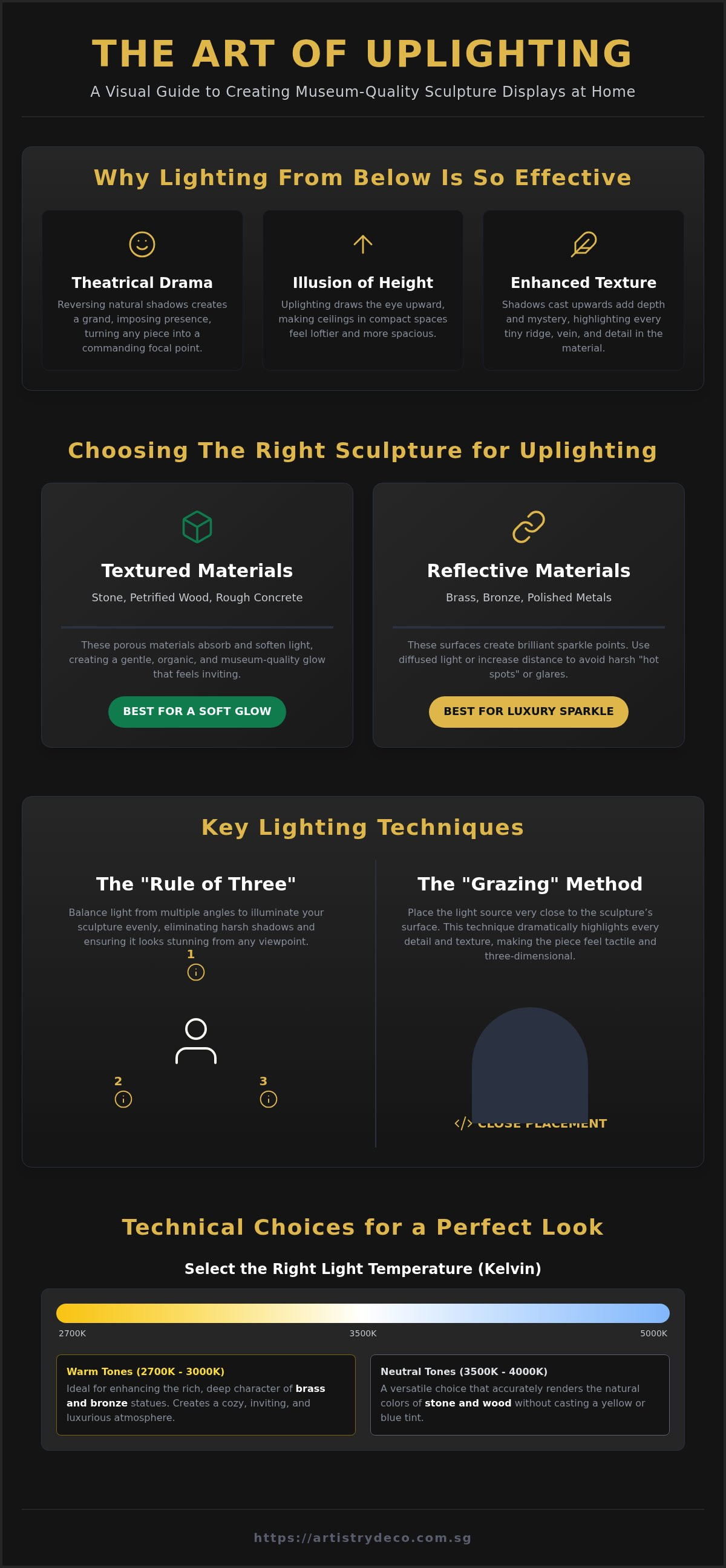
Most homes rely on overhead lighting, which mimics the sun but can often feel sterile. When you choose lighting a sculpture from below, you're intentionally reversing the natural order of light. This creates a sense of theatrical drama that instantly elevates a room. By placing the light source at the base, you highlight the underside of curves and crevices that usually stay in the dark. It’s a technique that makes even a small piece look grand and imposing, turning a simple object into a commanding presence.
For those living in compact spaces, this method is a secret weapon. Uplighting techniques draw the viewer's gaze upward, following the beam of light along the length of the art. This vertical movement creates an illusion of height, making your ceilings feel loftier than they actually are. It’s particularly effective for Modern Artistic Sculptures where bold lines and abstract shapes benefit from a more aggressive, directional light source. The light doesn't just show the art; it explains the form.
The Emotional Impact of Shadows
Standard BTO flats often suffer from flat, uninspiring ceiling lights that wash out the character of your decor. Lighting a sculpture from below introduces mystery through shadow play. As the light travels up, it casts shadows toward the ceiling, giving a static object a feeling of life and movement. One specific method we love is "grazing." This is when you place the light very close to the sculpture's surface to highlight every tiny ridge, vein, and texture in the material. It’s a sophisticated way to make a piece feel three-dimensional and tactile.
Creating a Focal Point in Your Living Room
A well-lit piece acts as a visual anchor. In a busy home, a single lighted sculpture can draw the eye away from daily clutter and toward a curated masterpiece. It’s about balancing the visual weight of the space. If you have a heavy sofa on one side, a brilliantly lit bronze statue on the other restores harmony. When you integrate these pieces as Functional Living Room Decor, you aren't just adding a lamp; you're creating an experience that defines the room's character. The light tells your guests exactly where to look, ensuring your most prized items get the attention they deserve.
Choosing the Right Sculpture for Uplighting
Not every piece of art responds the same way to a light beam. Choosing the right material is the first step in mastering the art of lighting a sculpture from below. While a smooth, flat surface might look dull under a spotlight, items with heavy texture thrive. Materials like stone or wood are naturally porous. They absorb and soften the light, creating a gentle glow that feels organic and inviting. In contrast, reflective metals like brass create brilliant sparkle points that catch the light and bounce it around the room, adding a sense of luxury.
Height also plays a major role in your setup. Taller pieces benefit significantly more from a ground-up light source because the light has more room to travel and fade. This creates a natural gradient from the bright base to the softer, more mysterious peaks at the top. For more detailed advice on technical placement, you can consult this technical guide to lighting statues to understand how engineers approach these physical dimensions.
Lighting Brass and Bronze Statues
Polished metals require a careful touch. If you place a light too close to a piece from the Aura Brass collection, you might create "hot spots" or blinding glares. These bright reflections can hide the very details you want to show. It's better to use diffused light or position the source slightly further away from the base. This brings out the deep, warm glow of the bronze without overwhelming the viewer's eyes. It turns the metal into a shimmering focal point that feels expensive and well-considered.
Highlighting Stone and Petrified Wood Textures
If you own pieces from the fossil and petrified wood collection, you have the perfect candidates for uplighting. The rough edges and ancient rings in these sculptures are meant to be seen. By placing your light source very close to the base, you use the "grazing" technique. This reveals every hidden grain and fossilized detail that overhead lights often miss. It turns a piece of ancient history into a modern masterpiece. The shadows created by the wood's natural ridges add depth that makes the sculpture feel truly three-dimensional.
If you're unsure which material suits your space best, feel free to reach out for a curation tip from our experts.
Step-by-Step Instructions for Lighting a Sculpture from Below
Transforming your living space into a private gallery doesn't require a professional renovation. With a few simple tools, lighting a sculpture from below becomes an achievable DIY project that yields professional results. Start by selecting your light source. If you want a clean look without visible wires, battery-powered LED puck lights are a fantastic option. They're small enough to hide behind the base of your art and often come with remote controls. For a more permanent setup, ensure you tuck cables behind pedestals or use cord covers that match your wall color to maintain a premium aesthetic.
To get the most out of your display, use the "Rule of Three." Instead of relying on one single, harsh beam, place three smaller lights around the base of the piece. This creates a balanced glow and prevents one side of the sculpture from being lost in total darkness. It's also vital to test your lights at different times of day. A setup that looks subtle during a bright Singapore afternoon might feel too intense once the sun goes down. Adjust the brightness until the mood feels consistent and inviting throughout the evening.
Setting the Distance and Angle
Placement is the difference between a masterpiece and a mistake. A helpful starting point is the 45-degree rule. By angling your light at 45 degrees toward the sculpture, you create depth without making the shadows look flat. If you want a sharper, more dramatic look, move the light closer to the base. For a softer appearance, pull the light back. When working with figurative statues, avoid pointing the light directly up from the center. This creates a ghoulish "flashlight under the chin" effect. Instead, angle the light slightly to the side to keep the facial features looking natural and elegant.
Dealing with Glare and Eye Strain
A common mistake is positioning lights so they shine into a guest's eyes. To prevent this, look for fixtures with "shrouds" or deep recesses that hide the bulb from direct view. You want people to admire the art, not the light source. It's also helpful to understand the "cutoff angle." This is the specific point where the fixture's housing blocks the direct view of the bulb, ensuring the light stays on the sculpture. Position your lights so the beam never crosses the eye level of someone sitting on your sofa. This creates a comfortable environment where the focus remains entirely on your beautiful collection.
Technical Choices: Beam Angles and Light Temperatures
Achieving a museum-quality look in your home depends on technical precision. When lighting a sculpture from below, the color of the light and the spread of the beam are your most important tools. Kelvin (K) ratings measure the warmth or coolness of a bulb. A lower rating like 2700K feels golden and cozy, while 4000K mimics the crisp clarity of daylight. Selecting the wrong temperature can make a premium piece look dull or unnaturally tinted, so it’s vital to match the light to the material.
Choosing a bulb with a high Color Rendering Index (CRI) is also essential for seeing the true colors of your art. A CRI of 90 or above ensures that the rich browns of petrified wood or the deep hues of natural stone aren't washed out. This level of detail is what separates a professional gallery from a standard home display. It allows every subtle shift in color to remain visible, even in a dark room.
Choosing the Right Bulb and Temperature
Museum curators frequently select 3000K because it strikes a beautiful balance between warm and cool tones. It feels natural and sophisticated in most Singaporean interiors. For your specific collection, let the material be your guide. Warm light brings out the soul of brass and bronze pieces, making them glow with a rich, inviting energy. If you are showcasing white marble or contemporary Stone Atelier carvings, cooler lights (4000K) keep the presentation looking modern and crisp. Using LED technology is a smart move; these bulbs emit very little heat, which protects the integrity of ancient fossils or organic wood textures over time.
Beam Angles for Different Shapes
The width of the light beam must match the silhouette of your art. A "Spot" beam, usually around 15 degrees, is ideal for tall, slender figures. It creates a tight column of light that emphasizes height. If you're lighting a sculpture from below that has a wider base, like a centerpiece or a globe, a "Flood" beam is better. It washes the entire surface in light, ensuring the edges don't disappear into the shadows. Use the table below to help determine the best fit for your pieces.
| Sculpture Type | Recommended Beam Angle | Visual Effect |
|---|---|---|
| Tall & Slender Statues | 15° (Narrow Spot) | Dramatic vertical focus |
| Wide Centerpieces | 35° - 60° (Flood) | Even, soft coverage |
| Globes & Spheres | 40° (Wide Spot) | Balanced highlights |
Curating Your Lighted Gallery with Artistrydeco
Building a private collection is a deeply personal journey of discovery and refined taste. When you curate your home with the intention of lighting a sculpture from below, you're not just buying objects; you're selecting characters for a silent, visual play. Mixing materials is the secret to a rich, layered gallery. Imagine the interplay between a polished bronze statue and a piece of raw, ancient stone. The bronze catches the light with a sharp, metallic shimmer that feels energetic and modern. Meanwhile, the stone provides a grounded, matte contrast that absorbs the glow, creating a serene and timeless atmosphere. This variety ensures that every corner of your room tells a different part of your story.
Exclusivity is at the heart of a high-end home. One-of-a-kind sculptures deserve their own dedicated spotlight, as their unique textures won't be found in any other residence. By choosing pieces that respond well to directional light, you create a home that feels like a curated experience rather than just a living space. It's about finding that perfect balance between the art itself and the way it's presented to the world.
Selecting Your Next Statement Piece
The Contemplation Collection offers pieces that are perfectly scaled for desk-level uplighting, making them ideal for a sophisticated study or home office. These sculptures feature intricate textures and thoughtful poses that truly reveal their depth when a light source is placed at their base. For those seeking a grander statement, a Zoffoli Globe acts as a magnificent uplit centerpiece. The light emphasizes the hand-painted details of the map and the rich wood of the Italian stand, turning a functional item into a glowing work of art. You can also experiment with grouping smaller sculptures together under a single wide-angle light. This "cluster" effect creates a unified focal point that draws the eye and celebrates the unique character of each individual piece.
Long-term Care for Lighted Art
Owning premium art in Singapore’s tropical climate comes with its own set of responsibilities. Maintaining the museum-quality look of your lighted display requires a commitment to detail. Dust is the natural enemy of lighting a sculpture from below, as even a thin layer of grime can be magnified by a strong beam of light. Regular, gentle cleaning with a soft cloth ensures that the light highlights the sculpture's true character rather than surface imperfections. It's also worth monitoring organic materials, such as petrified wood or fossils, for any signs of "light bleaching" after many years of intense, close-range exposure. By adopting a curatorial mindset, you protect the stories behind your pieces and ensure they remain vibrant for generations.
Explore our collection of light-ready sculptures today
Elevate Your Home with Professional Art Lighting
Mastering the art of lighting a sculpture from below turns your living space into a private gallery of light and shadow. You've learned how the right Kelvin temperature breathes life into brass and stone, and how specific beam angles shape the narrative of your collection. By choosing textured materials like petrified wood or bronze, you ensure that every ridge and curve tells a unique story. It’s about creating a mood that feels both exclusive and deeply personal.
Your home deserves a focal point that captures the imagination of every guest. Our Singapore-based curated collection features handcrafted premium materials that respond beautifully to professional lighting. These one-of-a-kind artistic sculptures are selected for their ability to hold a spotlight and command a room. When you invest in quality art, you're investing in a legacy that grows more beautiful with every flick of a switch.
Start your journey toward a more dramatic home today. We can't wait to see how you bring your vision to life and create an atmosphere that truly reflects your taste.
Frequently Asked Questions
Can lighting a sculpture from below damage the material over time?
No, provided you use modern LED bulbs rather than old halogen ones. LEDs emit very little heat, which is the primary cause of damage to delicate items like petrified wood or fossilized sculptures. Thermal stress can cause organic materials to crack or fade over many years. By choosing cool-running LEDs and keeping the fixture a few inches away for airflow, you protect your investment perfectly.
What is the best light color for a bronze or brass sculpture?
A warm white light between 2700K and 3000K is the ideal choice for these metallic finishes. This specific temperature range enhances the golden and earthy tones of the metal without making it look artificial or grey. Cool blue lights often wash out the rich character of handcrafted bronze. Warm light mimics a soft sunset, which brings out the deep, sophisticated details of each piece.
How far away should the light be from the base of the sculpture?
Position your light source between 6 to 12 inches from the base for the most balanced effect. If the light is too close, it creates "hot spots" that can wash out the texture. If it's too far, the dramatic shadow play begins to disappear. Adjusting this distance is a simple way to control the softness of the shadows and achieve a true museum-quality look in your home.
Do I need a professional electrician to install sculpture lighting?
You don't necessarily need an electrician when lighting a sculpture from below if you use plug-in or battery-operated fixtures. Many premium LED uplights are designed for easy home setup and can be moved as you rearrange your collection. However, if you want permanent, recessed floor lighting or custom-wired pedestals, a professional is recommended. This ensures all wiring is hidden safely and meets local standards for a seamless finish.
Are battery-powered lights bright enough to light a large sculpture?
Yes, many high-end battery-powered LED puck lights offer impressive brightness and clarity. While they may not match the raw intensity of a wired track system, they're perfect for creating an intimate, focused glow on a single large piece. Look for models with adjustable lumen settings to dial in the right intensity. They're a fantastic solution for renters or anyone wanting a clean look without visible cables.
What happens if the light creates too much glare on the ceiling?
You can solve this by using a fixture with a built-in shroud or a honeycomb louver. These small accessories help narrow the beam and keep the light focused strictly on the art rather than the surrounding space. If the light spill is still too wide, try tilting the fixture slightly or moving it closer to the sculpture. This ensures the light "grazes" the surface of the art effectively.
Can I use smart bulbs or color-changing lights for my art?
Smart bulbs are an excellent way to experiment with different moods throughout the evening. You can set schedules to dim the lights as the room gets darker, maintaining a consistent atmosphere. While color-changing lights are fun for events, we suggest sticking to natural whites for daily display. This preserves the integrity of the sculpture’s material, such as stone or metal, without creating a distracting or cheap appearance.
How many lights do I need for a single large sculpture?
We recommend using two or three light sources for larger pieces to ensure balanced coverage. Lighting a sculpture from below with just one beam can leave half the art in deep shadow, which often looks unbalanced. By placing lights at different angles around the base, you fill in those gaps and reveal more hidden textures. This multi-point approach creates a professional, three-dimensional effect that makes your collection feel truly grand.