
How to Make Your Home Feel More Personal: 5 Thoughtful Steps

A room can be beautifully arranged and still feel like it belongs to someone else. If your home looks polished but doesn’t tell your story, learning how to make your home feel more personal doesn’t mean starting over or filling every shelf. Often, the best place to begin is with what you already own: a travel keepsake, a well-loved book, or an object tied to someone or somewhere you cherish.
It’s understandable to want a distinctive home without letting treasured belongings turn into clutter. A personal space comes from considered choices, not from matching every detail. Give meaningful pieces room to be seen, repeat a few colours or materials to create visual calm, and let useful decor reflect an interest or memory. A sculpture, clock, or globe, for example, can add character while serving a purpose.
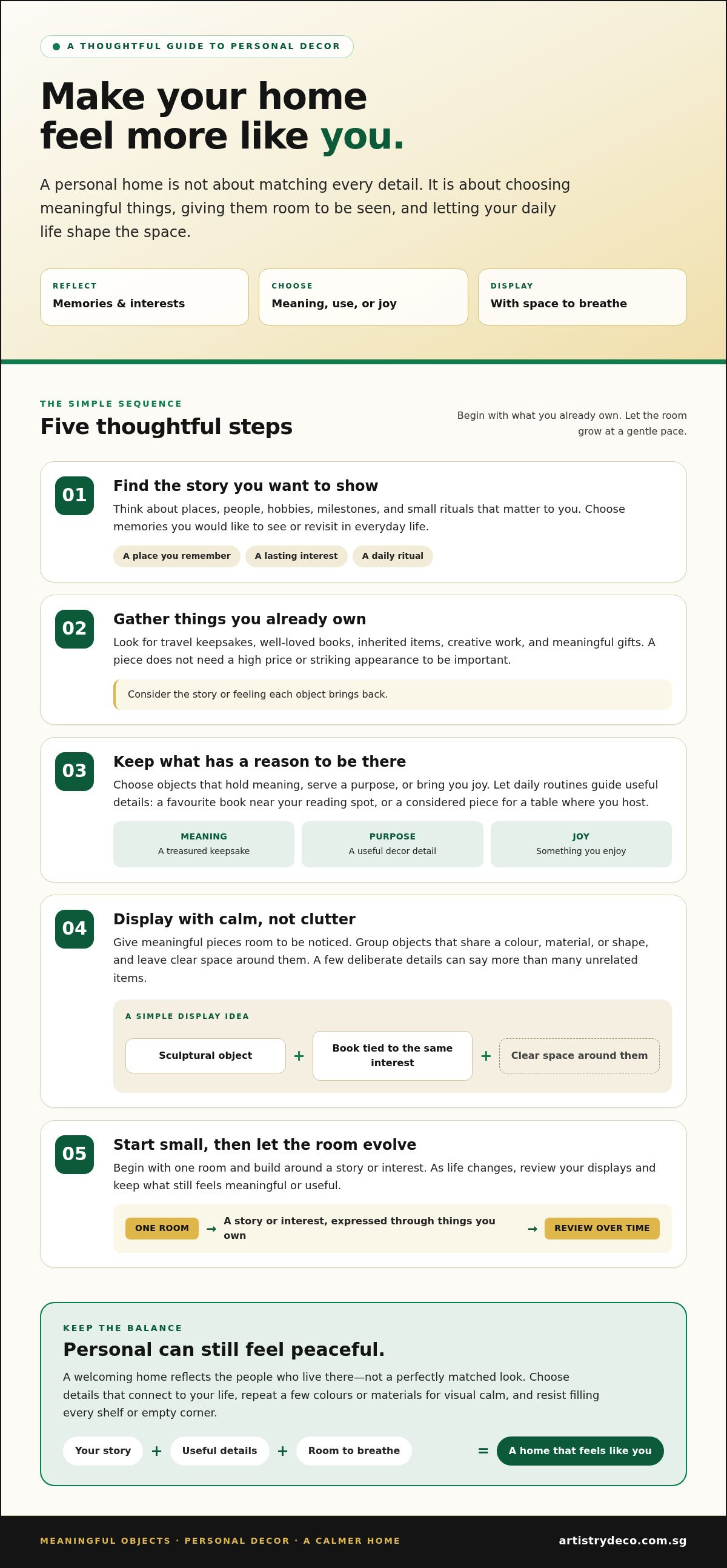
In this article, you’ll find five thoughtful steps for creating rooms that feel more like you. You’ll learn how to edit and display what you own, build a cohesive look around personal stories, and choose distinctive decor that feels welcoming and useful.
Key Takeaways
- A welcoming home reflects the people who live in it, not a perfectly matched look.
- Use memories, interests, and daily rituals to decide which parts of your story you want your home to show.
- Learn how to make your home feel more personal by keeping objects that hold meaning, serve a purpose, or bring you joy.
- Start with one room, choose a story or interest to express, and build around items you already own.
- Review your displays as life changes, keeping what still feels meaningful or useful.
Why a Personal Home Feels More Welcoming Than a Perfectly Matched One
A room can be tidy and well arranged, yet still feel as though it belongs to someone else. Perhaps the colours match and every surface is clear, but nothing hints at the people who live there. If you’re wondering how to make your home feel more personal, start with what the room says about your life, not with a shopping list.
A personal home reflects its occupants’ interests, memories, values, and daily routines. That might mean keeping a book you return to, displaying a small object from a meaningful trip, or using a favourite colour in a detail you see each day. The choice needn’t be expensive, rare, or perfectly styled. Its meaning to you is what gives it character.
Personalisation can begin with one small change, such as moving a treasured object where you’ll notice it or setting aside a surface for something you use and enjoy. It doesn’t require a full room makeover. Nor does it mean copying a trend or buying decor just because an empty corner seems to need something. A considered choice has a reason to be there. An item bought only to fill space may not make the room feel more like yours.
What makes a home feel personal?
Look for visible reminders of what matters to you: a hobby, a place, a person, or a familiar ritual. A collection of books can suggest a lasting interest; a meaningful keepsake can bring a memory back into view; a favourite colour can add a quiet sense of familiarity. As a broad field, interior design includes choices about how a space looks and works, but personal character comes from the details that connect it to the people who use it.
Can a personal home still feel calm and cohesive?
Yes. A few deliberate details can say more than many unrelated purchases. Group objects with a shared colour, material, or shape, and leave clear space around them so each can be noticed. For example, place a sculptural object beside a book connected to the same interest. A vase or candle holder can also be a considered accent. See designer vase and candle-holder decor for one example.
Personal decor is a thoughtful selection of things that reflect your life, not a collection of items chosen to fill every space. Let the room develop at a gentle pace. When each object has a clear place or meaning, your home can feel expressive and restful at the same time.
How to Find the Memories and Interests Your Home Can Reflect
Before moving objects or choosing new decor, take a little time to notice what you want your home to say. Write down places you remember fondly, people who matter to you, hobbies you return to, milestones you value, and small rituals that shape an ordinary day. You’re not planning a display yet. You’re identifying the stories that feel worth keeping close.
Then ask yourself: which memories would I like to see, talk about, or revisit as I move through the day? The answer might be a place you travelled to, a skill you’ve worked hard to learn, or a family moment you treasure. Family and cultural traditions can hold deep meaning, but they’re personal, not universal. Choose references that feel true to your own life rather than assuming your home needs to follow a particular tradition.
This reflection can also help you make your home feel more personal without buying decor to match an imagined version of your life. In an interview about the psychology of home decor, a University of Texas at Austin professor describes displayed items as “identity claims,” or signals of who we are. Think about what you’d like your belongings to express, even if only you know the meaning.
Which objects tell a story about you?
Gather a few things you already own before considering anything new. Look for inherited items, travel mementos, creative work, and meaningful gifts. Beside each one, write a short note about its story or the feeling it brings back. An object doesn’t need a high price or striking appearance to matter. If its meaning isn’t clear to visitors, a brief caption or a simple conversation prompt can invite a story without turning the display into an explanation.
How can daily rituals shape your home’s character?
Notice what you actually do at home. If you read in the evening, keep a favourite book within reach. If you enjoy hosting, choose a useful detail for the table. Music might call for a clear spot for the speaker you use; a quiet pause might be marked by a familiar scent. A candle holder can give that moment a visible place, and votive vessels and candle holders offer one decor example.
Choose details that support your real routines, not a lifestyle you feel you ought to have. Start with what you own, note the memory or habit attached to it, then decide whether it belongs in view, in use, or stored for another time. For questions about a decor item that might suit a personal ritual, you can contact Artistry Deco Shop.
How to Choose Personal Decor Without Making a Room Feel Cluttered
Meaningful objects deserve attention, but displaying every treasured item at once can make a room feel busy. To decide what stays in view, ask whether an object has meaning, serves a purpose, or genuinely pleases you. If it meets none of these tests, consider storing it, passing it on, or finding another use for it.
Picture a shelf with a few well-chosen pieces: a small keepsake, a favourite book, and an object connected to an interest. Each can be noticed. By contrast, a surface crowded with unrelated items may have no clear focal point, so the stories behind individual pieces get lost. Learning how to make your home feel more personal is as much about editing as adding.
How do you balance meaningful objects with visual simplicity?
Choose a link between the objects you want to display. They might share a story, colour, material, or shape. Then leave open space around the piece you want people to notice first. Consider scale too: a larger object may need more room, while smaller pieces can be grouped so they don’t look scattered. Contrast can help, but too many competing colours, textures, and shapes can make a display feel unsettled.
Try arranging the objects, then step back to the room entrance. Ask yourself:
- Can you see the main piece clearly?
- Do the objects feel connected, rather than gathered at random?
- Is there enough clear space for the display to feel restful?
If the arrangement feels crowded, remove one item and look again. You can also rotate meaningful objects over time. Keep some safely stored and bring them out when you’d like a change, rather than expecting every cherished piece to be on display at once.
Which functional decor can express your personality?
Useful objects can carry character without becoming extra clutter. A clock can suit someone who enjoys distinctive design; a globe may reflect an interest in places and travel; a candle can mark a quiet evening ritual. A sculptural object can bring shape and presence to a shelf or table. Artistic stone sculptures are one option to consider when looking for sculptural decor.
A designer vase or candle holder can also be an optional accent, especially if it has a clear place or purpose in your room. Choose it because it suits your taste or routine, not simply because a surface looks empty. When each item earns its place, your personal decor can feel thoughtful, useful, and calm.
A Simple Room-by-Room Plan for Making Your Home Feel More Personal
You don’t need to change every room at once. Choose one that feels generic, unusually bare, or disconnected from how you use it. In a Singapore home, available display space and layouts vary, so begin with the surfaces you actually have instead of following a fixed room plan. A shelf, desk corner, or part of a dining table may be enough.
Pick one story or interest you’d like the room to reflect. Gather a few things you already own that support it, then arrange them alongside the practical items you use every day. Live with the result for a while. If the display gets in the way or feels out of place, adjust it. This gradual approach makes it easier to see how to make your home feel more personal without turning the task into a full room project.
How can you personalise a living room first?
Start with one focal surface or shelf, not the whole living room. Pair a meaningful object with something already used there, such as a book you read, a clock you check, or a candle you enjoy. Keep the arrangement in proportion to the available space and leave enough room for daily use. Functional living room decor can bring character and purpose together.
Before adding anything, check whether the chosen pieces suit the room’s everyday role. A display should sit comfortably among the things you use, not block access or create another surface to manage. If it feels too busy, remove an item and see whether the story still comes through.
How can you carry personal details through other rooms?
Let a theme or material appear again in another room, but vary the objects and their purpose. For instance, an interest in travel might be reflected by a globe on a study desk, while a clock or small sculpture might suit another spot where it can be enjoyed without getting in the way. The aim is a quiet connection, not a repeated display in every room.
Adapt each idea to your home. A compact surface may call for one well-chosen object; a larger shelf may offer room for a small group. Think about how you move through the space, what you do there, and which objects you’ll notice or use. Make one change, then give it time before deciding what else the room needs.
How to Keep Your Home Personal as Your Life Changes
Your interests, routines, and household needs won’t stay the same forever, and your home doesn’t have to stay fixed either. A display that once felt right may no longer suit how you use a room or what you want to see each day. That doesn’t mean you need to replace everything. Often, a small edit is enough to make a familiar space feel in step with life now.
Personalisation is an ongoing practice, not a one-time makeover. Let your home evolve at a pace that feels natural. Keep the objects that still matter and make room for new chapters when you’re ready.
When should you refresh a personal display?
Review a display when your interests shift, your routine changes, or the objects no longer feel useful or meaningful where they are. You might bring out a piece tied to a new hobby, or store a keepsake that you still treasure but don’t want on view right now. Wrap and store meaningful items with care so they’re ready to return when the moment feels right.
Seasonal changes or milestones can offer a reason to refresh a shelf, but they don’t need to become a schedule. Change things when it feels enjoyable or helps the room work better for your household. If a display still feels right, let it stay.
How can curated decor help express your point of view?
A considered object can give a room a new note without asking you to start again. A sculpture might reflect an interest in form or art; a globe could speak to curiosity about places; a clock may suit a daily routine, while a candle can mark a quiet moment at home. Artistry Deco Shop offers decor such as artistic sculptures, globes, clocks, candles, and functional living room pieces. These are options to consider, not a checklist. The right choice is the one that feels at home with your story and the way you live.
Before adding something new, pause to consider what it will bring to the room. Does it connect with an interest, serve a purpose, or give you lasting pleasure? If it complements what you already own, it can become part of the home’s story without making older belongings feel out of place. A personal home is built through choices that continue to feel like yours.
Let Your Home Grow With You
A home feels more welcoming when it reflects the people who live there, not a perfectly matched style. Start by noticing which memories, interests, and routines you’d like to keep close. Then choose a few meaningful or useful objects, give them room to be seen, and build a personal display one space at a time.
You don’t need to replace what you own or finish everything at once. As your life changes, keep the pieces that still feel right and let your home change with you. If you’re considering a new accent, Artistry Deco Shop offers functional decor and artistic objects across several categories, including sculptures, globes, clocks, and handcrafted scented candles.
Learning how to make your home feel more personal is an ongoing process of choosing what matters to you. A thoughtful detail can be a beginning, and your own story can guide what comes next.
Take it one choice at a time, and let your home become more unmistakably yours.
Frequently Asked Questions About Personalising Your Singapore Home
How can I make my home feel more personal without buying new decor?
Start by gathering objects you already own that connect to a memory, interest, person, or routine. Choose a few to display together, such as a favourite book beside a meaningful gift, and leave enough space around them to be noticed. You can also rearrange photographs or collected objects to create a fresh view. These small changes can help you make your home feel more personal without buying anything new.
How do I make my home feel cosy and personal?
Build the room around what helps you feel at ease and how you actually spend time there. Familiar objects, a well-used reading spot, or details you enjoy seeing can make a space feel inviting. Begin with one room rather than trying to change the whole home. Choose a small group of meaningful pieces, then arrange them so the room remains comfortable and easy to use.
Can a minimalist home still feel personal?
Yes. A minimalist home can feel personal when the objects on display are chosen with care. Keep a few pieces with a clear meaning, such as a favourite book, a thoughtful sculpture, or a treasured keepsake, instead of filling every surface. Give each item room to stand out. The result can feel calm and uncluttered while still showing something about your interests, memories, or taste.
What should I display to make my home feel more personal?
Choose objects that reflect your experiences, interests, relationships, or daily life. A meaningful gift, travel memento, piece of art, or useful item you enjoy can each add a personal note. Before displaying something, consider the story it brings and whether you want to see it often. Choose decor because it matters to you, rather than simply because it is popular or seems to match a current trend.
How do I decorate a small home without making it feel cluttered?
Begin with the space you have and select a few objects that matter most. In a Singapore home, available display areas can differ, so choose a suitable shelf or tabletop without crowding it, and leave some surfaces clear. Group items that share a story, colour, or material to make the arrangement feel deliberate. Live with the display before adding more, and remove anything that makes the space harder to use.
How often should I update my home decor?
There’s no set schedule for updating your home decor. Refresh a display when it no longer reflects your interests, routines, or household needs, or when you’d enjoy seeing a different arrangement. Try moving objects you already own or rotating stored pieces into view. You can add something new if it feels meaningful or useful, but you don’t need to follow seasonal trends or replace belongings just to keep your home personal.