
How to Make Temporary Decor Look High-End: A Simple Styling Guide

What if temporary decor could feel polished without permanent changes or a cupboard full of one-use accessories? Removable decorations can look mismatched, cluttered, or flimsy when each piece is chosen on its own. Learning how to make temporary decor look high-end starts with a more deliberate approach: edit carefully, then give each detail room to shine.
Whether you’re styling a Singapore rental, preparing for a gathering, or refreshing a room for the season, you don’t need to buy more. You need a few choices that work together. This guide covers how proportion, colour, lighting, and a well-placed accent can make temporary decor feel cohesive. You’ll also learn how reusable accessories, including sculptural or functional objects, can create a focal point that still feels at home after the occasion.
Key Takeaways
- Learn how to make temporary decor look high-end by styling one focused area instead of trying to change the whole room.
- Use your room’s existing colours as a guide, then repeat a few tones to help temporary accents feel connected.
- Compare focal objects, soft accents, lighting, and tabletop details to choose what suits your space and can be reused.
- Follow a five-step styling process, from assessing the room to editing the final arrangement.
- Keep the display practical by checking stability, leaving surfaces clear, and making sure everyday use still feels easy.
What Makes Temporary Decor Look High-End Rather Than Makeshift?
Temporary styling can feel polished without permanent changes. The difference is not how much you add or spend, but whether each choice belongs in the room. Makeshift decor often gathers unrelated items without a clear plan. Considered temporary decor has a purpose: it suits the space, supports the way you use it, and can be removed when the occasion has passed.
For a Singapore rental living area set up for guests, start with the furnishings and layout already in place. A small arrangement on a side table, perhaps with one sculptural object and a soft accent in a colour already found in the room, can create a welcoming point of interest. Leave clear space for guests to set down a drink. The room feels refreshed, but remains practical.
What does high-end temporary decor have in common?
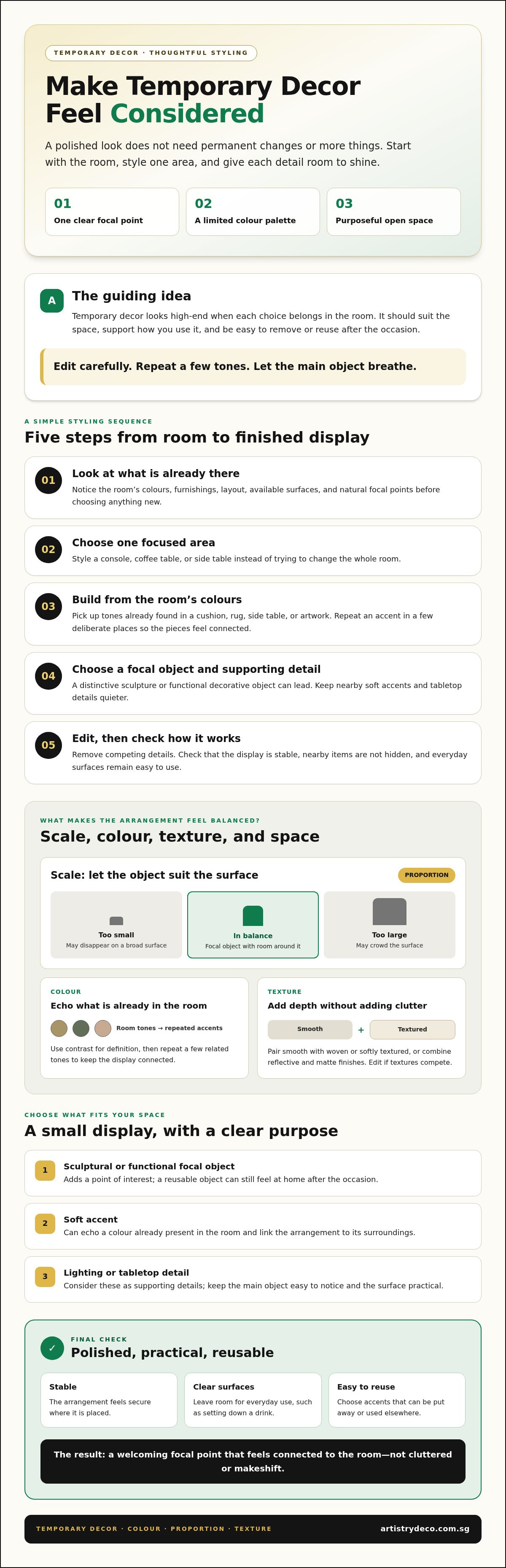
Three choices help an arrangement feel intentional: one clear focal point, a limited colour palette, and purposeful negative space. The focal point might be a distinctive sculpture or a functional decorative object. Keep nearby accents quieter, and repeat a few tones already present in the room so the new pieces feel connected rather than added as an afterthought.
Scale matters, too. A very small accent can disappear on a broad surface, while a large one may crowd it. Texture and finish add depth without requiring more objects. Pair a smooth surface with a woven or softly textured accent for contrast, or use similar finishes for a calmer effect. These choices reflect the fundamental principles of interior design, including balance, proportion, and harmony.
Elevated temporary decor is a small, well-edited arrangement that feels in balance with the room. Restraint gives each piece space to be noticed.
When is temporary styling useful at home?
Temporary decor works well for gatherings, festive occasions, seasonal updates, and rented spaces where you want a fresh look without changing the room’s main features. Removable accents can shift the mood for a dinner with friends, then be put away or reused elsewhere. A decorative vessel or candle-holder piece, for instance, can serve as a considered accent. Explore decorative vase and candle-holder pieces as one example of reusable home accessories.
Begin with what you own. Notice the room’s colours, available surfaces, and natural focal points before choosing anything new. Then style one area, such as a console or coffee table, rather than trying to decorate the whole home. This is the practical heart of how to make temporary decor look high-end: make a few thoughtful choices, place them with care, and stop before the space feels crowded.
How to Make Temporary Decor Look High-End with Colour, Scale, and Texture
Temporary accents feel at home when they respond to the room’s existing details. Look beyond the largest pieces: a colour in a cushion, the finish of a side table, or a tone in nearby artwork can guide your choices. Use contrast to add definition, but repeat one or two tones so the display still relates to its surroundings.
How can a simple colour palette make decor feel more considered?
Choose a small group of colours already present in the room, then let one accent tone appear in a few deliberate places. Repeating it in a soft accent and a tabletop detail creates a quiet link without making every object match. No colour automatically signals luxury. What matters is how the shades relate to each other and to the room.
In a compact Singapore apartment, you might pick up a tone from an existing rug and echo it in a cushion and a small object on a nearby table. Keep the remaining accents restrained. This carries the colour across the space without introducing a whole new scheme or overwhelming the furnishings.
How do proportion and material affect the finished look?
Think of the surface as a frame. One appropriately scaled decorative sculpture or vessel can establish a focal point on a console, while many small accents may break up the surface and compete for attention. Leave room around the main object, and check that its height works with nearby items rather than hiding them or appearing lost beside them.
Material contrast can make a simple arrangement more engaging. Pair a smooth finish with a woven or textured accent, or use a reflective detail alongside a matte surface. Then edit: too many competing textures can make the display feel unsettled. If you’re considering a sculptural accent, browse the brass sculpture decor category for an example of an object that can add shape and material contrast.
To practise how to make temporary decor look high-end, adjust the colours, scale, and textures as a group, then remove anything that distracts. For questions about decorative objects, contact Artistry Deco Shop.
Which Temporary Decor Choices Create the Biggest Visual Difference?
The most effective choice depends on the room, the occasion, and the furnishings already in place. A gathering may call for a simple table arrangement, while a living area that feels bare may benefit more from one strong focal object. You don’t need to use every kind of decor. Choose the option that solves the room’s main styling need, then give it space to work.
| Choice | Visual role | Ease of removal | Potential for reuse |
|---|---|---|---|
| Focal object | Creates a clear point of interest and anchors the arrangement. | Usually easy to move if it sits on a surface without fixing. | Can shift between a console, shelf, or living-room display. |
| Soft accents | Add colour and texture, helping a space feel welcoming. | Simple to fold, store, or swap out. | Can be brought back for another occasion or used in a different room. |
| Lighting | Changes the feel of an area and draws attention to a display. | Depends on the fitting. Choose an option that doesn’t require a permanent change. | Can be reused wherever it suits the room and setup. |
| Tabletop styling | Gives a dining or coffee table a composed, occasion-ready look. | Easy to clear and rearrange. | Individual objects can return to everyday display. |
Should you start with a focal object or several small accents?
A focal object is a useful starting point when a surface needs definition. Choose one that feels in scale with its surroundings, then leave clear space around it. This keeps the display legible and avoids the scattered look that can come from adding small items without a plan. For ideas on using sculptural pieces in a living area, see this guide to sculptural living room styling.
A small group of related accents can work well on a table set for guests, especially if the items share a colour, material, or purpose. Keep the grouping compact and leave room for the table’s everyday use. The aim is a deliberate arrangement, not a collection of everything you own.
Which accessories can work beyond one occasion?
Vessels, sculptures, clocks, and scented candles can move between an occasion display and everyday use. A vessel might sit at the centre of a table for a gathering, then return to a shelf afterward. A sculpture can anchor a side table year-round, while a clock adds both function and visual interest. Explore decorative vase and candle-holder ideas as one example of an accent that can be styled in different ways.
To make temporary decor look high-end, select the category that best suits your space, then edit the arrangement until it feels balanced. One thoughtful choice is often enough.
How to Style Temporary Decor in Five Clear Steps
A polished setup starts with a plan, not a shopping list. Work on one surface or area at a time, such as a console, coffee table, or dining table. This keeps the task manageable and helps temporary decor feel connected to the room instead of spreading into every corner.
- Step 1: Assess the room. Look at the area from the entrance and from the seats you use most. Note its colours, materials, existing objects, and the space you need to keep clear for daily use.
- Step 2: Choose a purpose. Decide what the display needs to do. You might want to welcome guests, mark a festive occasion, or add a seasonal change. Name one area to style and the mood you want it to create.
- Step 3: Set a palette. Pick a few tones that already appear in the room. Before adding anything, gather items you own that fit the mood. Testing them together can show what works and what the arrangement still needs.
- Step 4: Place the accents. Group related pieces on the chosen surface. Try a clear focal point with supporting objects nearby, adjusting their height and position so the group feels balanced. Keep enough open space for the display and the surface to remain useful.
- Step 5: Edit the result. Step back and check the arrangement from the doorway and usual seating positions. If it feels busy, distracts from the room, or lacks a clear focus, take one item away and look again.
How do you plan a temporary decor setup before placing anything?
Begin by asking three questions: What’s the occasion? Which single area will you style? What mood should it set? Then take stock of the colours, materials, and objects already in view, including anything you want the arrangement to leave unobstructed. In a Singapore rental or compact home, the best spot may be a small table or shelf, but let your actual layout guide the choice. Try a few items you already have before deciding whether anything is missing.
How can you make the final arrangement feel intentional?
Look for a clear relationship between the objects, whether they share a tone, finish, or purpose. Leave space around the group so it doesn’t feel squeezed onto the surface. Shift pieces until their heights and positions feel balanced, then view the arrangement from more than one angle. A display that looks composed up close should also make sense from the room entrance and your usual seat.
These checks are central to how to make temporary decor look high-end: choose with purpose, place with care, and edit with a light hand.
Keep Temporary Decor Polished, Practical, and Reusable
A temporary display should look composed while it’s in place and be easy to put away when its moment has passed. Before settling on an arrangement, check that each object sits securely and won’t interfere with doors, walkways, or the way you use a table. In a rental, plan where removable accents will be stored so they’re ready for another occasion without becoming clutter.
After a gathering or seasonal refresh, return useful pieces to everyday display rather than treating them as one-time decorations. A decorative object might move from a party table to a shelf, while a clock or sculpture can take a more lasting place in the room. Choosing objects with more than one possible use helps keep the display adaptable.
Can temporary decor still feel personal and distinctive?
Yes. A meaningful object or a material you enjoy can give a display character without requiring a large group of accessories. A sculptural accent, for example, can bring shape and interest to a room during an occasion, then remain part of the everyday setting. For an optional category example, explore brass sculpture decor and consider how a sculptural form might suit your existing pieces.
Where can readers find decor inspiration suited to their home?
Use inspiration as a prompt, then adapt it to your room’s scale, furnishings, and routines. A display that looks appealing in a photo may need fewer objects or a different placement to work well in your own home. If you’re exploring sculptural accents, this guide to modern artistic sculpture styling offers ideas to consider at your own pace.
Artistry Deco Shop serves customers in Singapore and offers decor categories that include sculptures and decorative objects. If you’d like to explore possible accents for your space, ask about the range.
Make Your Next Room Refresh Feel Considered
A polished temporary display doesn’t need permanent changes or a crowded surface. The difference comes from choosing accents with a clear purpose, keeping their scale in balance with the room, and editing until the arrangement feels calm and cohesive.
As you plan your next refresh, begin with one area and work with the furnishings you already have. A focused palette and a few well-placed details can make a rental feel ready for guests or give a familiar room a fresh mood. That’s the heart of how to make temporary decor look high-end: thoughtful choices, not more things.
For inspiration, Artistry Deco Shop serves customers in Singapore with categories that include artistic sculptures, decorative objects, clocks, globes, and handcrafted scented candles. Choose pieces that suit your space and can continue to bring character to your home beyond a single occasion.
Take your time, trust your eye, and let each detail earn its place. A little restraint can make a room feel beautifully your own.
Frequently Asked Questions
How do you make temporary decorations look expensive?
Make temporary decorations look considered by giving them a clear purpose and choosing pieces that suit the room. Start with one focal point, then add only details that support it. Use colours already found in your furnishings, and leave space around the display. The key to how to make temporary decor look high-end isn’t spending more; it’s choosing and placing accents with care so the arrangement feels balanced.
Can temporary decor look high-end in a small apartment?
Yes, temporary decor can look polished in a small Singapore apartment if it stays in scale with the space. Choose one area, such as a shelf, dining table, or side table, rather than decorating every surface. Keep useful areas clear, and avoid pieces that block movement or compete with daily tasks. A small, well-edited display can add character without making the room feel crowded.
What colours make temporary decor look more polished?
No single colour guarantees a polished look. Instead, choose tones that already appear in your room, such as a colour from a rug, artwork, or cushion. Repeat one accent in a few considered spots to connect the display, and use contrast sparingly to add interest. In a Singapore home with an open living and dining area, repeating a shared accent can help the rooms feel linked.
How many decor pieces should you use for a temporary display?
There’s no fixed number; the right amount depends on the surface, the size of the objects, and how you use the room. Begin with one focal piece, then add a small number of related accents only if they improve the arrangement. Leave enough room for the surface to work as intended. If the display feels busy or has no clear focus, remove an item and reassess.
How can renters decorate without making permanent changes?
Use freestanding, easy-to-move accents, such as decorative objects, soft furnishings, or tabletop pieces, to refresh a room without altering its main features. Don’t assume every removable product is suitable for every surface. Before using adhesive hooks or similar items, check the product instructions and your rental terms, and test carefully where appropriate. In Singapore rentals, keeping the setup simple can make it easier to adapt or pack away.
How do you make temporary decor work for a party and everyday use?
Choose accents that can return to a useful place after the event. A decorative object can anchor a party display on a table, then move to a shelf or side table for everyday use. Keep the gathering setup easy to clear, especially where guests need space for food or drinks. In a Singapore home, a reusable accent can refresh a familiar room without making the event setup feel like a separate, one-use scheme.
What should you avoid when styling temporary decor?
Avoid adding unrelated pieces simply to fill a surface, choosing accents that feel too large or too small, and blocking areas you use every day. Too many colours, finishes, or competing focal points can make a temporary display feel unsettled. Take care with stability, especially on busy tables or narrow shelves. Before guests arrive, view the setup from the entrance and usual seating spots, then remove anything that distracts.