
How to Blend Your Partner’s Decor Style With Yours

What if the best way to bring your decorating styles together is to stop choosing between them? Learning how to blend your partner's decor style with yours isn’t about one person giving in. It’s about creating a shared visual direction where treasured belongings and different tastes can sit comfortably side by side. That can feel tricky when you disagree about colours, materials, or what deserves a place in your home.
You can create a home that feels like both of you without making either person feel overlooked. Start by talking about the mood you want to create, then find details you both enjoy. A calm colour palette, repeated textures, or one expressive focal piece can help very different styles feel connected.
This guide will show you how to make joint choices, place sentimental items, and bring balance to shared spaces. Whether you live in a compact HDB flat or a condominium in Singapore, thoughtful accents, from functional decor to sculptures and clocks, can add character without crowding the room. The aim isn’t a perfect match. It’s a home that welcomes both of you.
Key Takeaways
- Define a shared decor direction by discussing what matters to each of you, while leaving room for personal touches.
- Use repeated colours, shapes, and textures to help different furniture and decor styles feel connected.
- Choose what belongs in shared rooms by weighing each item’s meaning, daily use, visual fit, and flexibility.
- Learn how to blend your partner's decor style with yours through a simple process of gathering references, setting priorities, testing ideas, and refining the look.
- Consider whether a functional or sculptural accent can add shared character without making the room feel forced or crowded.
Why blending your partner’s decor style starts with understanding what matters
Different tastes are normal. One of you may prefer clean lines and open surfaces, while the other is drawn to rich materials, collected objects, or bold details. A shared home doesn’t need to erase either person’s identity. The goal of how to blend your partner's decor style with yours is to make considered choices together, with space for both shared preferences and individual expression.
Before discussing what to buy or move, sort your priorities into three groups: fixed needs, meaningful belongings, and flexible preferences. Fixed needs might include clear surfaces for daily tasks or storage that suits your household. Meaningful belongings carry a story, so discuss their place with care. Flexible preferences, such as a favourite accent colour or decorative shape, may be easier to adapt from room to room.
A shared visual language is a small set of colours, materials, or shapes that helps different tastes feel at home together. It gives you a way to make choices without requiring every item to match. The principles of design, including balance, scale, and contrast, offer useful ways to think about how objects relate within a room.
What does a blended decor style look like?
Harmony can come from repeating one or two details, such as a warm wood tone, rounded shapes, or a similar level of visual detail. Matching every object isn’t needed. A few connecting elements can make the room feel intentional. For example, a calm neutral base can give a more expressive sculptural accent room to stand out. A brass sculpture can add a distinctive material and create a focal point in a shared space.
How to talk about taste without turning it into a contest
Start with what each person enjoys and how you want the room to feel: restful, lively, uncluttered, or welcoming. Ask what sits behind a strong like or dislike. A preference may be tied to comfort, a memory, or the way a room is used. That context can reveal common ground beneath different style labels.
Keep feedback focused on the object and the room, not the person who chose it. Instead of saying, “Your taste is too busy,” try, “I’m finding it hard to relax with so many details in this corner.” Then consider a smaller grouping or a different location. Curiosity makes it easier to shape a home where both partners feel seen.
How colour, shape, texture, and scale can bring two decor styles together
Different pieces don’t have to look alike to belong in the same room. A few repeated visual cues can connect them, while contrast lets each partner’s taste keep its character. Colour, shape, texture, and scale are practical tools for creating that balance. In a Singapore home, a considered arrangement can help a shared space feel settled rather than crowded.
Use a shared palette without making every item match
Choose a small group of colours you can both live with. A shared neutral, such as warm beige or soft grey, can link pieces with different styles. A recurring accent colour can do the same. For example, deep green might appear in a print, a cushion, and one decorative object. The pieces remain distinct, but the repeated colour gives the eye a path between them.
Check colours in the room itself before settling on a palette. Daylight and artificial light can change how a shade looks, so compare samples or objects where they’ll actually sit and at different times of day. This helps you choose a colour direction based on your home’s light, rather than how a shade looked on a screen or in a shop.
Balance contrasting shapes, textures, and statement pieces
Clean lines and sculptural forms can work together: one brings order, while the other adds movement. Texture creates another point of connection. Smooth stone beside warm wood, or the soft shine of brass alongside a matte surface, brings contrast without requiring more colour. Materials such as brass, bronze, marble, and petrified wood each have a distinct visual feel, so give a standout piece enough space to be noticed.
Scale matters, too. A bold object carries more visual weight than several small accents grouped nearby. If one partner prefers restrained decor and the other loves statement pieces, try giving a single focal object space around it instead of placing several bold items together. For ideas on choosing a distinctive focal point, explore this guide to modern artistic sculptures.
Repeat one or two visual cues to make unlike pieces feel related. This makes how to blend your partner's decor style with yours practical: agree on a colour, shape, or material, then let the rest of the room show its range. Artistry Deco Shop offers artistic sculptures and other decor accents that can bring a chosen material or shape into a shared space. Browse the brass sculpture collection for one example.
How to decide which furniture, keepsakes, and decor belong in shared rooms
Choosing what stays in a shared room can feel personal, especially when furniture or keepsakes carry memories. Rather than deciding whose taste wins, consider each item by four measures: its meaning, how often it’s used, how well it fits the room, and whether it can serve another purpose or move elsewhere. This gives both partners a fair way to discuss belongings without treating every choice as a verdict on the person who made it.
How to handle sentimental pieces and existing furniture
Before moving or sorting anything, give each person a chance to point out items with personal meaning and share the story behind them. Then consider placement. A treasured object might suit a bedroom or study better than a busy living room. Several small keepsakes can feel more considered when displayed together on one shelf instead of spread across every surface.
If a decision feels too charged, pause before making an irreversible change. Set the item aside safely if you have room, then revisit it after the conversation has cooled. This can be especially useful when deciding how to blend your partner's decor style with yours in a compact Singapore home, where keeping shared areas clear can matter as much as making room for personal objects. A world globe, for example, may suit a study or work desk better than a living room shelf.
What if one partner loves a piece the other dislikes?
Separate two questions: whether the item matters enough to keep, and where or how it should be displayed. Try a less prominent spot, or place it in the room for an agreed trial period. Then judge how it feels in daily use instead of debating an imagined result. For ideas on choosing accents that balance purpose and visual appeal, read this guide to functional living room decor.
A simple shared list can make choices feel less like a contest:
- Keep: It matters to one or both of you, serves a purpose, or fits the room well.
- Relocate: It’s valued, but another room or a grouped display would suit it better.
- Reconsider: It has little meaning or use, doesn’t fit the space, and neither partner wants to find another place for it.
Use the list as a prompt for discussion, not a final scorecard. A useful item may earn a place even if it isn’t a shared favourite, while a meaningful keepsake may need a more thoughtful display. Artistry Deco Shop’s functional living room decor and home accessories can help add character and purpose to a shared space. Browse the world globe collection for an example of a decorative accent suited to a desk or study.
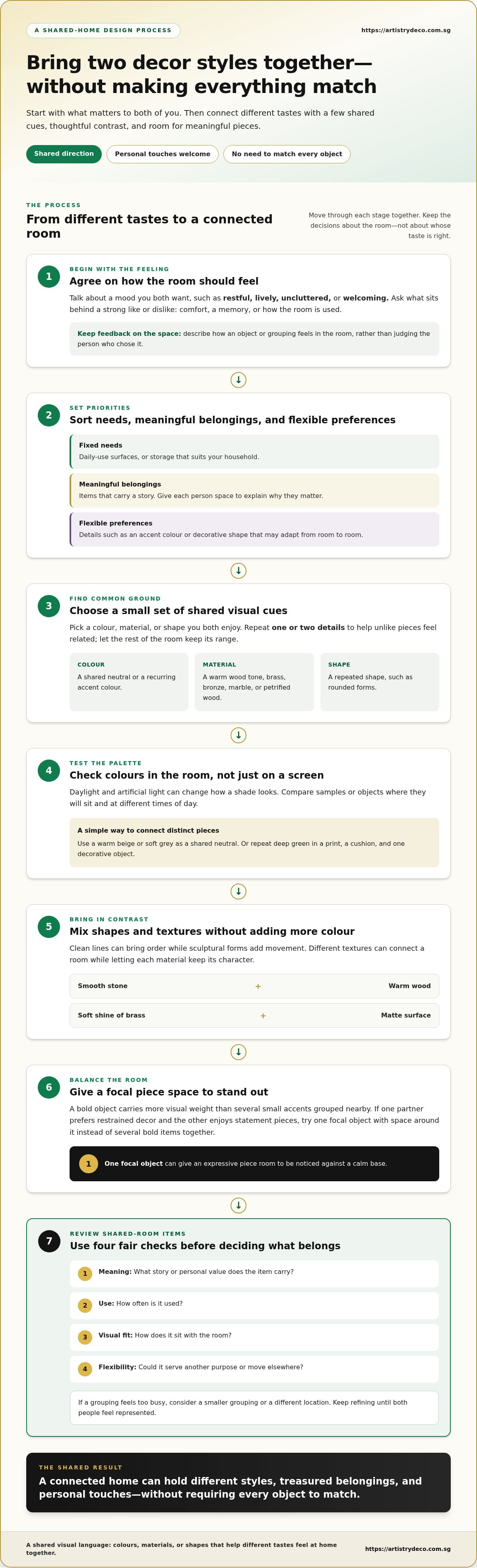
A step-by-step plan for blending decor styles in a shared Singapore home
A clear process can turn different preferences into choices you can both understand and revisit. Rather than starting with a style label or a shopping list, work from real examples and the way you use your home. This makes how to blend your partner's decor style with yours feel less like guesswork and more like a series of shared decisions.
Agree on a shared direction before shopping
Begin with inspiration, then connect it to your everyday needs. Move through these steps together:
- Collect references. Each partner chooses a few rooms or objects they like. Point out the details that appeal to you, such as colour, shape, material, or the feeling of the space. Focus on the examples, not whether they fit a particular style name.
- Name what you share. Look for overlap. You might both prefer warm colours, natural materials, calm rooms, or distinctive shapes. Choose a few common ideas to guide decisions, while keeping space for individual favourites.
- Set the room’s needs. Decide what the space must do before choosing accents. In a Singapore home, consider the room’s actual dimensions, where you need storage, and how people move through it. A living room used for relaxing and hosting, for example, may need clear walkways and usable surfaces as well as visual character.
- Choose accents with the room in mind. Once the direction is clear, consider whether a decorative object adds the colour, material, or character you want without taking over the space. Artistry Deco Shop’s designer vase and candle-holder collection offers options for adding a decorative detail to a room.
- Test, then refine. Try movable objects or temporary arrangements before settling on placement. Check sightlines, walkways, and whether tables and shelves still work for daily use. If a grouping feels crowded, remove or move one item, then review the balance again.
Test the plan in the room before committing
Seeing a choice in place can reveal what a reference image can’t. Stand at the room entrance, look from the main seating area, and notice whether an object draws the eye without blocking a view or interrupting movement. In a compact room, check that decor leaves enough usable surface for everyday needs. Refine gradually, keeping the choices that support both your shared direction and the way you live.
Finish the shared look with meaningful accents, not forced matching
A shared room doesn’t need a set of matching accessories to feel complete. One well-chosen accent can connect different tastes through its colour, material, shape, or role. Before adding anything new, look at what you already own. A clock, a small sculpture, or a candle may bring together two preferences if both of you like its presence and it suits the room.
Choose shared accents that offer both character and purpose
Consider what the object will contribute. A useful decorative piece, such as a clock, has a clear role as well as visual character. A globe might bring an expressive shape to a study or work area, while a candle can add a considered detail to a dining table. A purely ornamental sculpture may not serve a daily task, but it can still earn its place if you both enjoy looking at it and it gives the room a focal point.
Think about the object’s room role, visual presence, and shared appeal. Does it suit how you use the space? Does its size or shape feel balanced among nearby items? Can each of you see something you like in it, even if for different reasons? In a compact Singapore home, also consider whether it leaves the surface useful and the room easy to move through.
You don’t need to buy a new accent to make progress. Try moving an object you already own into a shared area, or group a few personal pieces on one shelf or table. If you decide to explore something new, Artistry Deco Shop offers functional decor and artistic sculptures that can serve as accents. Choose a piece because it suits your shared space, not because you feel you need to buy something to complete the look.
Let the room evolve as your shared taste develops
Give an arrangement time to settle. Live with it through ordinary routines, then talk about what feels right and what doesn’t. An object that looked striking at first may feel too prominent in daily use; another may become a natural part of the room. Adjust its position or edit the display before deciding that larger pieces need to change.
That gradual approach is at the heart of how to blend your partner's decor style with yours. A room can grow with you, reflecting the details you choose to share and the objects that still feel personal. Thoughtful selection matters more than instant perfection.
Create a Home That Feels Like Both of You
A shared home doesn’t need one person’s style to take over. Start by understanding what matters to each of you, then use a few repeated colours, shapes, or materials to help different pieces feel connected. For keepsakes and decor, consider meaning, daily use, and how each item fits the room before deciding whether to keep, move, or rethink it.
The process of how to blend your partner's decor style with yours can unfold over time. Test arrangements in your actual space, keep walkways and everyday needs in mind, and refine the room before making bigger changes. A considered accent can bring character and purpose, whether it’s something you already own or a piece you choose together.
Artistry Deco Shop offers functional living room decor and home accessories, including artistic sculptures, clocks, globes, and handcrafted scented candles. Its selection includes pieces made from materials such as brass, bronze, marble, and petrified wood. Explore these decor options as you shape a home that reflects both of you.
With patience and thoughtful choices, your home can become a welcoming expression of the life you’re building together.
Frequently Asked Questions
How do you combine two different decorating styles?
Combine the styles by choosing a few shared cues, such as a colour, material, or shape, then repeat them across different pieces. To work out how to blend your partner's decor style with yours, agree on what each room needs to do, from relaxing to dining or storage. Try objects you already own in the space, see how they look and function, then adjust gradually instead of expecting a finished look at once.
Can two contrasting decor styles look good in one room?
Yes. Contrasting styles can feel balanced when the room has a few clear links. Repeat a colour to connect distinct pieces, and balance the visual weight of a large, bold object with simpler items or open space. Mix textures, such as smooth stone with a softer surface, to add depth without relying on more decoration. A clear focal point helps guide the eye and gives the room a sense of order.
What should couples do with furniture one partner dislikes?
Start by listening to why the piece matters to one partner and what concerns the other. Consider whether it can move to another room, sit in a less prominent spot, or work in a temporary arrangement before either person decides. Then weigh its use, meaning, and fit with the shared space. If neither partner feels comfortable with it there, agree on a fair next step rather than treating the choice as a win or loss.
How do you decorate a shared home when one partner is minimalist?
Keep displays edited and give each chosen object room to be seen. Agree on how much visual detail feels comfortable, such as keeping a shelf to a small group of meaningful pieces rather than filling every surface. Useful accents, like a clock or a candle, can add character while serving a purpose. A minimalist partner can also help choose where expressive objects have the most impact.
How do you make a shared home feel personal to both partners?
Include belongings that matter to each person, then give them thoughtful places in shared rooms. A keepsake might sit on a shelf, while a personal artwork or object can bring character to a desk or living area. Look for a balance in visibility, not an exact match in the number or type of items. Shared spaces should reflect both people, while still leaving room for practical use and open surfaces.
Should couples choose a decor style before moving in together?
Discuss your needs and the rooms you both respond to before moving in, but you don’t need to settle on one strict style label. Share images of spaces and objects you like, then name the details behind your choices, such as colour, comfort, storage, or natural materials. These common points can guide decisions as you arrange the home. Your shared look can take shape over time as you learn how each space works.
How can couples blend decor styles in a small Singapore home?
Begin with the home’s actual layout rather than assuming every HDB flat or condominium has the same needs. Consider how each room is used, where storage is needed, and whether daily routes remain clear. Choose accents with care, keeping surfaces usable and avoiding items that crowd walkways. A single object that both partners enjoy may bring enough character to a compact space without requiring a larger change.