
Eliminate Household Odors Effectively

Baking soda can help absorb household smells, but it works best after you remove the source of the odor. To eliminate household odors effectively, give it at least a few hours on carpets or upholstery before vacuuming, while stronger smells may take 24-48 hours to fade with natural deodorisers. The right method depends on what’s causing the smell and where it has settled.
A lingering kitchen odour, musty fabric and a bin that smells of spoiled food each call for a different approach. Masking a smell may offer brief relief, but cleaning its source and letting fresh air circulate are more useful first steps.
This guide explains when baking soda may help, how activated charcoal and other absorbers work, and how to clear spoiled-food smells from bins and refrigerators. You’ll also learn what affects how long odours take to fade, so you can choose a method suited to the smell and your home.
Key Takeaways
- Use baking soda on carpets and upholstery, then vacuum it away; keep it away from aluminium surfaces.
- Choose an odour absorber to suit the room, and refresh coffee grounds or activated-charcoal pouches as needed.
- For rotten-food smells, remove the source, clean the bin or refrigerator, and let fresh air circulate.
- Allow natural deodorisers time to work, since the odour’s strength and where it has settled affect how quickly it fades.
1. Does baking soda get rid of smells?
Yes, baking soda can absorb some household odours, especially musty smells in carpets and upholstery. Sprinkle it over dry fabric, leave it for a few hours or overnight, then vacuum thoroughly. For a stale-smelling rug, gently work the powder into the fibres before vacuuming. Baking soda absorbs odours but does not remove what is causing them, so clean spills and other sources first.
On a fabric sofa or mattress, test a small, hidden area before applying baking soda more widely. Keep the powder dry, since residue can be harder to remove if it gets damp. For musty-smelling wood furniture, place a bowl of baking soda inside or nearby for a few days. For kitchen or bathroom drain smells, baking soda or baking powder can be used as part of drain cleaning.
In the refrigerator, place an open container of baking soda toward the back to help absorb lingering food odours. Replace it every few months, and promptly clean spills or spoiled food. Baking soda cannot eliminate an ongoing source, so wipe shelves and drawers before relying on an absorber. Keep the powder off aluminium surfaces, which it can react with and tarnish.
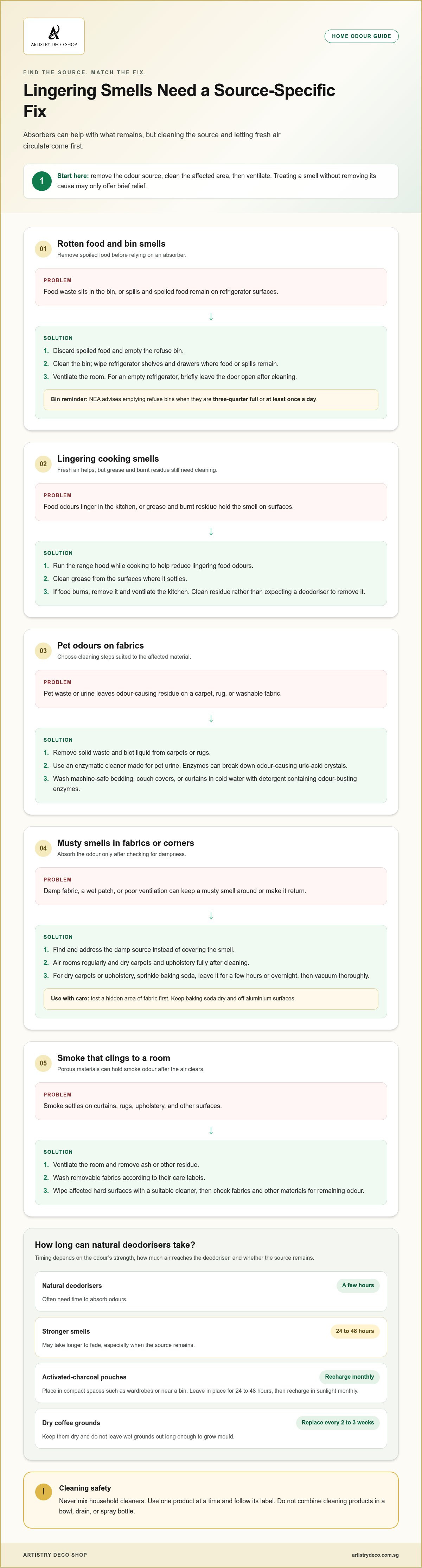
For odour treatment, never mix household cleaners. Use one product at a time and follow its label. Do not combine cleaning products in a bowl, drain or spray bottle.
Singapore’s humid conditions can make damp fabrics and poorly ventilated corners more prone to musty smells and mould. Air rooms regularly, dry carpets and upholstery fully after cleaning, and address moisture instead of covering the smell with baking soda. If a musty odour returns, look for a damp source before repeating the treatment.
2. Capturing odors with activated carbon, coffee grounds, kitty litter, and plants
There isn’t one best absorber for every smell. Baking soda suits enclosed spaces and fabrics, while activated charcoal pouches can help with room odours. Vinegar and water mixed at a 1:2 ratio can be set in bowls to absorb household odours. Choose based on where the smell lingers and whether you want to absorb it or add another scent.
Activated-charcoal pouches are useful in compact spaces such as wardrobes or near a bin. Leave them in place for 24-48 hours, then recharge them in sunlight monthly. Coffee beans in trays add a noticeable coffee scent while masking settled odours. Dry coffee grounds can also help; replace them every 2-3 weeks, and don’t leave wet grounds out long enough to grow mould.
Kitty litter can act as a simple absorber in a small, stable tray near a source of damp or stale odour. Keep it dry, replace it when it becomes damp or smells, and position it where pets and children cannot scatter or touch it. Houseplants may do little to reduce odours. Overwatering can encourage mould in the soil, adding a musty smell, so check the potting mix and let it dry between waterings.
An air purifier with an activated-carbon filter adsorbs odours from the air. A larger amount of activated carbon in the filter improves performance. Some purifiers combine carbon with HEPA filtration: HEPA filtration captures 99.9% of particles as small as 0.1 micron, including fine particles such as pet fur and dander. Run the purifier on a low setting to help reduce pet smells, and keep its filter maintained according to the maker’s instructions. These devices treat airborne odours and particles, not residue on surfaces, so clean the source as well.
3. Removing rotten-food smells from bins and refrigerators
Remove the source first, then ventilate the room before treating any lingering smell. In the kitchen, discard spoiled food, clean the bin, and wipe refrigerator shelves and drawers. The National Environment Agency (NEA) advises emptying refuse bins when they are three-quarter full or at least once a day. Regular emptying and wiping help stop rubbish smells from building up.
For a refrigerator, check containers, drawers and shelves for spills or spoiled food. Clean affected areas and briefly leave the door open while the appliance is empty. In kitchens and bathrooms, remove the odour source, ventilate and clean drain areas. Baking soda or baking powder can be used in drain cleaning. Never combine household cleaners, including vinegar and other products.
Cooking smells call for fresh air and source control. Run the range hood while cooking to help reduce lingering food odours, and clean grease from surfaces where it settles. If food burns, remove it and ventilate the kitchen. A deodoriser may help with the remaining smell, but it will not remove grease or burnt residue.
For pet odours on carpets or rugs, remove solid waste and blot liquid before using an enzymatic cleaner made for pet urine. Enzymes can break down odour-causing uric-acid crystals. Wash machine-safe bedding, couch covers or curtains in cold water with laundry detergent containing odour-busting enzymes. For persistent body odours on washable fabrics, follow the garment label and wash the item promptly.
Smoke can cling to porous materials such as curtains, rugs and upholstery. Ventilate the room, remove ash or other residue, and wash removable fabrics according to their care labels. Wipe affected hard surfaces with a suitable cleaner, then check whether the smell remains in fabrics or other materials. Compost-bin odours may ease if the bin is kept in the fridge or freezer, or fitted with a charcoal filter.
4. How long natural deodorisers take to work
Natural deodorisers usually need a few hours to absorb odours. Stronger smells may take 24-48 hours to fade. These timeframes depend on the odour’s strength, how much air reaches the deodoriser, and whether the source remains. A musty corner with a small, stale smell can respond sooner than a room where cooking odours linger across several surfaces.
Placement matters. Put an absorber close to the affected area, such as beside a bin or inside a wardrobe, rather than across the room. Keep the space ventilated so fresh air can circulate. In Singapore’s humid climate, damp fabric or a wet patch can hold a musty smell, so dry the material and address moisture before expecting an absorber to help.
Odour absorbers act on smells in the air, but they do not remove every source. Spoiled food, grease, smoke residue and pet accidents can leave odour-causing material behind. Clean the affected surface first, then use an absorber for any lingering smell. An air purifier can capture airborne particles, while an activated-carbon filter adsorbs odours as air passes through it.
After placing a deodoriser, note the smell, ventilate the room and assess it again after a few hours. If a strong odour remains, inspect nearby fabrics, drains, bins or damp areas rather than adding more fragrance. Bacteria and residue from organic spills may continue producing smells until the source is cleaned. Simply waiting longer will not solve the problem.
For a lasting result, match the method to the source. Remove spoiled food from a refrigerator, wash washable fabric or clean residue from a hard surface before allowing time for the odour to fade. This helps you distinguish a slow-acting deodoriser from a source that has not been treated.
Artistry Deco Shop: Functional Living Room Decor
Artistry Deco Shop offers premium functional living room decor for spaces where practical upkeep and considered design belong together. After cleaning the source of household odours and airing the room, choose statement pieces that add character without masking lingering smells. Functional dining table centrepieces and modern artistic sculptures can bring focus to a living area, while world globes suit study and work desks.
These pieces complement a room’s character, but they do not replace cleaning, ventilation or odour absorbers. When you’re ready to refine your space with functional decor and sculptural accents, explore Artistry Deco Shop’s collection.
Visit artistrydeco.com.sg to explore the collection.
Make room for a more considered home
With a steady cleaning routine and a method suited to each source, you can eliminate household odors effectively while creating a calm, personal space. Once you have dealt with the smell, consider how the room’s objects, textures and focal points shape its atmosphere. A well-chosen decorative piece can bring intention to a space, complementing good upkeep rather than replacing it.
Artistry Deco Shop offers Functional Living Room Decor, Functional Dining Table Centerpieces and Modern Artistic Sculptures. These premium pieces bring visual character to living and dining spaces, balancing form and function. Choose accents that suit how you use the room and the mood you want it to convey.
Let each considered choice help create a home that feels fresh, welcoming and distinctly yours.
Frequently Asked Questions
Does baking soda get rid of smells?
Yes, baking soda can absorb some mild household odours, though it will not address every smell. For a stale cupboard, place a small open dish on a stable shelf, away from stored items that could spill into it. If the odour comes from a visible stain or residue, the powder alone will not clean it. Choose a method suited to the surface and the source.
Does vinegar neutralize odors?
Vinegar is sometimes used as a household deodoriser, but it is not a substitute for addressing the source of an odour. Treat it as an absorber, not a spray for every material. A bowl keeps the liquid away from delicate finishes, while direct application can affect some surfaces. Its sharp scent may also linger for a while.
How to remove bad smells?
To eliminate household odors effectively, pinpoint where and when the smell appears. Note whether it gets stronger after cooking, doing laundry or opening a cupboard, then inspect nearby items and surfaces. Check less visible spots, such as the underside of a bin lid or the folds of a reusable shopping bag. This gives you a more precise target than freshening the whole room.
Sources of bad odours: How do they arise and why do they persist?
Bad odours can come from food, smoke, dampness or everyday household use. They may seem to disappear while a room is open, then return after it has been closed. Fabrics, storage spaces and enclosed corners can hold smells, making a quick change in room fragrance feel temporary. Tracking the pattern can help identify the likely source.
What are the most effective ways to eliminate common household odors?
The best approach depends on where the odour is coming from. For smells in room air, an air purifier with an activated-carbon filter can adsorb odours. A purifier with HEPA filtration also captures airborne particles. If the smell is linked to a particular item, focus on that item instead of treating the entire home. To eliminate household odors effectively, match the method to the material.
How do you remove smoke, mould, and musty odors safely?
For a musty-smelling book, place it in an airtight bag in the freezer for 72 hours. After removing it, keep it sealed in the bag for another 24 hours to help prevent condensation. Smoke odours need a different approach, since this book method does not address smoke. Keep cleaning products separate and follow each product’s label to avoid unsafe mixtures.