
Choosing and Styling Marble Statues for Your Living Room

What if a marble statue could make your living room feel more inviting, not more formal? The difference often comes down to scale, visual weight, and the objects around it. Marble statues for living room settings can add calm and character, creating a focal point without adding clutter. Before choosing one, consider where it will sit, how it will look beside nearby furniture, and whether there is enough room to see its shape clearly.
This guide covers practical ways to compare a statue’s size, form, and finish with your decor. You’ll also find placement and care tips to help you make a considered choice. For Singapore homes, measuring the display area and checking the route through the room can help you choose a piece that suits both the space and the way you use it.
Key Takeaways
- Think of a marble statue as a sculptural focal point that adds form, texture, and visual weight to your living room.
- Measure the intended spot and compare the statue’s height and width with nearby furniture and viewing distance.
- Decide whether marble statues for living room spaces should create a bold focal point, a paired display, or a quieter accent.
- Check sightlines, surface stability, and clear space before settling on a location.
- Use fit, form, and placement as simple checks when choosing a piece to suit your furnishings.
What Makes Marble Statues for a Living Room Feel at Home?
A marble statue is a sculptural focal point, not simply a small accessory. Its form gives the eye somewhere to rest, while the stone’s surface adds texture and a sense of permanence. The right choice depends on more than room size. Proportion, position, and nearby objects all affect how the statue looks in the space.
A well-placed statue gives a living-room arrangement a clear centre of gravity. It might relate to the lines of a sofa, bring focus to the space beside a console, or add interest to a display shelf. The aim is not to fill every empty spot. Give one considered piece enough room to be seen.
When does a marble statue suit a living room?
Start with the room’s purpose and visual character. A living room arranged for relaxed conversation may suit a quieter sculpture among soft furnishings. A more formal setting may welcome a stronger focal point. In either case, connect the statue to the room through its shape, tone, or visual presence. Avoid placing several equally striking objects close together, as they can compete for attention.
For example, a statue on a console can draw the eye without taking over the seating area. In a compact Singapore living room, measure the surface and check the space around it before choosing a piece. A smaller statue is not always the only option: a clear display area and a thoughtful position can also help a sculpture feel in proportion. Intentional placement matters more than simply choosing a smaller statue.
What impression does marble bring to an interior?
Marble has visual weight: even a modest statue can look substantial because of the stone’s solid appearance and surface character. Veining, tone, and finish can vary, so a piece may look different in changing light and beside different furnishings. The properties of marble sculpture offer useful background on marble as a medium and its use in sculptural work.
Form and finish shape the overall impression. Smooth contours can give a statue a calm presence, while a more detailed form may invite a closer look. A polished surface reflects light differently from a less glossy one. Compare these qualities with the textures and shapes already in your room. This makes it easier to decide whether the statue will feel balanced in your setting.
Marble statues for living room settings can sit alongside other carefully chosen sculptural decor. For contrast, explore the brass sculpture collection. The difference in material can add variety while keeping the room’s overall arrangement considered.
How to Choose a Marble Statue by Scale, Form, and Room
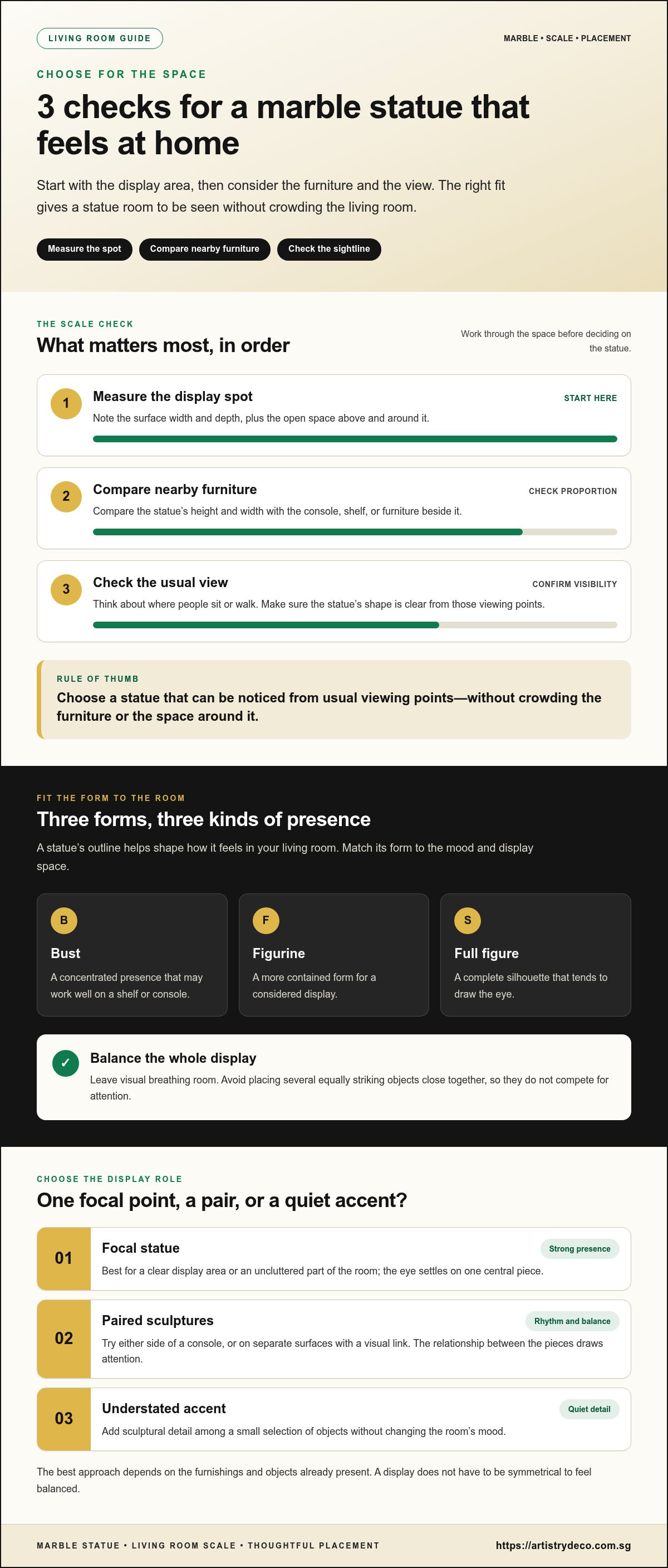
Read the space first, then compare it with the statue. Measure the intended area, note the nearby furniture, and compare those dimensions with the statue’s height and width. Don’t judge scale from a product image alone. A sculpture can look quite different beside a sofa or console than it does on its own.
- Measure the spot. Note the surface width and depth, plus the open space above and around it.
- Look at nearby furniture. Compare the statue with the console, shelf, or other furniture that will frame it.
- Consider viewing distance. Think about where people usually sit or walk, and whether the statue’s shape will be clear from there.
Rule of thumb: Choose a statue that can be noticed from the room’s usual viewing points without crowding the furniture or the space around it.
How big should a marble statue be for a living room?
Compare the statue’s height with the furniture beside it and the sightlines through the room. A tall piece may suit an open spot next to a console, while a low display surface may call for a more compact form. In a compact room, check the statue’s footprint as well as its height. Leave visual breathing room so it does not feel squeezed between other objects.
Which sculptural form suits your room’s character?
A bust has a concentrated presence and may work well on a shelf or console. A figurine often feels more contained, while a full-figure form tends to draw the eye through its complete silhouette. Match the subject and outline to the room’s mood. A calm, simple interior may suit a clear, uncluttered shape, while a room with more detail may welcome a more expressive form. No single type suits every space.
How do marble and brass sculptures differ visually?
Marble has a stone surface, with natural variation in tone and pattern that gives each piece its own visual character. Brass has a metallic presence and can bring a warmer, more reflective accent. Neither material is automatically the better choice. Compare the surrounding colours, finishes, and focal details. For a material comparison, explore the brass sculpture category alongside marble and stone statues.
Once you have a preferred form and a measured space, you can get in touch about a suitable sculptural piece.
Marble Statue Styles Compared: Focal Point, Pairing, or Quiet Accent?
Before choosing a statue, decide what role you want it to play. One piece can command attention, a pair can create rhythm, and a smaller accent can add sculptural detail without changing the room’s mood. The best approach depends on the furnishings and objects already present. A display does not have to be symmetrical to feel balanced.
| Approach | Visual impact | Suitable setting | Attention drawn |
|---|---|---|---|
| Focal statue | Strong, defining presence | A clear display area or an uncluttered part of the room | Invites the eye to settle on one central piece |
| Paired sculptures | Creates rhythm and a sense of balance | Either side of a console, or on separate surfaces with a visual link | Draws attention to the relationship between the pieces |
| Understated accent | Quiet, considered detail | Among a small selection of objects on a shelf or side table | Adds interest without becoming the main feature |
Should a marble statue stand alone or join a group?
A distinctive statue may provide enough focus on its own, especially with clear space around it. Nearby objects can support the display through a shared tone, shape, or finish, but too many strong forms may make it feel busy. If you group sculptures, vary their heights and silhouettes so each remains easy to see. Symmetry can be pleasing, but a balanced composition can also use different shapes arranged with care.
How can marble sit comfortably beside other materials?
Look at the textures and finishes already in the room. Marble can create a cool, patterned contrast beside smooth timber, soft fabric, or reflective surfaces. It can also sit quietly within a restrained palette. Treat contrast as a choice, not a rule. The aim is to let each material contribute without making the display feel crowded. The store’s marble and stone statues offer sculptural forms to consider for this kind of arrangement.
As you decide on a statue, consider how its shape and material will relate to the other decor in the room. Whether you choose a focal work, a pair, or a quieter accent, marble statues for living room settings feel most considered when the arrangement leaves space for both the sculpture and the furnishings to be appreciated.
How to Place and Care for Marble Living Room Statues
A thoughtful display starts with more than choosing an attractive spot. Consider what people see as they enter, where they sit, and how they move through the room. Marble statues for living room settings need a stable surface, a clear view, and enough open space to be noticed without getting in the way.
Which living-room locations give a statue enough presence?
A console can suit a statue that relates well to the surface’s height and width. A shelf may work for a compact piece if it is stable and leaves room around the sculpture. A dedicated display area gives a larger or more detailed statue space of its own. Check the view from the entry and seating area, and keep the statue clear of busy walkways and surfaces used every day.
Use this quick placement checklist before settling on a location:
- Sightlines: Can you see the statue clearly from the main entry and seating positions?
- Stability: Is the surface level and suited to the statue’s size and presence?
- Clear space: Is there room around the piece without blocking movement or access to everyday items?
How do you keep the display calm and balanced?
Edit the decor nearby before adding more. A few objects of varied heights can frame a statue, while a crowded surface may make every item harder to notice. Leave open space, and give the sculpture visual separation from objects with strong shapes or finishes. When arranging other living-room decor, use the same checks: scale, spacing, and how each piece looks with the rest of the room.
What is a sensible way to care for a marble statue?
Follow the care guidance provided for the specific statue and its finish. Marble and stone surfaces can differ, so don’t assume that one cleaning method suits every piece. Handle the statue with care when moving it, and use only care steps that are appropriate for its material and finish. If you’re unsure, pause before applying a cleaner or treatment rather than risking a change to the surface.
With considered placement and suitable care, a statue can remain an intentional part of the room rather than an object that needs constant rearranging. Choose a position that respects both the sculpture and the way you use the space.
Find a Marble Statue That Completes Your Living Room
A considered choice comes down to three checks: fit, form, and placement. The statue should suit the available space, feel at ease with the room’s character, and have a position where it can be seen without crowding the arrangement. Keep your furnishings in view as you choose. The aim is not to recreate a display from somewhere else, but to find a sculptural piece that feels connected to the room you live in.
A final checklist before choosing a marble statue
- Fit: Confirm the intended display area and compare the statue’s proportions with nearby furnishings.
- Form: Choose a sculptural shape that feels in step with the room’s mood and the role you want the piece to play.
- Placement: Picture the statue in position and make sure it has space around it, while keeping everyday movement and use in mind.
These checks help narrow the choice without making the process feel rigid. A piece with a strong silhouette may bring definition to a quiet corner, while a more restrained form can sit comfortably among existing decor. In either case, give the statue enough visual space to be appreciated. Consider how its tone and surface relate to nearby materials.
Explore sculptural options for your living room
With the intended setting in mind, compare stone sculptures by material, form, and visual presence. Marble and stone statues have distinct surface character, so picture each piece beside your furnishings and from the room’s usual viewing points. Let that relationship guide your selection rather than choosing a statue simply because it fills an open space.
Choosing marble statues for living room settings is a gradual act of curation. The right piece should feel at home with what you already value while bringing its own sculptural character to the room. For a considered living-room decor choice, explore the store’s marble and stone statues alongside its modern artistic sculptures and functional decor.
Choose a Sculpture That Feels at Home
Choose a marble statue with the room in mind. Check that its scale suits the space, its form fits your furnishings, and its position gives it room to be seen. Whether you prefer a clear focal point or a quieter accent, marble statues for living room settings work best when they connect with the character of your home rather than simply fill an empty spot.
Thoughtful placement and care help the piece remain part of a calm, considered arrangement. The store’s collection includes marble and stone statues, modern artistic sculptures, and living-room decor for those drawn to distinctive sculptural forms.
Take your time, trust your eye, and choose a piece that brings character to the way you live.
Frequently Asked Questions
What is the best place to display a marble statue in a living room?
Choose a spot where the statue can be seen from the main seating area or as you enter the room. A console, shelf, or dedicated display area may work if it suits the statue’s size and provides a stable surface. Leave clear space around the piece, and consider nearby objects and everyday movement so the display feels intentional rather than crowded.
How do I choose the right size marble statue for my living room?
Measure the intended display area, then compare the statue’s height and width with nearby furniture. Think about how far away people will view it and whether you want it to be a focal point or a quieter accent. The right size depends on the full arrangement, not just the room’s floor area. Leave visual breathing room around the statue.
Can marble statues work in a small living room?
Yes. A carefully chosen marble statue can add sculptural interest to a compact Singapore living room without taking over. Consider a shelf or narrow console if it is stable and the statue remains easy to see. Keep the surrounding decor simple, and compare the piece’s scale with nearby furniture. A clear display area can help even a modest statue feel purposeful.
How do I style a marble statue with modern furniture?
Let the statue’s form and surface add contrast, then connect it to the room with a restrained palette or related shapes. For example, a sculptural piece can stand apart from clean-lined furniture while still sitting comfortably beside it. Avoid crowding it with objects that compete for attention. Modern furniture does not need to match the statue’s style exactly for the pairing to feel considered.
Are marble statues suitable as living-room centrepieces?
Yes, a marble statue can serve as a centrepiece when its scale and form suit the room and its position offers a clear view. Consider whether people will see it from several directions, and use a stable display surface that suits the piece. Keep other prominent decor in balance so the statue reads as the main sculptural feature rather than one of several competing focal points.
How should I clean a marble statue at home?
Follow the care guidance for the specific statue and its finish. Stone surfaces can differ, so don’t assume one cleaning method suits every piece. For routine care, use gentle steps recommended for that material, and avoid a cleaner or treatment unless the guidance says it is appropriate. If care instructions came with the statue, use them as your first reference.
Should I choose a marble or brass statue for my living room?
Choose the material that feels most at home with your furnishings and the mood you want to create. Marble offers a stone surface with its own visual character, while brass brings a distinct metallic finish and warmth. Neither is automatically the better choice. Compare the statue’s form and scale with nearby colours, textures, and decor to see which material creates a more coherent arrangement.