
Best Sculptures: A Complete Buying Guide

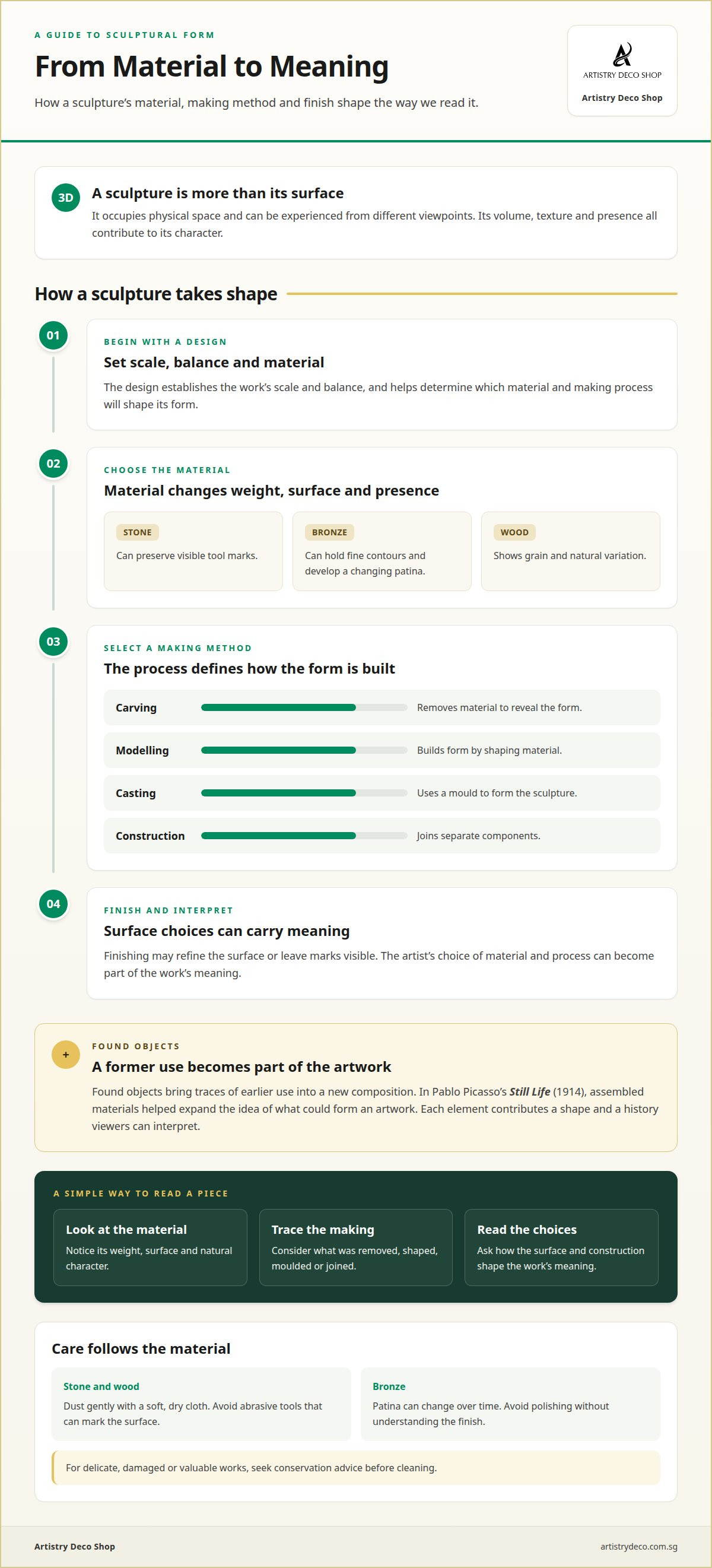
A sculpture is more than an image to admire from one side: it is three-dimensional art shaped by carving, modelling, casting or construction. Sculptures can be made from stone, metal and other materials, or from found objects given new meaning. Each invites you to notice its volume, texture and presence in space.
Choosing a sculpture is about understanding its story as well as appreciating its surface. This guide explores how materials and making methods shape a work, how found objects can become art, and how major movements have influenced artists’ approaches to form. You’ll also learn to read a sculpture’s relationship with its surroundings, helping you recognise what draws you to a piece and how it might fit into your space.
Key Takeaways
- Trace how major art movements reshaped sculptural form, from geometric construction to more expressive approaches.
- Compare materials and consider how an ordinary found object can gain new meaning through an artist’s choices.
- Learn to read volume, texture and the relationship between a work and the space around it.
- Use these insights to choose an artistic accent that suits your home, from a living-room piece to a dining-table centrepiece.
Related art movements
Art movements change how artists organise form, space and meaning. Cubism, developed by Pablo Picasso and Georges Braque around 1907-08, challenged the idea that a subject must appear from one viewpoint. Picasso’s Cubist constructions introduced a new approach to making sculpture in the twentieth century. Instead of modelling a continuous figure, artists could assemble distinct planes and shapes, encouraging viewers to consider how parts relate to a whole. Look for intersecting angles and simplified volumes when assessing a Cubist-influenced work.
Constructivism brought a different emphasis. Founded in Russia around 1915 by Vladimir Tatlin and Alexander Rodchenko, it treated structure and materials as central to artistic expression. Geometric forms, visible construction and a sense of balance can help explain this movement’s influence. Compare those qualities with the carved surfaces and material presence found in stone-carved decorative sculptures. The contrast shows how a work’s making method shapes its visual character.
Later artists explored abstraction and open form in distinct ways. Alexander Calder’s Untitled, dated 1937, is a reference point for considering how sculptural elements can occupy space without forming a solid mass. Barbara Hepworth’s Landscape Sculpture, dated 1944, offers another example for studying how openings and contours guide the eye. These works invite close attention to the spaces around and through a form, not only its outer edge.
Movement names are useful starting points, not strict labels for every work. To read a piece, identify its dominant shapes, materials and construction. Then consider whether its composition feels geometric, balanced, open or deliberately irregular. Compare your observations with examples such as Picasso’s Cubist constructions, Rodchenko’s Constructivist context and Hepworth’s abstract forms. This approach connects visual details to artistic ideas while leaving room for individual interpretation. A contemporary piece may echo a movement without belonging to it historically.
Sculptural materials and found objects
Material changes a work’s weight, surface and response to its surroundings. Stone can preserve tool marks; bronze can hold fine contours; wood shows grain and natural variation. Found objects add another layer, bringing traces of earlier use into a new composition. Pablo Picasso’s Still Life, dated 1914, is an example of sculpture made with assembled materials. Its construction expanded the idea of what could form an artwork. Each element contributes not only a shape, but also a history viewers can interpret.
Making a sculpture usually begins with a design that sets its scale, balance and material. The artist then chooses a process: carving removes material, modelling builds form, casting uses a mould, and construction joins separate components. Finishing may refine the surface or leave marks visible. Picasso’s assembled approach shows how the choice of materials and process can become part of a work’s meaning.
For an outdoor sculpture installation in Singapore, identify who controls the site and agree on placement, anchoring and public access before work begins. Requirements depend on the location and installation method, so follow the site controller’s process and applicable authority instructions.
To encounter sculpture in Singapore, explore galleries and public spaces, including National Gallery Singapore and Singapore Art Museum. Public artworks also appear in civic and landscaped settings. Notice how a piece changes with its surroundings: against architecture, a form can feel different than it does among trees.
Care depends on a sculpture’s material and finish. Dust stone and wood gently with a soft, dry cloth, and avoid abrasive tools that can mark the surface. Bronze may develop a changing patina, so avoid polishing without understanding its finish. For delicate, damaged or valuable works, seek conservation advice before cleaning.
Outdoor exposure brings moisture, heat, wind and airborne dirt, which can stain surfaces or weaken joins over time. An unsecured work can also be moved or stolen, so consider stable placement and visibility. For natural textures and distinctive material character, explore fossilized and petrified wood pieces as indoor display options.
Sculpture as three-dimensional art
Sculpture is three-dimensional art made by carving, modelling, casting or constructing. Unlike a drawing, it occupies physical space and can be experienced from different viewpoints. Michelangelo’s David, dated approximately 1504, shows how a single figure gains presence through its volume and carefully resolved anatomy. As you view a piece, notice how its outline changes when you move around it.
Three-dimensional form includes height, width and depth, but those measurements alone don’t explain a work’s effect. A projecting arm, deep fold or hollow can shift its visual balance. The Great Sphinx of Giza, dated approximately 2558-2532 BCE, combines a monumental body with a distinct profile. Smaller sculptures can create a more intimate encounter, where surface details and close viewing become central to appreciation.
The space around a sculpture matters as much as its solid form. Openings bring the background into the composition, while a broad base can make a figure feel grounded. Compare the silhouette from the front, side and rear. In an interior, consider sightlines from doorways and seating areas, too. This reveals whether a piece is designed for one main view or rewards movement around it.
Scale describes how a work relates to its setting and the viewer, not simply its physical size. The Statue of Liberty Enlightening the World, dated 1886, is designed for a monumental public setting. A tabletop piece works differently, drawing attention through close detail and proportion to nearby objects. In Singapore homes, consider available surface space, viewing distance and the form’s visual weight. A piece with a compact footprint may still command attention through height, contrast or an intricate outline. These cues help you choose a sculpture that feels balanced rather than crowded in its intended setting.
What are the main types and styles of sculpture?
Sculpture can be grouped by how it’s made, what it represents and how it occupies space. Figurative works depict recognisable subjects, while abstract forms simplify or transform them. Auguste Rodin’s The Thinker, dated 1902, presents a human figure through a concentrated pose. Compare its expressive body with abstract work, where shape, texture and balance may carry more meaning than a recognisable subject. These categories can overlap, so use them as guides rather than fixed rules.
Relief sculpture projects from a background, while freestanding work can be viewed from several sides. A relief often draws attention across a surface, making composition and depth cues especially important. A freestanding piece changes as you move around it. Before choosing a style, consider where it will be seen: a wall or narrow passage may suit a relief, while an open display area can reveal the changing profiles of a freestanding form.
Making methods create further distinctions. Carving removes material from a solid block, modelling builds form with soft material, and casting pours liquid material into a mould. A mould can be reused to create editions, so a cast work may exist in multiple versions. Construction assembles separate components, allowing visible joins and varied materials to shape the final effect. The method affects the surface, structure and relationship between a work and its base.
Modern styles also include assembled, abstract and spatially complex forms. Louise Bourgeois’s Spider, dated 1994, uses an instantly recognisable subject on an imposing scale. Rachel Whiteread’s Untitled (Stairs), dated 2001, offers a contrasting example for considering how familiar architectural forms can be transformed. To compare styles, note the subject, silhouette, surface and viewing angle. Then decide whether the work’s character suits your space and the mood you want it to create.
The making process offers a useful way to distinguish these approaches: carving shapes a solid material by cutting or scraping away from it, while modelling is an additive process in which soft material is worked to build up a shape or form. Casting involves making a mould and pouring liquid material into it. These descriptions distinguish removing material, building up a form and pouring liquid material into a mould.
Artistry Deco Shop: Functional Living Room Decor
Artistry Deco Shop brings sculptural character to everyday spaces with functional living room decor and modern artistic sculptures. Choose a piece for its form, material and presence, then consider how it will sit alongside the objects already in your room. A dining table can take a distinctive centrepiece, while a world globe can add visual interest to a study or work desk.
For a more individual accent, explore one-of-a-kind sculptures, fossilized sculptures and petrified wood sculptures. Their natural textures and distinctive forms can create a focal point without overwhelming a room. Choose according to the surface, viewing angle and mood you want the piece to bring to your home.
Visit artistrydeco.com.sg to explore the Artistry Deco Shop collection of sculptures and functional decor.
Choose a piece that feels at home
Let your next choice begin with the setting, not a trend. Consider where the sculpture will sit, what you want to notice first, and how its shape will meet the light and surrounding objects. A considered piece can give a room a distinct point of view, whether you’re drawn to quiet natural forms or a more expressive artistic presence.
Artistry Deco offers functional living room decor, dining table centrepieces and modern artistic sculptures for homes seeking character with purpose. As you explore the collection, focus on the piece that feels meaningful to you, then imagine how it will look in its intended place. The right choice is one you’ll enjoy encountering every day.
Take your time, trust your eye, and enjoy finding an artwork that makes your space feel more personal.
Frequently Asked Questions
What are sculptures and what materials are they made from?
Sculptures are three-dimensional artworks that can be shaped from materials such as brass, bronze, marble, stone and petrified wood. Some also combine materials or incorporate found objects. When choosing a piece, consider how its surface and colour will appear beside nearby finishes, such as timber, glass or metal. This helps the artwork feel considered within your room rather than visually disconnected.