
What to Put on Top of a Piano: Complete Styling & Safety Guide

A piano is an acoustic masterpiece first and a display surface second, yet leaving that expansive top completely bare can make your room feel unfinished. If you are wondering what to put on top of a piano, you probably share the dread every instrument owner feels: the fear of scratching a glossy polyester finish, triggering annoying buzzing noises during play, or risking catastrophic water spills from a vase. You want your home to look curated, but you don't want decorative accents to muffle your soundboard.
You can easily achieve visual elegance and acoustic purity without compromise. In this guide, you will discover safe, sophisticated, and functional decor ideas to style your piano top without dampening resonance or harming delicate wood veneer. We will walk through the essential safety rules of weight and vibration, examine protective styling layers, and show you how to balance upright and grand pianos with poise.
Key Takeaways
- Learn what to put on top of a piano to create a balanced look without muting acoustic resonance or causing unwanted vibration buzzes.
- Discover why open water vases and wax candles present severe hazards to high-gloss polyester, lacquer, and delicate wood veneers.
- Explore safe accent categories, such as modern artistic sculptures, tabletop globes, and decorative clocks fitted with protective felt pads.
- Master the visual differences between styling an upright piano against a wall and highlighting the graceful lines of a grand piano lid.
- Follow an easy, step-by-step styling routine that keeps your instrument clean, scratch-free, and organized.
Essential Rules for Decorating a Piano Top Safely
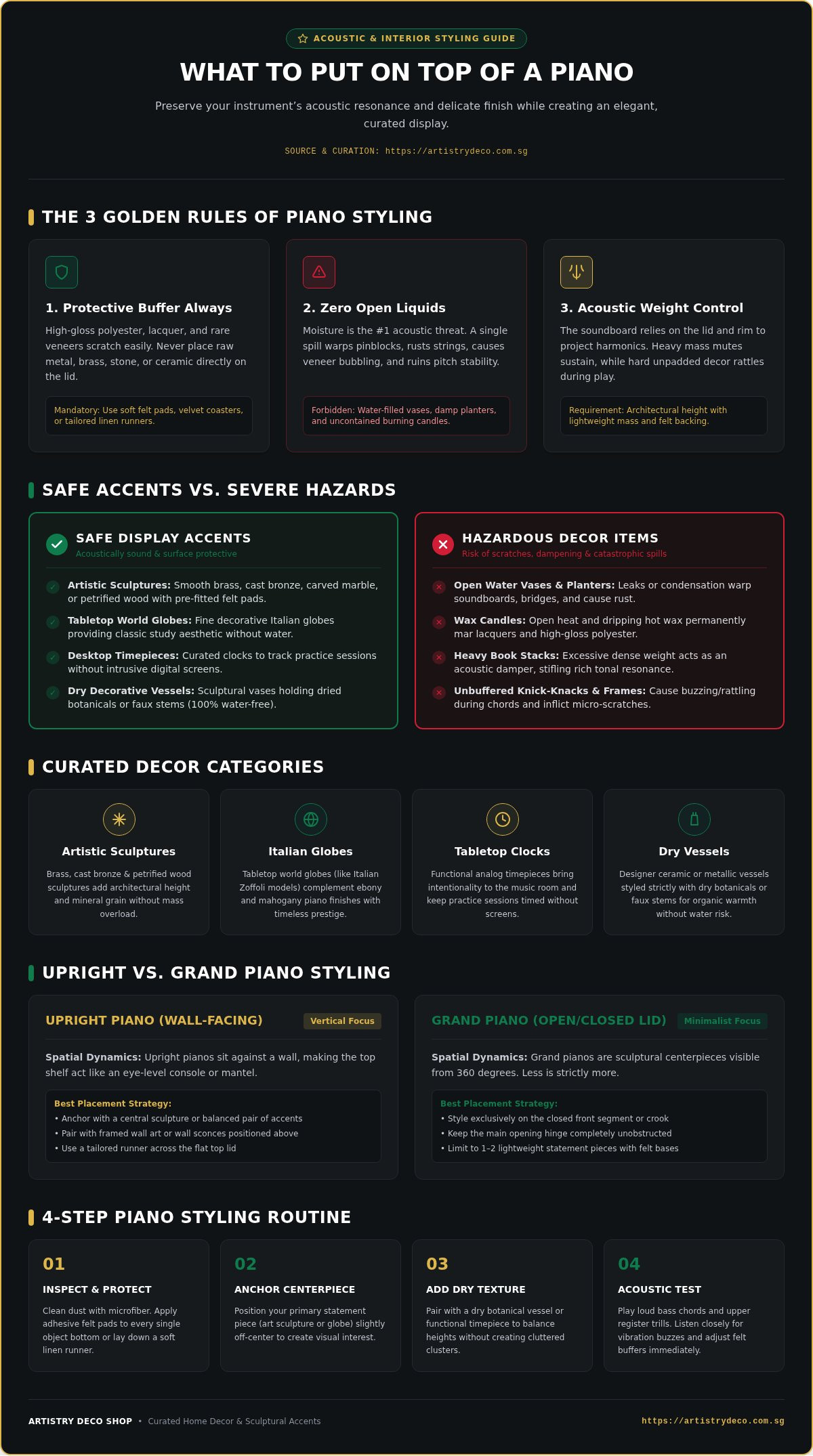
Decorating a piano requires a different approach than styling a common console table or fireplace mantel. A piano is a finely calibrated acoustic machine. Its high-gloss polyester, delicate lacquer, and rare wood veneers scratch easily if hard objects sit directly on them. Unprotected ceramic vases, rough metal frames, or unlined bookends cause fine micro-scratches that ruin the finish over time. Standard interior design tips often ignore these risks, leading to damaged surfaces and compromised acoustics. Knowing what to put on top of a piano starts with understanding how to protect both its finish and its sound.
To preserve your instrument, follow established piano maintenance best practices by adding a protective barrier beneath every single decorative accent. Never place raw brass, stone, or ceramic directly onto the lid. Instead, use thin felt pads, soft velvet coasters, or a tailored linen runner. These buffers prevent surface friction and absorb subtle tremors before they cause damage.
Acoustic Considerations: Weight and Sound Dampening
Excessive weight on the piano lid quickly dampens its tonal clarity. When you strike a key, vibrations travel from the strings into the soundboard, which relies on the entire wooden rim and lid to project rich harmonics. Heavy piles of coffee table books or massive stone sculptures act as acoustic dampers. They mute sustain and rob the instrument of its natural resonance.
Unsecured objects also generate annoying buzzing and rattling sounds during musical performance. High-register trills or resonant bass chords can cause hard-bottomed decor to vibrate against the wood. To maintain crisp acoustic projection:
- Choose lightweight to medium decorative items that offer architectural height without dense mass.
- Ensure every accent has soft felt backing to eliminate high-frequency buzzing against the gloss coat.
- Leave the primary opening hinge free of heavy obstructions so you can lift the lid easily.
The Golden Rule: Keeping Liquids Completely Away
Moisture is the greatest threat to any acoustic piano. Placing a vase filled with water or a potted plant on the lid is a recipe for disaster. Even a minor leak or condensation seep can run between the case joints, warping pinblocks, rusting strings, and causing irreversible veneer bubbling. Wood swelling around the bridge can permanently ruin the instrument's pitch stability.
Keep open water vases and live potted plants off your piano entirely. If you want the organic texture of nature, use dried botanicals, faux stems, or dry vessels. Pairing these with dry artistic accents, such as designer decorative vessels without water, gives you sculptural beauty while keeping your instrument completely safe.
Curated Decor Categories to Place on Top of a Piano
Selecting what to put on top of a piano requires balancing visual weight, stability, and acoustic safety. Many online galleries show surfaces crowded with dozens of small frames or loose knick-knacks, but this clutter creates visual noise and causes unwanted rattles. To keep the focus on the instrument's grandeur, select a few refined display pieces that elevate the room without overwhelming the soundboard. Following official Piano Technicians Guild care guidelines, ensure every item features factory-installed backing or sits on a protective barrier before styling.
Sculptural Art and Statement Collectibles
Artistic forms bring organic warmth to both traditional satin finishes and glossy black cases. A well-placed sculpture provides architectural height without the dense mass of stacked books. You can anchor an upright piano or a closed grand lid using modern artistic sculptures crafted from smooth brass, cast bronze, or carved marble. For organic texture, look to petrified wood sculptures that add rich mineral grain without introducing water or damp soil.
Functional Timepieces and Desk Globes
Functional decor brings practical value to practice areas while doubling as intentional styling accents. Adding a classic desktop globe introduces Old World curiosity and wanderlust to your music room. Fine Italian tabletop world globes from our curated Zoffoli globe collection pair beautifully with rich mahogany or ebony wood grain. Distinctive desktop timepieces from our tabletop clock selection help you track practice sessions without relying on a phone screen. Their weighted, stable bases stay planted even during dynamic fortissimo passages.
Layering Vintage Artifacts and Collector Pieces
Timeless decor harmonizes naturally with the classical heritage of an acoustic instrument. When choosing what to put on top of a piano, museum-inspired artifacts, stone relics, and historical collectibles offer rich visual stories. You can discover unique focal pieces through our handcrafted stone carving collection to establish a refined gallery look. To build an elegant vignette without cluttering the surface, rely on simple composition principles:
- Follow the classic rule of three by grouping a tall sculpture, a medium desk globe, and a horizontal accent.
- Vary materials by pairing cool bronze or polished marble alongside textured fossil stone.
- Leave generous breathing space around each accent so the piano lid retains its clean architectural silhouette.
If you need personalized advice on selecting scale-appropriate accents for your instrument, feel free to speak with our styling team for curated decor recommendations.
How to Style an Upright Piano vs a Grand Piano
Every piano style commands a room differently, so your decorating strategy must respect each model's distinct geometry. An upright piano sits flush against an interior wall, forming a flat shelf that works like a classic console. A grand piano extends into the open room, drawing attention to its curving rim and sculptural case. Knowing what to put on top of a piano comes down to working with these architectural shapes rather than treating every instrument like an ordinary side table.
Styling the Upright Piano: Creating Vertical Harmony
An upright piano offers a long, narrow plane framed by the wall behind it. Instead of centering a single tiny object, treat the wall and top board as one integrated gallery. Anchor the space with a large framed canvas, a vintage mirror, or twin sconces mounted at eye level. This vertical backdrop draws the eye upward and balances the heavy wooden base below.
Layer your accessories using an asymmetrical layout to keep the look relaxed and modern. Place your tallest piece, such as a sleek brass lamp or sculptural figure, toward one end. Then, group two lower items on the opposite side to balance the arrangement. You can pull in tasteful accents like decorative desk globes from our unique meridian globe collection or stone artifacts from our curated functional living room decor to add tactile interest without crowding the board.
Styling the Grand Piano: The Art of Restraint
Grand pianos require strict aesthetic restraint. Their beauty lies in their sweeping, fluid contours, which disappear under heavy displays. Leave the lid bare if you frequently play with it raised on the prop stick. Clearing off five or six delicate accents before every practice session quickly becomes frustrating.
When styling a closed grand lid for an event or daily living, choose one signature focal point. Place a felt-lined bronze statue or a carved stone bowl inside the flat bend, right where the curved rim scoops inward. Keep the straight front edge and rear tail open. This placement honors the flowing lines of the case, keeps the balance point stable, and makes moving your decor quick and simple whenever you want to open the instrument.
Common Mistakes When Decorating Piano Tops
Homeowners often treat an instrument like standard living room shelving, creating visual clutter and risking permanent damage. The broad, flat surface invites daily items to accumulate quickly. Piles of loose sheet music, mail, keys, and random knick-knacks turn a fine instrument into an accidental drop zone. Understanding what to put on top of a piano requires knowing which items to avoid completely, protecting both your finish and interior tuning stability.
Climate factors make proper styling choices even more critical. In warm or tropical environments, ambient humidity causes the instrument's wooden soundboard to expand and contract. Stacking heavy, non-breathable plastic bins or dense, non-porous slabs across the wood traps moisture against the finish. This trapped dampness turns high-gloss coats milky and promotes internal swelling. Coarse ceramic mugs and unlined brass trays also grind micro-dust directly into the lacquer whenever people touch them.
The Hazard of Open Flames and Dripping Wax
Burning traditional wax candles directly on or above an instrument presents extreme hazards. Radiated heat softens polyester coats and cracks delicate vintage lacquer within minutes. Dripping hot wax binds to wood grain, making removal nearly impossible without pulling off the clear finish underneath.
Skip open-flame tapers and opt for safe scent and lighting solutions instead:
- Display sculptural, unlit beeswax pillars that provide organic texture without heat risks.
- Use sealed mineral scent stones or dry volcanic diffusers placed inside lined containers.
- Introduce artisanal ceramic or stone vessels with dry botanical accents to achieve soft warmth safely.
Over-Cluttering vs Curated Negative Space
Lining up a dozen small picture frames across the lid is one of the most common decorating blunders. Crowded photo frames create severe visual noise, shrinking the perceived height of the room. From an acoustic standpoint, multiple lightweight frames rattle continuously against one another during playing sessions, ruining musical clarity.
Embrace negative space to give your instrument proper presence. Replace chaotic clusters with one or two deliberate art pieces that match the scale of the casework. Leaving wide, open stretches around your focal accents lets the natural luster of the wood shine. This curatorial balance ensures the instrument remains a commanding centerpiece of artistic craftsmanship rather than a crowded mantel.
Step-by-Step Guide to Styling Your Piano Vignette
Styling an instrument requires an orderly method that safeguards delicate woodwork while establishing visual balance. Following generic decorating steps often leads to placing abrasive book stacks or unstable ceramics directly on polished finishes. A deliberate styling sequence ensures your display looks elegant and performs safely during practice sessions. If you are deciding what to put on top of a piano, following these five practical steps will help you create a secure, harmonious vignette.
- Dust the surface: Wipe away all loose grit using a clean microfibre cloth before setting down any items.
- Lay protective barriers: Place felt discs, velvet underlays, or a linen runner under each intended accent.
- Set your anchor piece: Position your main statement item slightly off-center to establish dynamic visual weight.
- Layer complementary textures: Add one or two smaller accents of contrasting materials to finish the group.
- Perform a musical sound test: Play across the keyboard registers to confirm zero vibration rattles.
Step 1 to 3: Surface Preparation and Foundation Anchoring
Never place decor onto a dusty piano lid. Tiny airborne grit trapped underneath can act like sandpaper whenever an object shifts. Use a soft, dry microfibre cloth along the grain to lift away dust before styling. Once clean, add thin self-adhesive felt or velvet pads directly under the base of each accent piece. For broader coverage on an upright, lay a soft linen runner down first to shield the entire wood plane.
Next, set your anchor piece slightly off-center rather than squarely in the middle. Symmetrical center placement often looks stiff and formal. An architectural desk globe, a tall bronze figure, or a refined mantle clock anchors the composition with natural presence while drawing the eye across the casework.
Step 4 to 5: Layering Accents and the Musical Sound Test
Complete your vignette by layering one or two secondary pieces that complement the main anchor. Contrast is essential for visual depth. Pair cool polished marble with warm patinated brass, or balance a sleek modern clock with the rich, earthen contours of petrified wood. Keep the total count low to preserve intentional negative space.
The final acoustic test confirms your styling success. Sit down at the keyboard and play a full chromatic scale from the lowest bass notes up to the treble. Play resonant, heavy chords with the sustain pedal held down. Listen carefully for any sympathetic buzzes or fine rattling sounds. If an accent vibrates against the wood, adjust its position or add an extra layer of soft felt underneath.
When you are ready to curate your musical space with intentional accents, you can shop functional art at Artistry Deco Shop to discover refined pieces crafted specifically for sophisticated home interiors.
Curate Your Piano with Confidence and Style
Deciding what to put on top of a piano doesn't mean choosing between visual elegance and acoustic clarity. When you keep liquids far away, line every accent base with soft felt, and respect soundboard resonance, you protect your instrument's delicate casework for decades to come. Whether you arrange a balanced vignette above an upright or place a single sculpted accent along a grand piano's curve, intentional curation preserves both acoustic tone and visual beauty.
Your instrument deserves display pieces that match its handcrafted quality. At Artistry Deco Shop, we curate stable stone, marble, and patinated brass centerpieces tailored to elevate luxury interiors across Singapore without compromising acoustic tone. Treat your piano as the artistic centerpiece it is, and enjoy an inspiring space every time you sit down to play.
Frequently Asked Questions
Is it bad to put things on top of an upright piano?
No, placing decor on an upright piano is safe if you follow sensible weight and surface precautions. Upright models have a sturdy top shelf that easily holds light to medium display pieces. Placing rough objects directly onto the wood will scratch the finish, and heavy items can muffle sound. Choosing what to put on top of a piano thoughtfully ensures you protect the casework while enhancing your space.
What should you never put on top of a piano?
You should never place liquids, lit candles, or unpadded metal objects on a piano. Fresh cut flowers with water vases and live potted plants are major hazards because spills cause irreversible wood warping and internal string rust. Burning candles can drop hot wax and bubble the polyester finish. Unlined picture frames, coarse ceramics, and heavy non-breathable plastic storage bins should also stay off your instrument.
Can putting heavy decor on a piano ruin the sound?
Yes, placing excessive weight on the piano lid directly dampens acoustic projection and muddles tonal clarity. The piano case and lid vibrate sympathetically with the soundboard to project full, rich sound. Heavy stacks of books or massive stone blocks absorb those sound vibrations, causing notes to lose sustain. For optimal sound in Singapore homes, stick to lightweight or medium-mass artistic sculptures that provide height without acoustic dampening.
How do I stop items on my piano from rattling when I play?
You can stop items from rattling by attaching adhesive felt or velvet pads underneath every decorative piece. Annoying buzzes happen when acoustic vibrations travel from the strings through the lid, shaking hard surfaces against each other. Line the bottom of clocks, sculptures, and frames with soft felt discs to absorb these vibrations instantly. If a rattle persists, move the object slightly toward the outer edge where vibrations are lower.
Should I use a runner under decor on my piano top?
Yes, using a soft fabric runner is an excellent way to protect the delicate gloss or veneer finish from micro-scratches. A linen, velvet, or wool runner forms a reliable buffer against accidental scrapes and dust abrasion. In humid climates like Singapore, choose breathable natural fabrics rather than synthetic or rubber-backed options. Breathable textiles prevent ambient moisture from getting trapped against the wooden lid, keeping your finish smooth and clear.
How do you decorate a grand piano compared to an upright piano?
You decorate an upright piano across a wide horizontal surface against a wall, whereas a grand piano demands minimalist restraint. When deciding what to put on top of a piano, upright models allow layered asymmetrical vignettes with lamps, clocks, and wall art. In contrast, grand pianos feature sweeping, organic lines that look best with a single signature sculpture placed in the flat curve crook. This keeps the look balanced and easy to clear.
Can I put indoor plants on top of my piano?
You should avoid putting live indoor plants on top of your piano due to moisture and humidity risks. Live potted plants require routine watering, and accidental overflow can permanently damage pinblocks and strings. Even self-watering planters leak condensation, while moist soil raises local humidity, causing soundboard swelling in tropical Singapore apartments. To achieve natural botanical styling without risk, choose preserved branches or mineral decor like petrified wood in dry decorative vessels.