
What Makes a Sculpture Valuable? A Guide to Art Gallery Pricing

Why does one bronze figure command a small fortune while another seemingly identical piece sits unnoticed? It’s a question that often leaves new collectors feeling unsure. You want your home to reflect your unique taste, but art gallery pricing can feel like a maze of complex jargon. It’s natural to worry about overpaying for something that might not hold its worth over time.
Understanding what makes a sculpture valuable is the first step toward building a collection with total peace of mind. Whether you’re drawn to the heavy weight of a brass statue or the ancient story within petrified wood, certain markers of quality are universal. You deserve to feel like an insider who knows exactly what to look for in a high-end piece.
In this guide, you’ll discover the key factors that determine sculpture value, from rare materials to the history of the artist. We’ll look at how to spot true quality in handcrafted works so you can select your next centerpiece with confidence. By the end, you’ll know how to tell the difference between a simple object and a lasting work of art.
Key Takeaways
- Learn the "Value Triangle" to understand exactly what makes a sculpture valuable by looking at the artist's history, material rarity, and the piece's uniqueness.
- Discover why rare materials like petrified wood and handcrafted bronze are considered nature's original art and how they hold their worth over time.
- See how functional items like Zoffoli world globes or unique clocks can bridge the gap between home decor and high-value artistic investments.
- Get practical steps to inspect a sculpture's weight and material quality so you can spot genuine craftsmanship before you buy.
- Understand the role of provenance and gallery standards to ensure you never overpay for mass-produced items again.
The Core Factors: What Makes a Sculpture Valuable?
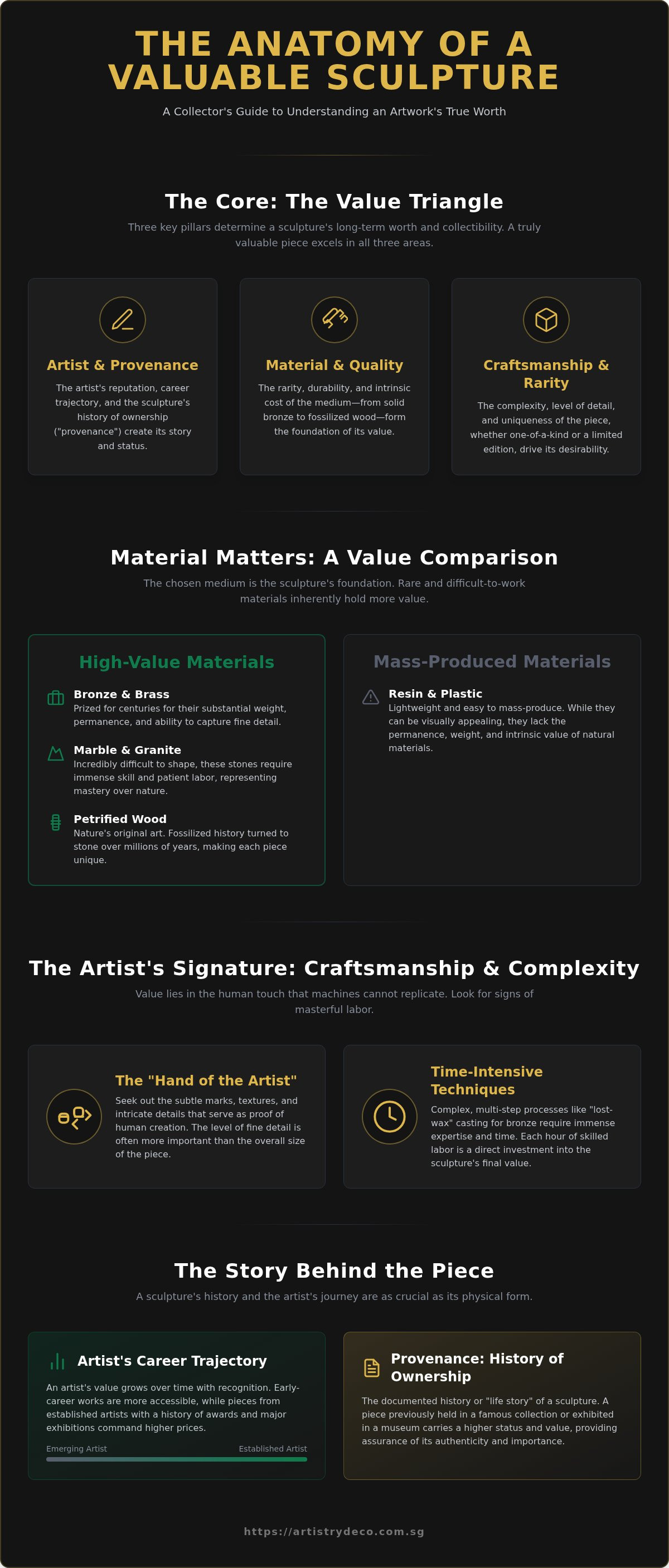
Defining what makes a sculpture valuable requires looking past the surface. It's a blend of the physical and the poetic. Think of the history of sculpture; it has always been about more than just shape. True value comes from what experts call the "Value Triangle." This concept links the artist's reputation, the rarity of the piece, and the quality of the material used. While mass-produced items might look nice for a season, original works hold their spirit and worth for generations. In modern Singaporean homes, this appreciation is growing through the rise of "Functional Art." This category includes items like designer globes or clocks that serve a daily purpose while standing as true artistic statements.
Material Rarity and the Cost of the Medium
The medium chosen by an artist sets the foundation for its worth. Bronze and brass statues carry a weight and durability that resin or plastic simply cannot match. When you touch a brass piece, you feel the cold, solid reality of a metal that has been prized for centuries. Stone works, like those carved from marble or granite, represent a different kind of value. These materials are incredibly difficult to shape. They require months of patient labor and a master's touch to prevent the stone from cracking. For those seeking something truly rare, petrified wood sculptures offer a glimpse into the deep past. These are not just objects; they are fossilized pieces of history. Millions of years have turned organic wood into shimmering stone, making each piece a one of a kind treasure that can never be recreated.
Complexity and the Artist's Labour
Beyond the material, the artist's labor adds a layer of value that machines can't replicate. The size of a piece often influences the cost, but the level of detail is even more important. Collectors look for "the hand" of the artist. These are the subtle marks and textures that prove a human mind guided the tool. Time intensive techniques like the "lost-wax" casting method for bronze illustrate this perfectly. This process is slow and complex. It involves creating a wax model, encasing it in a mold, and then melting the wax away to make room for molten metal. Each step adds to the final gallery price because it represents hours of expert craftsmanship. When you see these details, you begin to understand what makes a sculpture valuable and why a handcrafted piece is a wise investment for your collection.
How Art Galleries Price Sculptures: Behind the Scenes
Walk into any high-end gallery, and you'll notice that pricing follows a strict, professional logic. It isn't a guessing game. Curators look at market standards to decide a fair price. One of the most powerful factors is provenance. This refers to the history of ownership. A piece that was once held in a private collection of a known connoisseur or displayed in a museum carries a higher status. It's essentially the "life story" of the object. This history is a core part of what makes a sculpture valuable to serious collectors. If you're looking for professional tips on how to determine the value of your artwork, looking at these historical records is a great place to start.
Market demand shifts with the times. Right now, sleek, modern styles are very popular in Singapore. This high demand for certain looks can push prices up. You also have to consider what happens behind the scenes. The gallery price includes professional curation, global shipping, and insurance. These costs ensure that your investment is protected from the moment it leaves the studio until it sits on your table. You're paying for the peace of mind that your piece is authentic and has been handled with extreme care.
The Artist’s Career Trajectory
An artist's position in the art world is a huge part of what makes a sculpture valuable. Emerging artists have lower prices because they're still building their names. As they win awards or show their work in major cities, their value increases. Their exhibition history acts like a resume for the piece. Many collectors keep an eye on modern artistic sculptures to spot these rising stars early. It's a way to find beauty that might also grow in financial worth as the artist becomes more established.
Limited Editions and Rarity
Rarity is your best friend when collecting art. In materials like bronze, artists often create "limited editions." You might see a mark that says "2 of 8," meaning only eight of those sculptures exist in the whole world. While these are valuable, "one-of-a-kind" pieces are the top tier. These unique items have no duplicates. This scarcity protects your investment over several years because the supply will never increase while demand for quality work grows. If you want to know more about the rarity of a specific piece, feel free to reach out to our team for a private consultation.
Rare Materials: From Petrified Wood to Fine Brass
The material used in a piece is often the very first thing a collector notices. It's the physical soul of the work. While some believe that only precious metals like gold hold worth, many savvy art investors look for materials that tell a story much older than human history. Natural history brings a sense of timeless luxury to a modern home. This connection to the earth is a huge part of what makes a sculpture valuable. When you choose a piece made from a rare natural medium, you aren't just buying decor; you're securing a fragment of the world that cannot be remade.
Marble and stone statues offer a similar kind of natural rarity. The value lies in the veins and unique patterns found deep within the rock. These lines are like a fingerprint from the earth. No two blocks of marble are identical, which means every carving is a one of a kind masterpiece. This inherent uniqueness is why stone has remained a staple of high-end galleries for centuries. It represents a blend of nature's art and human skill that mass-market items simply can't copy.
Petrified Wood: Nature’s Original Art
Imagine a tree that stood tall millions of years ago. Through a slow, hidden process, minerals replaced every cell of that wood, turning it into solid stone. This "frozen in time" look is exactly why collectors prize this material. It takes an incredible amount of time to create, which makes fossilized sculptures completely irreplaceable. You can't manufacture history on this scale. For those who want to dive deeper into why these ancient pieces are so prized, you can explore more about petrified wood decor value. The mix of organic shapes and stone durability creates a focal point that feels both ancient and modern.
The Aura of Brass and Bronze
There's a specific feeling you get when you lift a high-quality metal statue. The weight tells you everything you need to know. In the world of fine art, a heavy sculpture often suggests that the artist used pure, solid materials rather than cheap fillers. This physical presence is a key marker of what makes a sculpture valuable. Brass and bronze also have the unique ability to grow more beautiful as they age. They develop a patina, which is a soft glow or color change on the surface. This "aged value" shows the piece has a life of its own. Many collectors specifically seek out The Aura Brass Sculpture Collection because these pieces are designed to last for generations while gaining character every year.
Functional Art: When Value Meets Utility
Art doesn't always have to stay behind a glass case. Functional art is a growing trend that brings beauty into your daily routine. It includes items that serve a clear purpose while maintaining the high standards of a gallery piece. When asking what makes a sculpture valuable, we often look for a mix of skill and story. Functional pieces like high-end globes or designer clocks provide both. They aren't just tools for checking the time or looking at a map; they are handcrafted objects that define the character of a room. This category of decor is becoming a favorite in Singapore because it allows you to live with art instead of just looking at it.
The value of these items often comes from the brand's history. A name that has been respected for decades adds a layer of trust that mass-produced items can't offer. This heritage proves that the piece was made using techniques that have been perfected over generations. In these cases, the craftsmanship is just as rigorous as what you'd find in a "pure" sculpture. The artist must balance the beauty of the form with the technical needs of the function. Every curve and finish is intentional, turning a common object into a collectible work of art that feels important in your space.
The Craftsmanship of Zoffoli Globes
Italian globe making is a tradition that spans centuries. When you look at Zoffoli Italy Globes, you see this history in every detail. These pieces aren't mass-produced in a factory; they are the result of careful, expert work. They feature hand-painted maps and solid wood bases that feel substantial and cool to the touch. This level of care is exactly why they are considered top-tier Functional Living Room Decor. The materials and the legacy of the maker work together to ensure the piece holds its worth over time. It's a way to bring a sense of global exploration and classic luxury into your study or living room.
Artistic Timepieces and Decor
A unique clock can do more than just tell the time; it can act as a sculptural focal point in a study or office. Modern interiors often benefit from "playful" designs that break away from traditional styles. These pieces use unexpected shapes and materials to catch the eye and spark conversation. The Ehaika Timepiece Collection is a perfect example of this philosophy. By choosing a clock that doubles as a sculpture, you're investing in a piece that adds both utility and artistic flair to your home. This blend of roles is a key part of what makes a sculpture valuable in a modern living space. It shows that you value things that are both useful and beautiful.
How to Evaluate a Sculpture Before Buying
Evaluating a piece requires a sharp eye and a bit of patience. Before you make a decision, you should physically inspect the work. Start with the weight. A solid brass statue or a piece of petrified wood should feel substantial. If a large piece feels surprisingly light, it might contain cheap fillers. Next, look for markings or a certificate of authenticity. These documents are proof of the piece's history and are a major part of what makes a sculpture valuable in the eyes of future buyers.
Before you commit to a purchase, follow these steps to ensure you're making a sound choice:
- Inspect the weight: Genuine materials like brass or stone should feel heavy and solid.
- Research the maker: Look for brands or artists with a proven history of quality.
- Check for markings: Look for brand stamps or official certificates.
- Assess the condition: Search for cracks or rough casting seams that might lower the worth.
- Trust your intuition: A piece should create an emotional spark when you see it.
Examine the surface carefully. In cast metal, you want to avoid rough casting seams where the mold halves met. In stone, look for natural cracks versus damage from poor handling. This level of detail is another part of what makes a sculpture valuable to those who appreciate fine art. While the technical details matter, don't ignore your feelings. The best piece for your home is one that speaks to you every time you walk past it.
Spotting Quality in Singapore Galleries
When visiting a gallery, don't be afraid to ask questions. Ask the assistant about the sculpture's origin and the artist's process. You should also understand the difference between an "open edition" and a "limited run." A limited run has a set number of copies, which usually increases the price. Look at the finishing. In high-end brass or stone, the polish should be even and the details should be crisp, not blurred or faded.
Building a Curated Collection
If you're just starting, try choosing a "pillar" piece first. This is usually a larger statue or a bold centerpiece that sets the tone for the room. Once you have this foundation, you can begin mixing materials. Pairing the cool touch of marble and stone statues with the warm glow of brass and the ancient texture of petrified wood creates a layered, premium look. Remember that your collection is a reflection of your journey. Buy what you love; the greatest value of any art is the daily enjoyment it brings to your life.
Begin Your Journey into Fine Art Collecting
Choosing the right piece for your home is a deeply personal act of storytelling. You now understand that what makes a sculpture valuable isn't just the price tag on a gallery wall; it's the rich history of the material and the expert hand of the maker. From the millions of years held within the Stone Atelier Collection's petrified wood to the world-renowned Italian craftsmanship of Zoffoli globes, quality is always something you can feel. As the official Singapore stockist for these heritage brands, we ensure every piece meets the highest standards of excellence.
Building a collection is a slow and rewarding journey of discovery. By looking for solid materials, limited editions, and brand heritage, you can invest with total confidence. Whether you're drawn to the heavy weight of our exclusive brass statues or the playful utility of an artistic clock, your home deserves pieces that will hold their worth for decades. Every one of a kind sculpture we offer is chosen for its ability to transform a room into a sophisticated sanctuary.
Take the first step today and find a masterpiece that speaks to your unique taste. We look forward to helping you discover art that inspires you every single day.
Frequently Asked Questions
Is a heavy sculpture more valuable than a light one?
Weight is often a strong indicator of quality and material authenticity. Heavy pieces usually consist of solid materials like brass, bronze, or marble rather than hollow resin or plastic. This physical density is a key part of what makes a sculpture valuable because it proves the artist didn't use cheap fillers. In Singapore's premium decor market, a substantial weight suggests durability and a higher cost of the medium itself.
Do sculptures hold their value over time?
Quality sculptures generally hold or increase their value if they are well-maintained and come from a reputable source. Factors like the artist's career growth and the rarity of the material play a huge role. For instance, a limited edition bronze or a one-of-a-kind stone carving is more likely to stay relevant in the Singaporean art market. Always look for pieces with clear provenance to ensure your investment remains secure.
How can I tell if a brass statue is high quality?
High-quality brass statues should feel cold to the touch and have a significant weight. Look closely at the details; crisp lines suggest a professional casting method like the lost-wax process. You should also check for a natural patina rather than a painted-on finish. In our curated collection, we look for brand markings or signatures that confirm the piece's origin. These small details are often what makes a sculpture valuable to collectors.
What is the difference between a sculpture and a statue?
A statue is actually a specific type of sculpture that represents a human or animal figure. Sculpture is a much broader term that includes abstract forms, functional art, and relief carvings. While all statues are sculptures, not all sculptures are statues. For a modern Singapore interior, you might choose an abstract marble piece or a functional globe, both of which fall under the wider umbrella of sculptural art.
Why is petrified wood so expensive?
Petrified wood is highly prized because it's a finite resource that takes millions of years to form. It isn't something that can be manufactured in a factory. Each piece is a fossilized record of the earth's history, featuring unique mineral patterns and colors. This natural rarity makes fossilized wood a top choice for one-of-a-kind sculptures. Collectors in Singapore value these items as nature's original art because no two specimens are ever the same.
Should I keep the original packaging for a collectible sculpture?
You should definitely keep the original packaging and any paperwork for high-end collectibles. While the sculpture itself is the main prize, the original box and certificates help prove its authenticity. This documentation is vital if you ever decide to resell the piece or have it appraised in Singapore. Proper packaging also ensures the sculpture stays safe from scratches or humidity during storage or when you're moving to a new home.
How does the size of a sculpture affect its gallery price?
Size does influence the price because larger works require more materials and longer labor hours. However, a small, highly intricate piece by a famous artist can sometimes cost more than a large, simple statue. Gallery pricing in Singapore balances the physical scale with the complexity of the design. A massive stone carving involves significant transport and insurance costs, which are naturally reflected in the final price you see at the gallery.
Does a famous artist's signature always mean high value?
A signature is important, but it isn't a guarantee of high value on its own. You must also consider the piece's condition, rarity, and where it fits in the artist's career. Some artists produce open editions that are signed but mass-marketed, which makes them less valuable than unsigned one-of-a-kind works. True value comes from the combination of the artist's name and the exceptional quality of the specific sculptural work.