
Styling Large Sculptures in the Living Room: A Thoughtful Guide

What if the sculpture that seems too large for your living room is exactly what gives it character? It’s natural to worry that a striking piece might crowd the room or compete with the furniture. But styling large sculptures in living room spaces is less about filling an empty corner and more about balancing scale, sightlines, and breathing room.
A well-placed sculpture can draw the eye, add texture to a quiet area, and make a room feel more personal. The key is to give it a considered position that works with the rest of the room, rather than making everyday life revolve around it.
This guide covers how to judge scale, choose a location, coordinate materials and colours, and keep pathways clear. Whether you’re considering a modern artistic form or a piece in brass, bronze, marble, stone, or petrified wood, a few practical checks can help it feel at home in your living room.
Key Takeaways
- Observe the room, shortlist possible spots, test them from key viewpoints, and adjust the placement.
- When styling large sculptures in living room spaces, consider how scale and sightlines affect the overall feel.
- Connect the sculpture to your decor through a shared tone or a deliberate contrast, and avoid combinations that compete for attention.
- Check the specific sculpture’s weight and care guidance. Seek qualified advice if you have concerns about stability or placement.
- Review the arrangement in daily use, then make small changes to keep the room easy to move through.
Styling Large Sculptures in Living Room Spaces Without Overwhelming Them
A statement sculpture can feel like too much in a room where people gather, walk through, and unwind. That concern is worth taking seriously. The aim isn’t to fill every empty corner, but to find a place where the piece can be seen without getting in the way of daily life. In a compact Singapore living room, preserving clear routes and useful open space can matter as much as choosing a striking focal point.
Visual balance describes how a sculpture’s size, shape, and position relate to the furniture, open floor area, and other features around it. A balanced arrangement doesn’t have to be symmetrical. It simply feels settled: the sculpture draws the eye, while the room remains comfortable and practical to use. This is a useful starting point for styling large sculptures in living room settings.
What makes a large sculpture feel balanced in a living room?
Consider the whole composition, not just the sculpture’s height. A broad sofa or substantial sideboard may visually balance a sculpture with a strong form, while a smaller seating area may suit a more open, slender shape. Look at how much floor remains visible around the piece, too. A little breathing room helps its outline read clearly and makes the placement feel deliberate.
A focal point has a clear role in the room. It attracts attention, then lets the eye move on to the view, seating, or another detail. If the sculpture competes with several bold objects at once, the room can feel unsettled. The elements of art, including form, space, and colour, offer a useful way to think about how these parts work together. For an example of sculptural decor in stone, explore the carved stone sculpture collection.
Start with the room, not the sculpture
Before testing a location, notice what already draws your eye. Is it a window view, the main seating area, or a feature on the wall? Then trace the routes people use to cross the room and note where they sit. A spot that looks appealing from the entrance may feel intrusive from the sofa or narrow a path used every day.
Make a quick sketch or take a phone photo from a few viewpoints. Mark the main furniture, walking routes, and possible display spots, such as a corner or open wall area. Compare each option with the room’s focal point and available space. This helps you choose based on how the living room works, not just where an empty patch happens to be.
Choose a Living Room Location by Checking Scale, Sightlines, and Flow
A sculpture can look composed from one angle and awkward from another. A corner may seem ideal from the doorway, yet feel crowded beside the sofa. A spot near a screen might draw attention away from both. Before settling on a location, test how the sculpture fits the room as people actually see and use it.
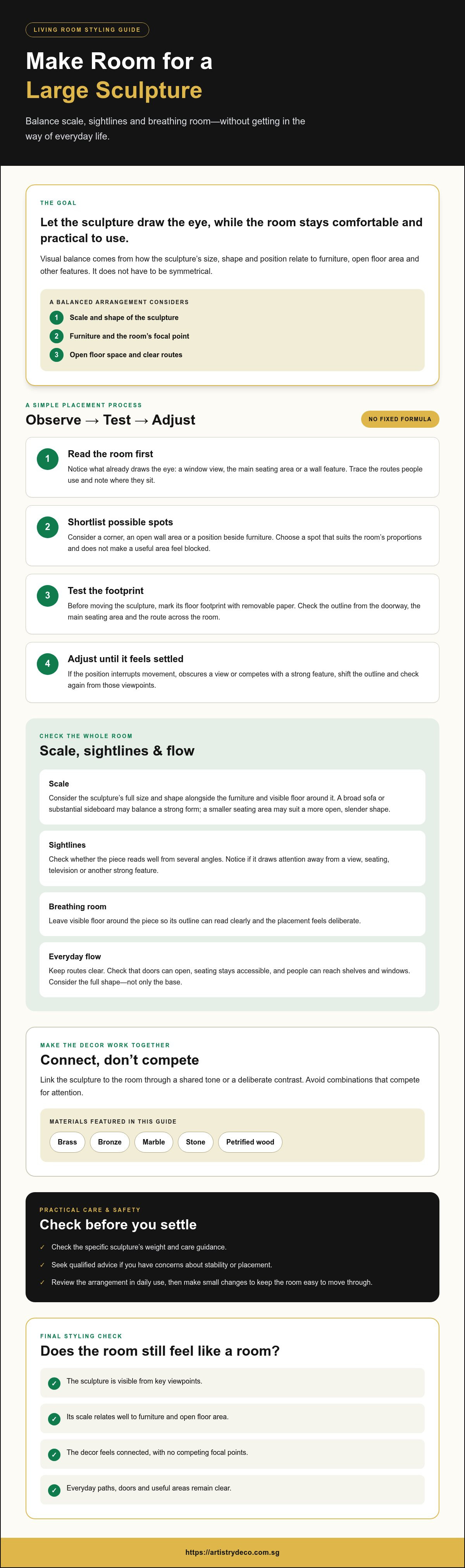
Observe the room, shortlist suitable spots, test each from key viewpoints, then adjust until the sculpture feels balanced and the room still flows. This sequence makes styling large sculptures in living room spaces more considered, without relying on a fixed formula.
Test possible sculpture placements from different viewpoints
Start by noting the room’s natural focal point and main walking routes. Then shortlist locations that could suit the sculpture, such as a corner, an open wall area, or a spot beside furniture. Choose a location only if it works with the room’s proportions and doesn’t make a useful area feel blocked. A corner can give the piece a clear boundary; an open wall area can let its form stand out; a position beside furniture may connect it to the seating area.
Before moving the sculpture, mark its footprint on the floor with removable paper. View the outline from the doorway, the main seating area, and the route people use to cross the room. Does it interrupt movement, obscure a view, or compete with a television or another strong feature? If so, shift the outline and check again. A position that reads well from several angles is more likely to feel at home.
Keep movement and practical use in mind
Consider what happens around each possible location during an ordinary day. A sculpture shouldn’t make a door harder to open, block access to seating, or sit where people regularly reach for shelves or windows. Keep everyday routes clear, and consider the full shape of the piece, not just the space taken up by its base.
In compact Singapore homes, preserving usable floor space can make the difference between a striking focal point and an obstacle. If no floor position works, don’t force one. Try another shortlisted spot or reconsider whether the piece suits the room. Artwork Archive also advises considering high-traffic areas when deciding where to securely hang art, a useful reminder that placement should account for daily movement as well as appearance.
Live with the paper outline before carrying or positioning a heavy sculpture. If you’re considering a piece and have questions about its details, you can contact the retailer.
Balance a Statement Sculpture with Furniture, Colour, and Other Decor
A sculpture feels connected to a living room when its shape, colour, or material relates to something already in the space. The link can be subtle: a warm metal surface may echo a lamp detail, while a pale stone form may sit comfortably among light-toned furnishings. There’s no single right match. The aim is to create a clear relationship, not make every element identical.
Use colour and material to create a considered relationship
Look for a colour or material that appears elsewhere in the room, then decide whether to repeat it or contrast with it. A brass or bronze sculpture might pick up warm details nearby; marble or petrified wood could add a natural note among other textures. These are starting points, not rules. The shape and finish of the individual piece, along with the room’s light and palette, affect how it reads. For more ideas on sculptural forms, explore this guide to modern artistic sculptures.
A deliberate contrast can work, too. Against a quiet, simple backdrop, a sculpture with a distinct colour or texture may become a composed focal point. The principles of scale and placement are a useful reminder to consider how artwork relates to nearby furniture and the room around it. Apply the same thinking to a sculpture: judge it in context rather than on its own.
Use this quick comparison to assess the relationship:
| Combination | What it can look like | What to check |
|---|---|---|
| Complementary | A sculpture repeats a tone, texture, or material already present. | Does the shared detail make the room feel connected without becoming repetitive? |
| Contrasting | A distinctive form or finish stands out against a quieter setting. | Does the contrast feel intentional, with the sculpture still in harmony with the room? |
| Visually competing | Several bold colours, shapes, or decor pieces demand attention at once. | Could removing or moving an accessory give the sculpture a clearer role? |
Give the sculpture room to be seen
Nearby decor should support the sculpture, not crowd its outline. If a side table or shelf holds several eye-catching objects, edit the group and keep only the pieces that relate in scale, colour, or material. Smaller objects can sit together when they read as one considered arrangement; scattered accents may instead draw attention away from the sculpture.
For example, a stone sculpture can add a natural textural note to a living room. See stone sculpture decor as one example, then consider how a piece might relate to your own furnishings. When styling large sculptures in living room spaces, a little restraint around the focal point can help the arrangement feel personal and at ease.
Style a Large Sculpture Safely Without Crowding or Damaging the Room
A sculpture’s material alone won’t tell you how heavy it is or how it should be handled. A piece in stone, marble, brass, bronze, or petrified wood can vary in form and construction, so check the specific item’s weight and care guidance before deciding where or how to place it. This is especially important if the sculpture is difficult to lift or has an uneven base.
Follow the manufacturer’s instructions for handling, placement, and care. If you’re unsure whether the floor or chosen spot is suitable, seek advice from a qualified professional rather than guessing. Don’t assume that a particular floor protector, support, or placement method will suit every sculpture.
Protect floors and nearby finishes during placement
Before adding a pad or protective layer, check the care guidance for both the sculpture and the floor. A removable protector may help reduce marks, but only if its material and fit are suitable for the surfaces and won’t make the sculpture unstable. If the guidance is unclear, ask a qualified professional before using one.
Plan the move before lifting. For a heavy piece, get appropriate help instead of dragging it across the floor, which could mark the surface or affect the sculpture. Keep the route clear, and avoid rushing or twisting while moving it. If you can’t handle the piece with confidence, pause and seek qualified assistance.
Before final placement, check the sculpture’s stability and confirm that its contact with the floor won’t harm either surface.
Avoid making the display feel crowded
Safety and visual comfort go together. Make sure the sculpture doesn’t obstruct normal movement or access to seating, and look at the arrangement from the places you use most. If the piece feels squeezed between furniture and accessories, remove or reposition nearby decor. The goal is to give the sculpture a clear place, not create a cluster that makes the room harder to use.
In a compact Singapore living room, a thoughtful edit can preserve useful floor space while keeping the sculpture in view. Consider whether every nearby object needs to stay, or whether one or two can move elsewhere. For broader ideas on balancing practical use with a considered display, read the functional living room styling guide.
Finish the Living Room Sculpture Arrangement with a Simple Styling Check
A considered placement should look good and feel natural in daily life. Before calling the arrangement finished, view it from the entrance, the main seating area, and the routes you use to move through the room. This final check can reveal a small adjustment that helps the sculpture feel more at home.
A quick checklist before calling the arrangement finished
- Balance: Does the sculpture feel in proportion to the furniture and open space around it?
- Sightlines: Can you see and appreciate it from the room’s main viewpoints, without blocking a view or competing with another focal point?
- Movement: Can people reach seating and move through the room comfortably?
- Nearby decor: Do surrounding objects support the composition, or is there an accessory drawing attention away?
If the display feels busy, try removing or moving one nearby item rather than adding another. The sculpture doesn’t need a collection of objects around it to feel complete. Often, a quieter setting gives its form more presence.
Let the room remain personal and livable
Live with the placement for a little while before deciding it’s final. Notice how it feels during ordinary routines, from sitting down to crossing the room. If the sculpture makes a useful area awkward or seems out of place from a common viewpoint, adjust it. A small shift can change how it relates to the furniture and the rest of the room.
Keep the objects that matter to you. A meaningful keepsake or favourite accessory can give the room warmth and character, even if it doesn’t match the sculpture exactly. Styling large sculptures in living room spaces isn’t about creating an untouched display; it’s about making the artwork part of a welcoming home. As furniture and daily needs change, the arrangement can change, too.
Let your room, preferences, and practical needs guide the choice. The sculpture should become a clear focal point while the living room remains comfortable, open, and unmistakably yours. If you have questions about the available decor, contact the team.
Make Your Sculpture Feel at Home
A large sculpture feels intentional when its scale suits the room, its placement works from different viewpoints, and people can still move through the space with ease. For styling large sculptures in living room settings, start by choosing a clear focal point, then consider how colour, material, and nearby decor relate to it. A little breathing room can help the sculpture stand out without making the room feel crowded.
The right piece should also feel personal. Modern artistic sculptures and one-of-a-kind sculptural decor can bring distinctive character to a living room, with materials including brass, bronze, marble, stone, and petrified wood. Let your preferences and the way you use the room guide your choice.
Take your time, trust what feels balanced, and let the piece become part of a living room that feels welcoming and unmistakably yours.
Frequently Asked Questions
How do you style a large sculpture in a living room?
Start by noticing the room’s natural focal point and the routes people use each day. Shortlist a few possible positions, then view each from the doorway and main seating area. Consider how the sculpture relates to furniture, colour, and nearby decor, leaving open space around it so its form can be seen. Adjust the position until it feels deliberate and doesn’t get in the way of everyday use.
Where should a large sculpture go in a living room?
Choose a position that suits both the room and the sculpture, as there’s no single best location for every home. An open corner, clear wall area, or space beside furniture may work if the piece remains visible and doesn’t interrupt movement. Check the view from the entrance and main seating area before settling on a spot. The right placement should feel connected to the room, not simply fill an empty space.
How do you make a large sculpture a focal point?
Give the sculpture a clear visual role by placing it where it can be noticed without blocking a view or competing with several bold features. Relate its colour or material to the room, or use a considered contrast to help it stand out. Keep nearby decor simple, and leave some open space around the piece. A focal point draws the eye naturally, rather than making the whole room feel like a display.
How do you style a sculpture in a small living room?
In a small living room, begin with the space and routes that need to stay usable. Test the sculpture in more than one position and check its impact from the room’s main viewpoints. If the arrangement feels crowded, move or remove nearby accessories rather than squeezing the sculpture into a tight spot. In a compact Singapore home, including an HDB flat, thoughtful placement matters more than filling every open area.
How do you balance a sculpture with living room furniture?
View the sculpture and furniture together from a usual seating position. Notice their relative visual presence, shapes, colours, and materials. A repeated tone or material can create a quiet link, while a deliberate contrast can give the sculpture more presence. Keep the surrounding arrangement simple enough for each element to remain distinct. The goal is a considered relationship, not a perfect match between the sculpture and every piece in the room.
How can you protect a floor when placing a heavy sculpture?
Check the care guidance for both the sculpture and the floor before adding a pad or other protective layer. Don’t drag a heavy piece across the surface; arrange suitable help to move it carefully. If you’re unsure whether the sculpture will remain stable or the floor is suitable, seek qualified advice before placing it. Avoid relying on guessed weight limits or general assumptions based on material, since details can vary between pieces.
Can a large sculpture work in a minimalist living room?
Yes, a large sculpture can suit a minimalist living room when its form and placement feel considered. Let the piece provide visual interest without surrounding it with many competing accessories. Consider how its shape and material relate to the room, then view the arrangement from several points. Keep the display uncluttered, but don’t remove meaningful objects just to create a bare look. The room should still feel comfortable and personal.
Explore modern artistic sculptures and functional living room decor, or contact the team with questions about the decor range.