
Questions to Ask Before Buying a Sculpture: The 2026 Collector’s Guide

A sculpture is never just a piece of decor; it's a silent narrative that defines the soul of your home. You want a piece that feels timeless and unique, yet the fear of ending up with a low quality, mass produced item is very real. It's natural to feel uncertain about how bronze ages or how a large stone piece might affect the flow of your room. To move forward with confidence, you need a clear set of questions to ask before buying a sculpture. These essential questions to ask before buying a sculpture act as your roadmap to finding true value and lasting craftsmanship.
In this 2026 collector's guide, you'll learn how to master the art of selection. We'll show you how to ensure every piece brings aesthetic harmony to your living space without creating clutter. From understanding the secrets of petrified wood to the noble weight of brass, we'll help you build a home that feels curated and sophisticated. By the end of this article, you'll have the expert knowledge needed to choose a lasting art piece that you'll be proud to own for a lifetime.
Key Takeaways
- Identify a piece that resonates with your personal narrative and enhances the aesthetic harmony of your home’s interior design.
- Master the critical questions to ask before buying a sculpture to ensure the material integrity of premium brass, marble, or petrified wood pieces.
- Verify the authenticity and investment potential of your art by researching artist provenance and distinguishing between limited editions and original works.
- Prepare your living space for large-scale functional art by assessing furniture weight limits and considering the specific environmental needs of high-end materials.
- Evaluate the true value of a sculpture by analyzing material rarity and the intensive artisanal labor required to create a lasting masterpiece.
Understanding Your Emotional and Aesthetic Connection
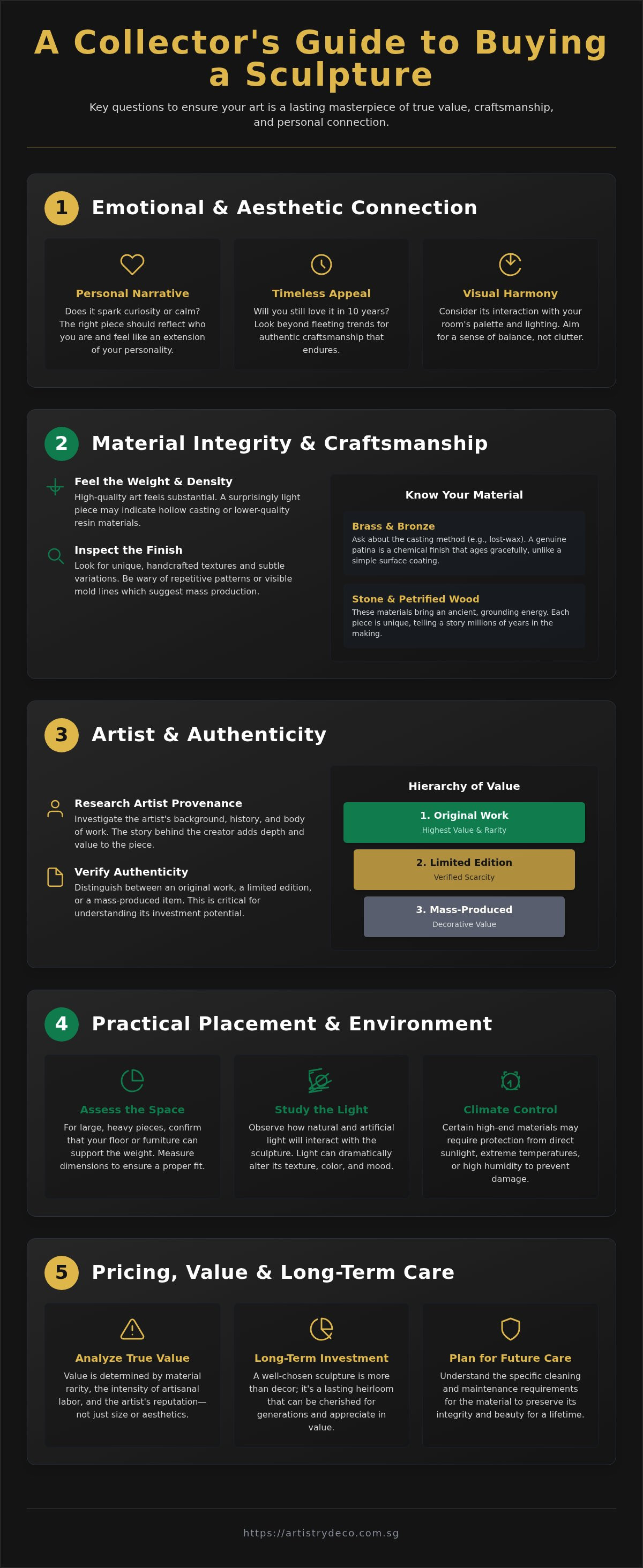
A sculpture isn't just a static object. It's a presence that lives with you, breathing character into your private sanctuary. When you first encounter a piece, notice your immediate reaction. Does it spark a sudden curiosity, or perhaps a deep sense of calm? One of the most important questions to ask before buying a sculpture is whether the work evokes a lasting emotional or intellectual response. Art should challenge your thoughts or soothe your spirit; it should never feel like a mere space-filler. By understanding the history of sculpture, you'll see how master artisans have used form and volume to tell stories for millennia. This context helps you judge if a contemporary piece has the same depth and staying power.
Longevity is the true test of a collector's choice. Ask yourself if you'll still feel a connection to this piece in five or ten years. Trends fade, but authentic craftsmanship remains. Consider how the sculpture's shapes and colors interact with your current room palette. A bold, dark bronze might provide a striking contrast against a neutral wall, while a translucent marble piece could offer a soft, ethereal glow. You're looking for a relationship between the art and the architecture of your home, ensuring they speak the same language of elegance.
Does the Sculpture Fit Your Personal Narrative?
Every home is a curated collection of its owner's life experiences. Your art should reflect who you are and what you value. If you're drawn to the raw, ancient beauty of the natural world, petrified wood sculptures tell a story of time and transformation that spans millions of years. These pieces act as sophisticated conversation starters, inviting guests to explore the unique narratives behind your decor. Whether it's a symbol of strength or a nod to your travels, the sculpture should feel like a natural extension of your own personality.
Visual Harmony and Room Balance
The success of a piece often depends on its environment. Imagine the sculpture in different lighting conditions. Morning sun might highlight the intricate textures of a piece from The Stone Atelier Collection, while evening spotlights could cast dramatic, moody shadows that change its character entirely. Think about visual weight. A heavy, solid piece can anchor a room as a focal point, while a more delicate, airy design might serve as a supporting accent. You want to achieve a sense of balance where the sculpture feels intentional, not cluttered.
Evaluating Material Integrity and Craftsmanship
The soul of a masterpiece lies in its substance. When you're standing before a potential acquisition, the first thing you should notice is the relationship between size and weight. A high-quality piece of functional art should feel substantial. If a large statue feels surprisingly light, it's often a sign of hollow casting or low-density resin. Understanding the density of your chosen medium is one of the essential questions to ask before buying a sculpture. It's the difference between a temporary ornament and a lasting heirloom.
When you prepare your list of questions to ask before buying a sculpture, always look for signs of expert hand-finishing. Mass-produced items often show repetitive patterns or visible mold lines. In contrast, a handcrafted piece will have unique textures and subtle variations that reveal the artist's touch. You should also check for structural stability. A well-designed sculpture should be perfectly balanced or securely mounted to its base. If you have specific questions about how a piece is finished, it's always best to speak with a curation expert who can explain the technical details.
The Beauty of Brass and Bronze Statues
Metal sculptures offer a timeless elegance that few other materials can match. When examining these pieces, ask about the specific casting process used. Is it a traditional lost-wax method or a more modern sand cast? The Aura Brass Sculpture Collection serves as a perfect example of how premium metalwork should look and feel. Pay close attention to the patina. A genuine patina isn't just a surface color; it's a chemical finish that will age gracefully over decades. Authentic patinas develop a rich character that mass-produced coatings simply can't replicate.
Stone and Petrified Wood: Nature’s Sculptures
Stone and fossilized materials bring an ancient, grounding energy into a modern home. For items like those in the Fossil Petrified Wood Collection, the origin and age are vital factors. These pieces are often millions of years old, transformed from wood into stone through mineral replacement. Ask your curator about the polishing techniques used. High-quality marble or petrified wood should feel cool and smooth to the touch, with no artificial fillers hiding cracks. The beauty of these materials is their raw, unrepeatable nature. No two slabs of stone or sections of fossilized wood will ever be identical.
Investigating the Artist and Authenticity
Buying art is an act of trust. To ensure that trust is well-placed, you must look beyond the surface of the object. One of the most critical questions to ask before buying a sculpture is: who created this, and what is its lineage? A piece's value is deeply tied to the artist’s history, their formal education, and the exhibitions where their work has been showcased. When you understand the hands that shaped the clay or carved the stone, the sculpture becomes more than decor; it becomes a part of art history. Take the time to research the creator's journey to see if their artistic evolution aligns with your own tastes.
Documentation is your shield against the common. Always ask for a certificate of authenticity or official provenance papers. These documents confirm whether the piece is a one-of-a-kind original or part of a limited edition. You should also inquire about the "marriage" of parts. In high-end work, every component should be original to the design. If a base or a specific attachment seems mismatched, it might indicate a repair or a later addition that could affect the piece's long-term value. Authentic, handcrafted pieces should feel like a singular, cohesive thought from the artist.
Unique Pieces vs. Curated Replicas
Owning a one-of-a-kind sculpture offers a level of exclusivity that is hard to match. These works carry the raw energy of the artist’s initial vision and are often the most prized in a collection. However, there is also immense value in owning high-quality, museum-grade replicas. These pieces allow you to bring home the spirit of ancient history with incredible precision and respect for the original. If you're interested in how to blend these styles, our guide on Vintage Historical Artifacts provides deeper insights into curating history within your own four walls. Both paths lead to a sophisticated home, provided the quality is uncompromised.
Provenance and Storytelling
Every great sculpture has a story that begins long before it reaches your living room. Ask the seller about the background of the specific design. Does it have historical or cultural significance? Perhaps it reflects a specific movement or a traditional technique unique to a certain region. Determine if the artist is known for this specific style or material. When a sculpture comes with a rich narrative, it transforms from a visual object into a meaningful legacy. This storytelling adds a layer of depth that guests will notice and appreciate during your social gatherings, making your home feel truly curated.
Practical Placement and Singapore Climate Factors
Selecting a masterpiece is only half the journey; the other half is ensuring its survival and presence in your private sanctuary. You must measure your space with absolute precision. A sculpture that is too small disappears into the room, while one that is too large can feel oppressive. Check the weight-bearing capacity of your furniture. A solid marble statue or a dense bronze piece requires a sturdy foundation. It's not just about the look; it's about the safety and stability of your curated collection.
Among the essential questions to ask before buying a sculpture, climate-related concerns are often overlooked. Singapore's tropical environment is beautiful but demanding. Direct sunlight streaming through large windows can cause certain finishes to fade or crack over time. Positioning your art away from harsh UV rays ensures that the colors remain as vibrant as the day you acquired the piece. You're building a legacy, and that requires a home environment that respects the material's needs.
Scaling the Sculpture for Modern Living Rooms
Modern interiors thrive on focus. When you place a centerpiece on a dining table, try the rule of thirds to create a sense of movement and visual interest. It's better to have one breathtaking focal point that commands attention than a series of smaller, distracting objects. This approach prevents the room from feeling like a storage space and allows the art to breathe. If you're unsure how to begin, read how to style functional living room decor for professional placement techniques.
Maintaining Art in a Tropical Environment
Maintenance in the tropics requires a proactive mindset. Ask about the specific cleaning needs for brass in Singapore's salty, humid air. Marble and stone react to the constant shift between outdoor humidity and indoor air conditioning. These environmental stressors can lead to micro-cracks or surface dulling if the material isn't museum-grade quality. Determine if the artist recommends a professional wax or sealant every few years to preserve the integrity of the surface. Authentic materials like those in The Stone Atelier Collection are chosen for their resilience, but they still benefit from a gentle, informed touch.
Pricing, Value, and Long-Term Care
Investing in a sculpture is a significant financial and emotional commitment that should reflect the physical and intellectual labor involved in its creation. When you review the price, look closely at the rarity of the materials and the hours of intensive artisanal work. A handcrafted bronze piece or a fossilized wood slab requires months of careful preparation and expert finishing. One of the essential questions to ask before buying a sculpture is what additional costs are involved beyond the initial acquisition price. In Singapore, professional sculpture installation pricing can start at around S$800 for larger or more complex pieces. You should also check the shipping guarantees for fragile items to ensure your investment arrives in pristine condition without hidden logistical risks.
While art should always be bought for the joy it brings, its potential to appreciate in value is a welcome benefit for any collector. High-quality pieces from established collections often hold their value better than generic, mass-produced decor items. Review the gallery's return policy and ensure they provide clear documentation for every acquisition. This transparency is the hallmark of a premium curator and protects you as a member of the collecting community. It's also wise to consider the cost of art insurance; premiums typically range between 1% and 5% of the artwork's value annually to protect against unforeseen damage.
The Value of Functional Art
Art doesn't have to be purely decorative to be valuable. Functional pieces offer a unique value proposition by blending high-end aesthetics with daily utility. For instance, Zoffoli Italy Globes serve as both world-class study tools and stunning room centerpieces. Comparing the cost of mass-market decor to investment-grade sculptures reveals a significant difference in longevity. An investment piece is built to last centuries; cheaper alternatives often degrade or lose their appeal within a few years. Choosing functional art ensures your home feels sophisticated while serving your lifestyle needs.
Developing a Care Routine
A masterpiece requires a dedicated care plan to maintain its luster and structural integrity over time. Always ask for a written care guide tailored to your sculpture's specific material. The cleaning products used on a polished marble surface are very different from those used on a matte brass patina. Plan for the long-term safety of the piece by identifying a location away from high-traffic areas where it might be accidentally bumped. Using the right pH-neutral cleaners and soft microfiber cloths will prevent surface scratches or chemical damage. A well-maintained sculpture will remain a proud focal point in your home for generations.
Begin Your Journey into Curated Art
Choosing a sculpture is a personal journey that transforms a house into a sophisticated home. By mastering the essential questions to ask before buying a sculpture, you've gained the tools to identify true quality and artistic intent. You now know how to look for material integrity in handcrafted brass or ancient marble and how to protect those pieces in our tropical climate. Each selection should tell a story that resonates with your own values, creating a space that feels curated and alive.
Our Singapore based boutique specializes in sourcing rare treasures that bridge history and modern design. We offer exclusive pieces handcrafted by master artisans, including sculptures carved from 20-million-year-old petrified wood. We understand the local environment and the high standards of the modern collector. Whether you want a bold centerpiece or a subtle accent, we're here to help you find a piece that offers beauty and lasting value.
Your home deserves a narrative as unique as your own. We look forward to helping you find the perfect masterpiece to start your next chapter.
Frequently Asked Questions
How do I know if a sculpture is made of real brass or just plated?
Weight and sound are the most reliable indicators of material integrity. Solid brass is much heavier than plated zinc or resin alternatives. If you tap the piece with a fingernail, solid brass produces a clear, resonant ring; plated items sound dull and hollow. Look at the Aura Brass collection for examples of genuine weight. Real brass also maintains a consistent golden hue throughout the material even if the surface is lightly scratched.
What is the best way to clean a marble sculpture without damaging it?
Use a pH-neutral cleaner and a soft microfiber cloth to preserve the natural luster of the stone. You must avoid acidic substances like vinegar or lemon juice, as these will etch the surface of marble and stone statues. Gently wipe away dust every week. For deeper cleans, use distilled water mixed with a tiny drop of mild soap. Always dry the surface immediately to prevent water spots or mineral buildup from Singapore’s tap water.
Do sculptures in Singapore homes need special protection from humidity?
Yes, pieces in Singapore require protection from our high humidity to prevent oxidation. Metal patinas on bronze statues can change color or develop corrosion in moist air. We recommend applying a thin layer of microcrystalline wax to create a protective barrier. For petrified wood or marble, keeping a stable indoor temperature with air conditioning helps prevent moisture from seeping into the natural pores of the material.
Is it better to buy a unique one-of-a-kind piece or a limited edition?
A unique one-of-a-kind sculpture offers the highest level of exclusivity for your private collection. These pieces are handcrafted by master artisans and carry the strongest investment potential. Limited editions are also valuable but exist in a set quantity. When preparing your questions to ask before buying a sculpture, verify the edition number and the total run size. Both paths lead to a sophisticated home, but an original provides a truly singular narrative.
How can I tell if a petrified wood sculpture is authentic?
Genuine petrified wood displays visible wood grain patterns and growth rings that have been replaced by minerals like quartz. It's extremely heavy and feels cold to the touch like stone, never warm like resin. It should have a Mohs hardness of approximately 7. Always check if the seller can provide the geological origin. Our fossilized sculptures often date back 20 million years, showing natural crystalline structures that mass-market replicas cannot replicate.
What questions should I ask about the shipping of heavy stone sculptures?
You should ask about white-glove delivery and the use of custom, reinforced crates. Heavy stone statues require professional handling to prevent hairline cracks during transit. In Singapore, inquire if the delivery includes on-site placement and if the team understands the weight limits of your pedestals. Don't forget to confirm that the shipping quote includes full insurance, which usually costs between 1% and 5% of the piece's total appraised value.
Should I ask for a certificate of authenticity for a modern sculpture?
You should definitely request a certificate of authenticity for any modern sculpture you acquire. This document is a formal record of the artist’s name, the specific medium, and the creation date. It’s an essential part of the piece’s provenance and is critical for future resale or insurance appraisals. A reputable curator will always provide this documentation to ensure your investment is verified and protected as part of your home’s lasting legacy.
How do I choose the right size sculpture for a small Singapore apartment?
Choose pieces with verticality to draw the eye upward without taking up valuable floor space. A tall, slender sculpture creates a focal point that makes a small room feel more grand. One of the smart questions to ask before buying a sculpture for a compact apartment is how it interacts with light. Polished metal or marble pieces reflect light, helping to maintain an airy and open feel in typical Singapore urban living spaces.