
Petrified Wood Sculptures: The Ultimate Guide to Fossilized Art in Singapore (2026)

Your living room doesn't just need a new piece of decor; it needs a story that began twenty million years ago. Owning one-of-a-kind petrified wood sculptures is like holding a physical piece of history that has turned from ancient timber into shimmering stone. We know that finding the perfect balance between raw, natural fossils and a polished Singaporean apartment can feel like a challenge. You might worry about how to tell if a stone is real or if it will be too heavy and difficult to maintain alongside your modern furniture.
We agree that your home should be a sanctuary that reflects your taste for the extraordinary and the timeless. This guide will help you choose, style, and care for petrified wood sculptures so they become the breathtaking focal point of your office or living room. You'll learn how to pick mountain lookalike carvings for better Feng Shui and how to match these ancient Earth elements with your contemporary space. Let's explore how to bring the quiet power and enduring beauty of the natural world into your everyday life with confidence and ease.
Key Takeaways
- Identify premium quality by checking for natural bark details and vibrant mineral colors that show the stone's age and origin.
- Learn the best ways to display petrified wood sculptures as bold entry focal points or unique functional decor on your tables.
- Use the grounding energy of the Earth element and mountain shapes to bring stability and support to your work or living space.
- Protect your investment with simple maintenance tips, including why you should never use chemicals on these delicate mineral surfaces.
- See why fossilized art is a sustainable and sophisticated choice for modern homes that value one-of-a-kind history.
What Are Petrified Wood Sculptures? The Science of Ancient Art
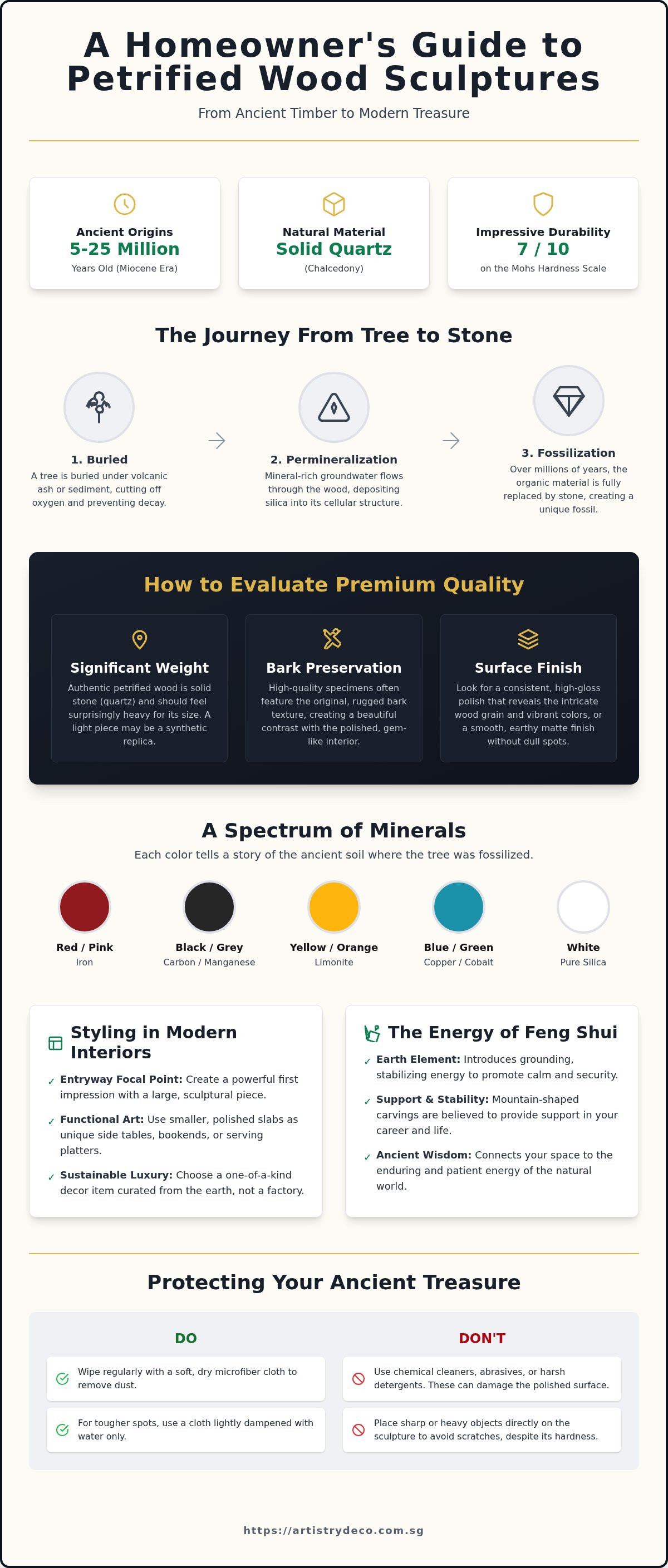
A petrified wood sculpture is much more than a simple ornament. It represents a bridge between the ancient world and your modern home. These pieces are the fossilized remains of terrestrial vegetation that lived millions of years ago. Most high-quality specimens found today date back to the Miocene era, a period spanning from 5 to 25 million years ago. During this vast stretch of time, what was once a living tree transformed into a shimmering gemstone. Because the organic cells are replaced by silica, these sculptures are technically categorized as chalcedony or quartz.
Choosing petrified wood sculptures means inviting a story of survival into your space. These fossils didn't just happen by chance. They required a perfect set of conditions to transition from bark to stone. This rare combination of geology and time creates a material that feels cool to the touch and heavy with history. It's a tactile experience that connects you to the Earth's deep past every time you run your hand over its polished surface. Each piece serves as a silent witness to a world that existed long before our own.
The Journey from Tree to Stone
The transformation begins when a tree is suddenly buried under volcanic ash or thick sediment. This burial creates an environment without oxygen, which is vital because it prevents the wood from rotting away. Over thousands of years, groundwater rich in dissolved minerals flows through the sediment and into the buried logs. Permineralization is the replacement of organic matter by minerals like quartz. As the water evaporates, the minerals stay behind, slowly filling the empty spaces left by decaying cells. This process is the core of The Science of Ancient Art, ensuring that even the smallest details of the wood grain are preserved in solid stone forever.
Why Fossilized Wood is a Unique Decor Material
Why do interior designers and collectors prize this material so highly? Durability is a major factor. Fossilized wood ranks at a 7 on the Mohs scale of hardness, which means it's as tough as granite and very difficult to scratch. This makes it perfect for functional art that can be used daily without fear of damage. Additionally, the uniqueness of each piece is unmatched. No two petrified wood sculptures can ever share the same grain pattern or color palette. The hues you see are a direct result of the specific minerals present in the soil during the fossilization process. Finally, this is a form of sustainable luxury. We aren't harvesting living forests; we are curating ancient treasures that have already spent millions of years beneath the Earth's surface.
How to Evaluate Quality in Petrified Wood Sculptures
When you first encounter petrified wood sculptures, the most striking feature is often their weight. Real fossilized wood is significantly heavier than resin fakes because it is essentially solid quartz. If a large piece feels surprisingly light, it's likely a synthetic imitation. Beyond weight, you should look closely at the surface finish. A high-gloss polish highlights the intricate cell structures and mineral colors, while a matte finish offers a more raw, earthy aesthetic. Both have their place in a modern interior, but the quality of the polish should be consistent without visible scratches or dull patches.
Bark preservation is another hallmark of a premium specimen. Collectors often look for pieces where the original texture of the tree's exterior is still visible. This contrast between the rugged, ancient bark and the smooth, gemstone interior creates a stunning visual narrative. It's a sign that the fossil was handled with care during the extraction and polishing phases. If you're unsure about the authenticity or origin of a particular piece, you can speak with our curators for expert guidance on selecting a genuine masterpiece for your collection.
Mineral Colors and Their Meanings
The palette of a fossil isn't random; it's a chemical signature of the past. When Evaluating Quality in Petrified Wood, understanding these colors helps you appreciate the piece's history. Red and pink hues indicate a high iron content, while black and grey tones are usually the result of carbon or manganese oxides. Yellow and orange tones suggest the presence of limonite. The rarest specimens feature blue or green inclusions caused by copper or cobalt. These vibrant colors are highly prized by serious collectors for their beauty and rarity.
Sourcing and Origins: Java vs. Madagascar
The origin of your piece dictates its personality. Indonesian wood, particularly from Java, is famous for its dramatic shapes. These specimens often resemble miniature mountains, making them ideal for those seeking powerful Feng Shui elements. In contrast, Madagascar is the primary source for colorful polished rounds and slices. These are often used as functional dining table centerpieces because of their bright, kaleidoscopic patterns. Local Singaporean collectors often lean toward Indonesian sources. The proximity allows for a better selection of large, structural petrified wood sculptures that make a bold statement in a foyer or executive office.
Styling Petrified Wood in Modern Singaporean Interiors
In a city known for its sleek architecture and glass-fronted buildings, bringing in something raw and ancient creates a powerful contrast. Large petrified wood sculptures placed on pedestals in a foyer act as immediate conversation starters. They ground the entryway of a modern condo or BTO, providing a sense of permanence that factory-made furniture simply cannot match. For a more subtle touch, many homeowners use smaller fossilized slices as functional dining table centerpieces. These organic shapes break up the sharp lines of a contemporary kitchen, making the space feel more lived-in and soulful.
To make these fossils truly shine, you need to balance their "cold" stone nature with "warm" materials. Pair a polished fossil slab with a solid teak or oak dining table. This creates a harmonious blend of textures that feels both luxurious and inviting. Lighting is equally crucial for these pieces. Use directional spotlights or warm LED strips to illuminate the sculpture from an angle. This highlights the intricate crystalline structures formed during the formation of petrified wood, making the hidden quartz layers sparkle like diamonds when you walk past.
Minimalist Living Room Styling
In a clutter-free home, less is always more. A single, tall statement piece placed on a low-profile TV console draws the eye without overwhelming the room. This approach allows the natural grain and mineral colors of the fossil to take center stage against a neutral wall. You can Browse our Modern Artistic Sculptures for styling inspiration to see how these ancient textures complement a clean, contemporary layout. It's about finding that one unique specimen that speaks to your personal style and letting it breathe in an open space.
The Executive Home Office
Your workspace should reflect authority and quiet confidence. Using petrified wood sculptures as bookends or desk ornaments signals stability and a deep appreciation for heritage. Pair these natural wonders with Unique & Playful Clocks to create a curated, professional setup that feels both personal and high-end. These pieces aren't just for your own home; they make exceptional gifts for luxury property sales or corporate milestones. They offer a one-of-a-kind token of success that won't fade or wear out, standing as a testament to time and resilience.
Symbolism and Feng Shui: The Energy of Fossilized Wood
In the practice of Feng Shui, petrified wood sculptures are highly valued for their unique energetic profile. They represent a rare bridge between the Wood and Earth elements. While they began as living trees, their transformation into stone over millions of years has imbued them with intense grounding energy. This makes them ideal for homes that feel chaotic or for individuals who need more stability in their personal lives. Placing these fossils in the Center (Tai Qi) of your home can promote overall health and harmony for the entire household.
The symbolic power of these pieces also relates to longevity. Because these trees have survived through the ages, they're seen as icons of endurance and resilience. In the Bagua map, you might also place them in the Northeast area, which governs knowledge and self-cultivation. The steady, ancient vibration of the stone helps quiet the mind during meditation or study. It's a physical reminder that great things take time to grow and that true strength comes from deep, solid roots.
Mountain symbolism is perhaps the most practical application for petrified wood sculptures in a Singaporean office. In traditional design, having a "mountain" at your back provides support and protection from unseen challenges. By placing a large, rugged sculpture behind your desk or seating area, you create a symbolic barrier that fosters confidence. This sense of being backed by millions of years of history can change the way you approach high-stakes meetings or daily tasks.
The Mountain Lookalike Sculpture
Many collectors specifically search for "mountain lookalike" carvings because of their protective qualities. These pieces often feature natural peaks and valleys that mimic a vast landscape in miniature. When displaying these, choosing the right base is essential. Solid wooden pedestals are preferred because they allow the energy to flow smoothly from the Earth into the sculpture. You can Explore our Fossil & Petrified Wood Collection to find specimens that naturally embody these majestic mountain forms.
Metaphysical Properties for the Modern Professional
Beyond traditional Feng Shui, petrified wood is often called the "stone of transformation." For the modern professional, it serves as a tool to foster patience and steady growth. It reminds us that business success isn't built overnight. Many collectors view these as "living" historical artifacts that carry the wisdom of the ancient world. They help you stay connected to your goals during times of rapid change, providing a calm center in a fast-paced city. It's an investment in your mental well-being as much as it is a statement of style.
Maintenance and Care for Your Petrified Wood Collection
While petrified wood sculptures have survived for millions of years underground, they still require thoughtful care to maintain their museum-quality appearance in your home. The most important rule is to keep things simple. For routine cleaning, you only need a soft, damp cloth to wipe away surface dust. Avoid using any household chemicals or acidic cleaners like vinegar or lemon-based sprays. These substances can react with the delicate mineral inclusions in the stone, potentially dulling the high-gloss polish over time.
If you own one of the more intricate mountain-style carvings, dusting can be a bit more complex. The rugged textures and deep crevices that make these pieces so beautiful also tend to trap particles. A soft-bristle brush, such as a clean makeup brush or a small paintbrush, is the best tool for reaching these tight spots without scratching the surface. Additionally, consider the placement of your piece. While quartz is very stable, direct sunlight over several decades can sometimes cause certain mineral colors to fade slightly. Placing your sculpture away from harsh, direct UV rays ensures that its vibrant reds and deep blacks remain intense for generations.
Handling Heavy Stone Sculptures
Moving your collection requires patience and a bit of planning. Because these pieces are essentially solid quartz, they are much heavier than they appear. Always ask for help when moving large pedestals or log blocks to avoid injury or accidental drops. To protect your contemporary furniture, we recommend using thick felt pads under the heavy stone bases. This prevents the hard minerals from leaving permanent scratches on your wooden consoles or marble tables. You should only use a pH-neutral soap if water is insufficient for cleaning your sculpture.
Long-term Investment Value
Beyond their aesthetic appeal, petrified wood sculptures are increasingly seen as appreciating assets. As natural fossil sites around the world become more strictly protected or depleted, the supply of high-quality, legally sourced specimens is shrinking. This makes every authentic piece you own more valuable over time. To preserve this value, it's wise to keep detailed records of your sculpture's origin and estimated age. Documenting whether your piece comes from Java or Madagascar helps future collectors appreciate its true worth. For more tips on building a meaningful collection, you can Read our guide on Curating History at Home. It's a rewarding journey that turns a simple hobby into a lasting legacy.
Transform Your Home with a Piece of Earth’s History
Bringing a piece of the ancient world into your modern Singaporean home is more than a design choice; it's an investment in a legacy that spans millions of years. You now understand how these shimmering fossils transition from timber to stone and how to identify the rich mineral colors that signal true quality. From grounding your living space with the Earth element to maintaining the high-gloss finish with expert care, owning petrified wood sculptures is a rewarding experience for any collector.
Artistry Deco Shop offers a curated selection of these rare treasures, specifically chosen to complement the elegance of luxury homes. We provide secure local delivery and the expert advice you need to ensure your fossil remains a breathtaking focal point for decades. Every piece in our collection is a unique survivor of history, waiting to tell its story in your office or foyer.
Take the time to choose a specimen that resonates with your spirit and watch as it brings a quiet, timeless power to your everyday surroundings.
Frequently Asked Questions
Is petrified wood a real stone or just hard wood?
Petrified wood is technically a real stone, specifically a type of chalcedony or quartz gemstone. Although it retains the visual appearance of ancient trees, the organic matter was replaced by minerals millions of years ago. It feels cold and hard like granite because it has completely transformed into a fossil. You aren't buying wood; you're buying a piece of geological history that is as durable as any other rock.
How can I tell if a petrified wood sculpture is authentic?
Authenticity can be verified by checking the piece's weight and temperature. Real petrified wood sculptures are significantly heavier than resin or plastic fakes; they'll feel naturally cold to the touch even in a warm room. Look for small imperfections like natural bark textures or tiny crystalline structures within the grain. If the patterns look too perfect or repetitive, it's likely a mass-produced imitation rather than a genuine fossil from Indonesia or Madagascar.
Where is the best place to put petrified wood for Feng Shui?
The best placement depends on your goals, but the Center of the home is ideal for overall stability and health. Placing a mountain-shaped piece behind your desk or sofa provides symbolic support and protection from professional challenges. If you're focusing on personal growth, the Northeast sector is the traditional spot for self-cultivation. These fossils act as a powerful Earth element that grounds energy and brings a sense of calm to any busy living space.
Is petrified wood rare and does it increase in value?
High-quality petrified wood is rare because it requires a specific set of geological conditions to form over millions of years. As many natural fossil sites become protected or depleted, the supply of museum-grade specimens is decreasing. Collectors often see these pieces as appreciating assets. A well-preserved sculpture with rare mineral colors like blue or green can become a valuable heirloom that gains worth as the global market for rare natural art continues to grow.
How do I clean my petrified wood sculpture without damaging it?
You should only clean your sculpture with a soft, damp cloth and plain water. It's important to avoid any acidic or chemical cleaners, as these can react with the minerals and ruin the polished finish. For intricate carvings with deep textures, a soft-bristle brush works wonders for removing trapped dust without scratching the stone. If the surface is very dirty, a tiny amount of pH-neutral soap is the only safe additive you should consider.
Are these sculptures safe to keep in a house with children?
These sculptures are completely non-toxic and safe for homes with children, but their weight is a factor to consider. Because they are solid stone, a large piece can be very heavy; it should be placed on a sturdy, stable surface where it can't be tipped over. We recommend using felt pads on the base to prevent the stone from sliding. Always ensure that any piece with sharp, natural edges is kept out of reach of very small children.
Why is petrified wood so heavy compared to normal wood?
The weight comes from the permineralization process, where every organic cell is replaced by heavy minerals like silica and iron. While a normal log is porous and contains air, petrified wood sculptures are solid stone throughout. This makes them roughly three times heavier than the original wood would have been. This density is one of the clearest signs that you're holding a piece of Earth that has spent millions of years under intense pressure.
Can petrified wood be used as a dining table centerpiece?
Absolutely, polished slices and rounds make stunning and functional dining table centerpieces. They are highly durable and heat-resistant, so they can easily handle the weight of vases or other decorative items. The unique grain patterns provide a sophisticated, organic look that contrasts beautifully with modern glassware and linens. Since each piece is one-of-a-kind, it serves as a permanent conversation starter for your guests during dinner parties or formal family gatherings.