
How to Value Antique Home Decor: A Beginner's Guide

Imagine discovering a heavy brass statue tucked away in a dusty corner of your home, its surface worn by time but its weight suggesting a hidden story. You might wonder if you've found a priceless heirloom or just a charming vintage trinket. Many collectors feel a sense of confusion when trying to tell the difference between a modern replica and a true historical treasure. It's common to worry about being scammed or missing a tiny maker mark that could change everything. Learning how to value antique home decor doesn't have to be a mystery reserved for auction houses. You deserve to feel certain when you display a petrified wood sculpture or a marble piece in your living room.
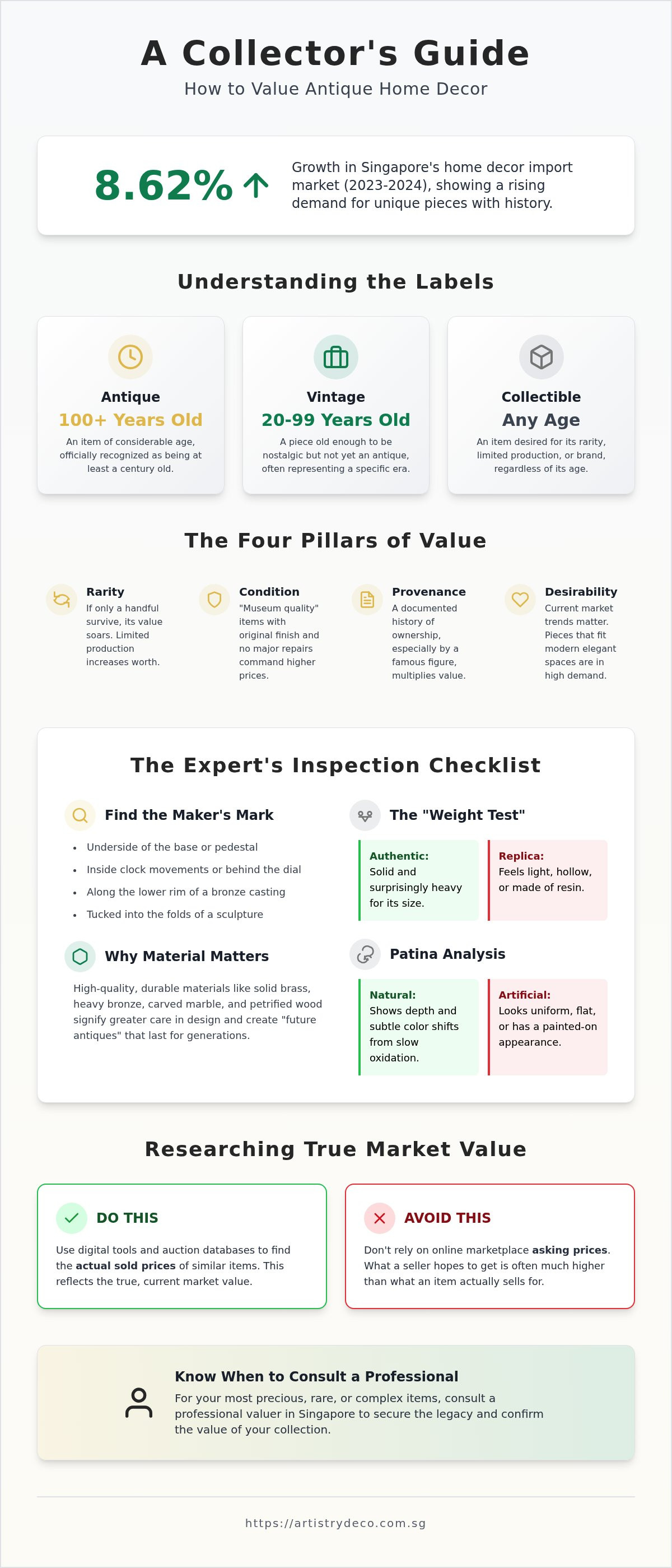
We've created this guide to help you identify, research, and price your items with ease. You'll learn how to spot the signs of quality craftsmanship and understand the current market trends in Singapore, where the home decor import market grew by 8.62% between 2023 and 2024. We'll walk through the simple steps of checking for authenticity and caring for your precious finds. By the end, you'll have the knowledge to price your pieces accurately and the pride that comes from owning a genuine piece of history.
Key Takeaways
- Uncover the subtle differences between antique, vintage, and collectible labels to better understand the story behind your home accessories.
- Master the "Weight Test" and learn how to value antique home decor by identifying the hallmarks of quality in heavy brass and bronze statues.
- Use digital tools and auction history to find the true market price of your treasures instead of relying on unreliable asking prices.
- Identify the right moment to consult a professional valuer in Singapore to secure the legacy and value of your most precious items.
- Gain the confidence to blend historical artifacts with modern functional art to create a living space that feels both timeless and personal.
Getting Started: What Determines the Value of Antique Home Decor?
Before you can master how to value antique home decor, you need to speak the language of collectors. Most experts follow the standard Definition of an antique, which refers to an item that's at least 100 years old. If a piece is older than 20 years but hasn't reached the century mark, it's usually called vintage. Collectibles are different; they might be newer items that people want because they're part of a limited set or a specific brand. Understanding these labels is the first step in knowing what you have on your shelf.
Rarity is the heartbeat of valuation. If thousands of identical statues were made in the 1920s and many still exist, the price stays low. However, if only a handful survived a war or a factory fire, the value soars. Provenance adds another layer of magic. This is the documented history of who owned the piece. A simple brass bowl might be worth a modest amount, but if it sat on the desk of a famous leader, its value multiplies. This history turns a simple object into a piece of a larger narrative.
In Singapore, the demand for unique home decor is rising. Imports grew by 8.62% from 2023 to 2024, showing that more people want items with a story. Modern trends often favor pieces that act as a bridge between the past and the present, which means certain styles might be worth more today than they were a decade ago.
The Three Pillars of Value: Age, Condition, and Rarity
Age is just the beginning. A 200-year-old chair that's falling apart might be worth less than a 50-year-old designer lamp in perfect condition. Collectors look for "museum quality," where the item has its original finish and no major repairs. In the Singapore market, desirability often leans toward items that fit into elegant urban spaces. A rare piece that's also beautiful and functional will always command a higher price than a rare item that's difficult to display or maintain.
Why Material Matters in Valuation
The material of a piece tells you a lot about its original cost and its lasting worth. Solid brass, heavy bronze, and carved marble are classic choices that hold value well because they're durable and difficult to work with. We also see a growing interest in natural wonders like this fossil petrified wood collection. These pieces are millions of years old, turning ancient organic matter into stone. Understanding these materials is a key part of how to value antique home decor because high-quality materials usually mean the maker took more care in the design, creating a "future antique" that lasts for generations.
The Expert’s Eye: How to Inspect Materials and Markings
Learning how to value antique home decor requires a shift in perspective. You must look beyond the surface and focus on the physical evidence of quality. A true masterpiece often carries a secret signature that tells its story. Start by gently turning the item over. Maker’s marks, factory stamps, or artist signatures are frequently hidden on the base or tucked into the folds of a sculpture's drapery. Use a magnifying glass to inspect these areas. A faint stamp from a famous foundry can instantly elevate a piece from a decorative object to a high-value investment.
Finding the Hidden Maker’s Mark
If you don't see a mark right away, don't lose hope. Many antique clocks or statues have marks hidden in specific spots that are easy to miss:
- The underside of the base or the interior of a pedestal.
- Inside the clock movement or behind the dial plate.
- Along the lower rim of a bronze sculpture's casting.
If the piece is completely unmarked, look at the style. Does it match the bold lines of the Art Deco period or the intricate details of the Victorian era? Identifying the period helps you place the item in a historical context. This detective work is part of the joy of collecting. It connects you to the artisan who created the piece decades ago.
The "Weight Test" is another reliable tool in your arsenal. Authentic brass and bronze statues are solid and heavy. If a piece feels surprisingly light for its size, it's likely a hollow modern replica or made from a cheaper resin composite. Inspect the finish as well. A natural patina grows slowly over years of oxidation, showing depth and subtle color shifts. Artificial aging often looks uniform or painted on. Look for "cold painting" on older sculptures, where vibrant colors were applied directly to the metal after it cooled. This technique was popular for Austrian bronzes and adds significant value if the original paint is still intact.
Assessing Stone and Wood Decor
Stone and wood items offer their own clues. Solid marble feels cold to the touch and has unique veining that no resin can perfectly copy. When exploring natural treasures like fossilized sea shells and petrified wood, look for the organic patterns created by millions of years of pressure. Handcrafted items will show slight variations, unlike the perfect symmetry of factory-made pieces. These details are vital for anyone learning how to value antique home decor with precision. If you're ever unsure about a specific find, you can always speak with a curation expert to gain more insight into your collection's potential.
Market Research: Using Online Tools and Sales History
Once you've inspected the physical details of your piece, the next stage of how to value antique home decor takes place in the digital world. Technology has made it easier to trace an item's lineage directly from your home. A simple reverse image search can often reveal the artist or the specific era of a sculpture. By uploading a clear photograph of your item, you can find matching silhouettes in auction catalogs or museum archives. This initial identification sets the stage for accurate pricing and helps you avoid common mistakes made by casual observers.
The most critical rule in market research is looking at "Sold" listings. Many beginners fall into the "eBay Trap," where they see a high asking price and assume their item is worth the same. In reality, an item is only worth what someone has actually paid for it. Auction house archives provide the most reliable data because they show realized prices. For highly specialized items, such as Zoffoli Italy Globes, joining niche collector forums can offer insights that general search engines miss. These communities understand the nuances of specific brands, historical editions, and the subtle variations that drive collector interest.
Reliable Online Databases for Collectors
Finding the right data requires precision in your search terms. Use specific keywords like "Art Deco" or "Mid-Century Modern" to filter your results. General terms are often too broad and lead to modern mass-produced items that don't reflect the true value of your find. Look for realized prices in high-end galleries or curated stores in Singapore. These venues reflect the local market's appreciation for quality. This is vital since the Asia Pacific furniture market is estimated to reach USD 7.26 billion in 2026. Comparing your item to pieces in these professional settings gives you a more realistic view of its potential value.
Comparing Replicas and Originals
A common dilemma is choosing between a damaged antique and a high-quality modern piece. In the current market, condition is paramount. A flawless modern brass sculpture often holds more aesthetic and functional value than a cracked or poorly repaired antique. This shift toward "functional art" is a major trend in 2026. Collectors now value pieces that provide both a visual narrative and a practical purpose in a contemporary home. This hybrid approach is a sophisticated way of understanding how to value antique home decor while building a collection that feels relevant to your lifestyle today.
Professional Valuations and Care in the Singapore Climate
Sometimes, DIY research reaches its natural limit. If you suspect your piece is a rare masterpiece or a significant historical artifact, it's time to seek a professional eye. In Singapore, many reputable auction houses offer complimentary initial appraisals through digital channels like WhatsApp. If you require a formal document for insurance or a sale, an online valuation for a single piece typically costs S$80. On-site inspections for larger collections often start from S$100 per item. This professional step is a vital part of how to value antique home decor with absolute certainty, ensuring you don't leave money on the table or misidentify a treasure.
Protecting Your Investment from Humidity
Singapore’s tropical climate is a silent enemy of historical treasures. High humidity can trigger "bronze disease," a destructive form of corrosion that appears as fuzzy green spots on metal. Wood is also at risk; it can warp or crack as it absorbs moisture from the heavy air. Display your items in climate-controlled rooms and avoid direct sunlight. Maintaining the air quality is just as important as controlling temperature. Using BAS Deodorizers helps keep the environment fresh and stable, protecting the delicate materials of your collection from the elements. A stable environment preserves the patina and structural integrity that drive market value.
The Appraisal Process: What to Expect
A professional valuation comes in different forms. An insurance valuation focuses on the cost of replacing the item, which is often higher than the fair market value. The fair market value is what a willing buyer would pay in an open market. If you decide to sell at auction, remember that Singapore auction houses often charge a seller's commission of 21.8%, including GST. A mandatory insurance fee of 1.7% of the final selling price is also standard. A crucial rule of ethics is to never use an appraiser who offers to buy the item from you. This creates a conflict of interest that can lead to an unfair price.
Before the valuer arrives, prepare a clean space and gather any receipts or ownership history you have. Avoid deep cleaning the piece yourself. A simple dusting with a soft, dry cloth is enough. Harsh chemicals or aggressive polishing can strip away the original finish, instantly lowering the value of the item. By respecting the natural aging process, you preserve the very character that collectors prize. This careful balance of professional insight and daily maintenance ensures your collection remains a valuable asset for years to come.
Curating Your Collection: Blending Antiques with Modern Functional Art
The true joy of collecting lies in the balance between history and utility. Once you've mastered the basics of how to value antique home decor, you gain the confidence to treat your items as more than just objects. They become anchor points for your interior design. A century-old bronze statue can stand proudly alongside unique and playful clocks, creating a dialogue between different eras. This approach, known as functional decor, ensures that art isn't just something you look at; it's something you live with every day. It transforms a house into a personal gallery that reflects your unique taste and world view.
Styling for the Modern Singapore Home
In Singapore’s sophisticated urban spaces, a single statement piece often works better than a dozen small trinkets. You might use Zoffoli globes to ground a glass-topped desk, bringing a warm, vintage texture to a minimalist office. The key is finding contrast. Pair the cold, smooth surface of a modern marble plinth with the rich, dark patina of an antique brass figure. This mix prevents a room from feeling like a museum period piece. The way these pieces interact with light and shadow in a room is a testament to their lasting quality. Choosing a piece for its story rather than its price tag is the mark of a true curator.
Building a Future Heritage
Not every valuable item in your home needs to be a hundred years old. You can begin building a legacy today by choosing high-quality, one-of-a-kind sculptures that are destined to become the treasures of tomorrow. Intricate stone carvings and solid brass figures are excellent examples of future antiques. These items carry the same spirit of craftsmanship and material excellence that collectors look for in historical artifacts. By investing in quality materials now, you're curating a collection that will grow in value for the next generation. Quality is a language that never goes out of style.
Before you finalize your next acquisition, use this final checklist for the aspiring home curator:
- Rarity and Age: Confirm if the piece meets the 100-year antique rule or the 20-year vintage mark.
- Physical Integrity: Check for original finishes and signs of handcrafted work rather than modern factory seams.
- Market Context: Use "Sold" prices from auction archives to set a realistic price for the local market.
- Climate Care: Ensure the item is protected from Singapore’s high humidity to prevent warping or corrosion.
Explore our curated collection of functional art to start your journey.
Embrace the Art of Curated Living
Identifying a true masterpiece is a rewarding ritual that connects you to the artisans of the past. You now have the tools to look beyond the surface, from searching for hidden maker marks on bronze bases to analyzing realized auction prices. By focusing on high-quality materials like marble and stone, you ensure your collection remains a source of pride. These small details transform a simple room into a space filled with character and narrative.
Understanding how to value antique home decor is just the beginning of your journey as a collector. As Singapore-based premium home decor specialists, we curate a selection of museum-quality replicas and expertly crafted brass sculptures that bridge the gap between historical beauty and modern utility. These pieces are designed to be the heritage items of the future, offering a level of craftsmanship that mass-produced items can't match.
Your home is a canvas for your personal narrative. Start building a collection that tells a story of quality, craftsmanship, and refined taste today. It's time to surround yourself with objects that inspire discovery and reflect your commitment to excellence.
Frequently Asked Questions
What is the difference between an antique and a vintage item?
An antique is defined as an item that's at least 100 years old, while vintage pieces are generally 20 years or older. This distinction is vital when learning how to value antique home decor because the age bracket dictates which collector market you're targeting. In Singapore, many collectors seek vintage mid-century modern items alongside century-old artifacts. Understanding these labels ensures you use the correct terminology when researching sales history or speaking with professional appraisers.
How can I tell if my brass statue is solid or just plated?
The most reliable indicator is the weight of the piece. Solid brass and bronze statues are significantly heavier than hollow or plated replicas. You can also use a small magnet; brass is non-magnetic, so if the magnet sticks, the item is likely steel or iron with a thin brass coating. Checking for a seam from a mold or looking for areas where the gold color has worn away to reveal a different metal underneath also helps confirm the quality.
Does cleaning an antique item lower its market value?
Aggressive cleaning or polishing can drastically reduce an item's market value by removing the original patina. This natural oxidation is often what collectors look for to prove an item's age and authenticity. For most home decor accessories, a gentle dusting with a soft, dry cloth is sufficient. If you use harsh chemicals or abrasive tools, you risk stripping away the historical character that makes the piece unique and valuable in the eyes of an expert.
Where can I find a maker’s mark on a small decorative object?
Maker's marks are often tucked away in discreet locations to avoid distracting from the item's aesthetic. For statues, check the very bottom of the base or the lower rim of the casting. On clocks, the mark might be hidden inside the back panel or on the movement itself. Using a magnifying glass is helpful for spotting faint stamps or etched signatures that have faded over time. These marks are the primary evidence used to verify origin and value.
Is petrified wood considered an antique or a fossil?
Petrified wood is technically a fossil, as it consists of ancient organic matter that has turned into stone over millions of years. While it isn't an antique in the 100-year sense, it's highly valued as a one-of-a-kind natural sculpture. In the Singapore market, these fossilized pieces are treated as premium functional art. Their value is determined by their size, the clarity of the wood grain, and the unique colors created by mineral deposits during the fossilization process.
How do I know if an online price is fair for my decor piece?
A fair market price is determined by what buyers have actually paid, not what sellers are asking. When researching how to value antique home decor, always filter your search results to show Sold or Realized prices on auction sites. Asking prices on platforms like eBay can be highly inflated and don't reflect the true demand. Comparing your piece to similar items in high-end Singapore galleries also provides a more accurate benchmark for local market value.
Can modern replicas like Zoffoli globes be considered valuable decor?
Yes, premium modern replicas like Zoffoli Italian globes hold significant value as functional art. While they aren't centuries old, their expert craftsmanship and historical design make them future antiques. Collectors in Singapore value these pieces for their blend of historical beauty and modern utility. They're often used as statement pieces in studies or offices, holding their value well due to the brand's reputation for quality materials and authentic cartographic details.
What should I do if I find a signature I cannot read?
If you find a signature that's difficult to read, start by taking a high-resolution photograph and using a reverse image search. This can often link the item's silhouette to known artists or foundries. You can also try making a rubbing by placing a piece of paper over the signature and gently rubbing it with a pencil. If the artist remains a mystery, identifying the style and material can still help a professional appraiser place the item in the correct period.