
How to Display Sculptures: A Guide to Artistic Spaces

What if the most powerful item in your Singaporean living room isn't your designer sofa, but a single piece of hand-carved stone or brass? It's a bold idea, but three-dimensional art has a unique way of giving a room a soul. You probably want a home that feels like a curated sanctuary, yet you might worry about making the space look cluttered. Many people feel stuck when they try to figure out how to display sculptures in your home without it feeling messy or overwhelming. It's also common to feel unsure about how to use lighting to highlight a statue without creating harsh, distracting shadows.
We understand that matching a heavy marble piece or a tactile petrified wood sculpture with your existing furniture can feel like a challenge. This guide will give you the confidence to select and place art like a professional curator. You'll discover how to use light to enhance your decor and turn your living space into a sophisticated private gallery. We are going to look at the best spots for focal points, the rules for eye-level placement, and how to mix different materials to create a look of quiet luxury.
Key Takeaways
- Learn how to choose the perfect spot in your entryway or living room to make a bold statement with a hero piece.
- Discover why you should avoid flat overhead lighting and how to use shadows to bring out the deep texture of your statues.
- Master the professional secret of eye-level placement and learn how to display sculptures in your home using pedestals for a gallery feel.
- Find out how to blend different materials like brass, marble, and petrified wood to create a balanced and luxurious look in your Singapore home.
The Art of Presence: Why Sculpture Display Matters in Your Home
Sculpture display is the intentional placement of three-dimensional objects to enhance the flow and character of a room. It’s more than just finding a spot for a beautiful item; it’s about how that item interacts with the air around it. While 2D wall art acts like a window into another world, 3D sculptural forms exist in our physical space. They share the same floor we walk on and the same light we breathe in, making them feel more like companions than decorations.
A well-placed statue creates what experts call a "visual pause." In a world of busy patterns and flat screens, a solid object gives the eye a place to rest. It anchors the room's energy, providing a sense of weight and permanence. Sculptural display is the bridge between architecture and interior decor.
Engaging the 360-Degree View
Sculptures invite you to move. You don't just look at them; you walk around them to see how the light changes on their surface. This 360-degree nature means you must consider every angle when choosing a spot. In a Singapore BTO or condo, where space is often limited, smart placement is vital. You want to invite exploration without blocking walking paths. A sculpture should feel like it belongs in the space, not like an obstacle you have to dodge. Think about the silhouette of the piece from the doorway, the sofa, and the dining table. If it looks good from only one side, it might be better suited for a niche or a corner shelf.
Creating Focal Points with Functional Art
If you're new to collecting, you might feel unsure about where to start. Many homeowners find success by choosing Functional Living Room Decor. These pieces offer art with a purpose, such as a designer clock or a handcrafted globe. They provide an easy entry point because they serve a clear role while still offering the tactile beauty of a sculpture.
Learning how to display sculptures in your home starts with understanding how these 3D objects break the monotony of flat surfaces. A heavy marble base or a shimmering brass figure adds a vertical element to coffee tables and sideboards. This layering creates depth. By using functional art as a focal point, you draw the eye to specific areas of the room, making even a small apartment feel like a curated, luxury gallery.
Strategic Placement: Where to Showcase Sculpture for Maximum Impact
Placement determines how a piece "speaks" to the room. If you want to know how to display sculptures in your home effectively, start by identifying the natural paths people take through your space. Each room offers a different stage for your art, from the high energy of an entryway to the quiet focus of a study. By choosing the right location, you turn a simple object into a meaningful part of your daily life.
The 'Hello' Moment in the Entryway
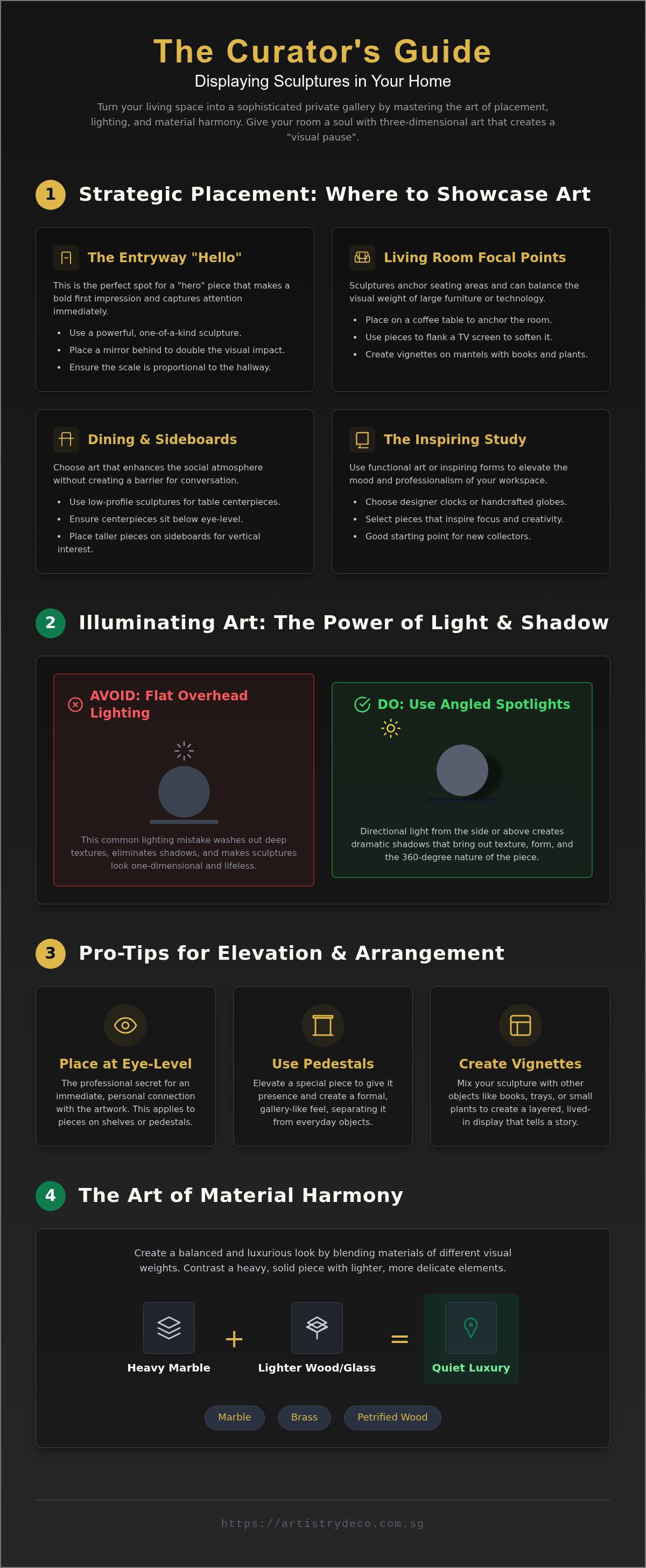
The foyer is the perfect spot for a "hero" piece. This is a one-of-a-kind sculpture that captures attention immediately as someone enters. When choosing a piece for a console table, scale is vital. A small statue might get lost in a wide hallway, while a piece that is too tall can feel cramped. Aim for a height that relates to the door frame or the mirror above it. Using a mirror behind a statue is a clever trick; it doubles the visual impact and lets guests see the hidden details of the sculpture's back without having to walk around it.
In the living room, sculptures can balance the visual weight of a television. Placing statues on either side of a screen helps blend the technology into your decor. For coffee tables, a sculpture acts as an anchor that pulls the whole seating area together. In your study, professional and inspiring forms like world globes or elegant clocks can lift the mood of your workspace. If you have mantels or ledges, use them to create vignettes. Mix your art with personal items like books or small plants to make the display feel lived-in and warm.
Dining Room Centerpieces and Sideboards
The dining table is a social hub where conversation should flow easily. For centerpieces, choose low-profile sculptures that sit below eye level. This ensures your art doesn't block the view between friends and family during a meal. On sideboards, however, you have more freedom to play with scale. You can use Modern Artistic Sculptures to create vertical interest and break up the long, flat line of the furniture.
If you are styling a heavy marble piece, try pairing it with lighter materials like wood or glass. This balance keeps the sideboard from feeling too "heavy" in a modern Singaporean home. If you need help finding the right spot for your next statement piece, feel free to connect with our team for expert curation advice.
Illuminating Art: How Lighting Transforms Three-Dimensional Forms
Light is the silent partner of any three-dimensional work. It is what allows us to see the depth, the curves, and the hidden details of a piece. When you are learning how to display sculptures in your home, you quickly realize that shadows are just as important as the light itself. Shadows define the texture of a stone surface and the sharp edge of a metal figure. Without them, even the most expensive statue looks flat and lifeless.
Most Singaporean homes rely on flat, overhead lighting. This is the enemy of sculptural art. It casts a uniform glow that hides the very features that make the piece special. Instead, look for ways to use directional light. Directional lighting creates the drama necessary for a gallery feel. Natural light is also a powerful tool. A bronze piece placed near a balcony comes to life in the afternoon sun, as the shifting rays catch the warm metallic tones and bring out the craftsmanship.
Directional vs. Diffused Lighting
Using a spotlight allows you to highlight specific textures in stone or the fluid lines of a modern figure. This is called directional lighting. For larger, standalone pieces, experts often use a "triangle" technique, where three light sources hit the object from different angles to eliminate harsh, unwanted shadows. However, not every piece needs a sharp spotlight. For delicate glass or light-colored marble, soft and diffused light works better. It creates a gentle glow that makes the material feel light and airy rather than heavy and solid.
Managing Reflections and Glare
Displaying Brass Bronze Statues can be tricky in the bright Singaporean sun. Metal surfaces reflect light easily, which can lead to distracting glare. If you place a polished statue near a large window, position it so the reflection doesn't blind your guests when they sit on the sofa. Warm-toned LEDs are excellent for enhancing the natural "glow" of metal and wood. They provide a cozy, high-end feel that matches a premium interior.
Keep in mind that Singapore’s high humidity can affect metal finishes over time. To keep your brass pieces shining under your lights, wipe them regularly with a soft, dry microfiber cloth. Avoid harsh chemicals that might react with the moisture in the air and dull the patina. This simple care ensures that your collection remains a radiant centerpiece for years to come.
Elevation and Layering: Using Pedestals, Shelves, and Vignettes
Elevation is the secret to a professional look. If you want to know how to display sculptures in your home, remember the "eye level" rule. This is the same standard used in world-class galleries. Generally, the center of your piece should sit about 145 to 150 centimeters from the floor. This height allows you and your guests to appreciate the fine details without straining. When art is too low, it feels like an afterthought; when it's too high, it loses its connection to the room.
A pedestal, or plinth, gives a small piece immediate importance. It tells the viewer that this object is special and deserves its own space. You can also play with layering. Placing a sculpture in front of a framed painting adds a layer of depth that creates a rich, three-dimensional story. On a shelf, try to mix different heights. This creates a dynamic "skyline" that keeps the eye moving across your collection rather than getting stuck on one spot.
Choosing the Right Pedestal
Choose materials that complement the piece. A warm wood pedestal works beautifully for shimmering brass, while a stone base supports a glass sculpture well. Always check the weight capacity of your furniture or shelves. Heavy marble statues need a solid, sturdy foundation to stay safe. In a minimalist Singaporean apartment, a "floating" shelf offers a clean way to display art. It keeps the floor clear while giving your favorite piece a stage of its own.
Creating a Story with Vignettes
A vignette is a small, curated group of objects that tells a story. You can mix Unique & Playful Clocks with small figurines to create a sense of personality. Use the "rule of three" to keep things balanced. Grouping three objects of different sizes creates a natural harmony that is pleasing to the eye. If a piece feels too small for the table, use a stack of art books as a "mini pedestal" to give it a little extra height and presence.
Material-Specific Curation: Styling Marble, Brass, and Natural Fossils
The final step in mastering how to display sculptures in your home is understanding the soul of the material itself. Each substance, from the cool weight of marble to the ancient grain of petrified wood, carries a different emotional resonance. In a modern Singaporean home, where clean lines often dominate, these materials provide the necessary texture to make a space feel complete. By choosing the right material for the right spot, you create a home that feels layered and rich with history.
Brass and bronze statues offer a golden warmth that balances the cool tones often found in contemporary apartments. To keep these metal accents from looking dated, use them sparingly. A single brass figure on a dark wood console table looks timeless and sophisticated. If you have a room filled with glass and steel, a metallic sculpture adds a much-needed organic glow that softens the overall feel of the space.
The Elegance of Stone and Marble
Marble and stone statues are ideal for the bright, airy atmosphere of local condos. Their smooth surfaces catch the natural light coming through large balcony windows, creating a sense of calm and permanence. To prevent stone from feeling too clinical, pair it with soft textures like velvet or linen. A marble bust sitting next to a linen-covered armchair creates a beautiful contrast between the hard and the soft. In Singapore's humidity, dust can settle and cling to porous surfaces. Keep your stone statues polished by using a soft brush or a dry microfiber cloth, and always avoid acidic cleaners that might damage the natural finish.
Styling Functional History
Functional art allows you to integrate history into a modern, tech-heavy environment. For instance, Zoffoli Globes bring a sense of old-world exploration to a professional study. They act as a bridge between the digital tools we use daily and the physical heritage of the past. You can create a dedicated collector's corner by grouping Vintage Historical Artifacts on a dedicated shelf or sideboard.
Another striking option is the use of Petrified Wood Sculptures. These pieces are literal snapshots of time, offering a tactile connection to the earth that sparks immediate conversation. A final tip for any growing collection: start with one statement piece that speaks to you. Build your gallery slowly around it, ensuring each new item shares a common thread of quality and craftsmanship.
Your Journey to a Curated Private Gallery
You've seen how the right placement and lighting can turn a simple statue into a powerful focal point that anchors your room. By choosing museum-quality materials like Italian brass, marble, or ancient petrified wood, you add a layer of quiet luxury to your Singaporean home. Mastering how to display sculptures in your home is a slow, rewarding process of discovery. It's about finding that one-of-a-kind piece that speaks to your personal story and placing it where it can truly breathe and interact with its surroundings.
Our curated collection features handcrafted replicas and rare fossilized sculptures designed for the most sophisticated interiors. Whether you're styling a minimalist condo or a professional study, our team provides expert advice tailored to the unique conditions of Singaporean living spaces. We help you select pieces that don't just fill a gap, but create a meaningful experience for everyone who enters your home. Taking the time to curate your space ensures that every detail, from the texture of stone to the glow of metal, reflects your dedication to quality.
We look forward to helping you transform your living space into a sanctuary of art and inspiration that you'll enjoy for years to come.
Frequently Asked Questions
What is the best height to display a sculpture?
The center of your piece should ideally sit at an eye level of approximately 145 to 150 centimeters from the floor. This standard ensures that the fine details of the work are visible without guests needing to look up or down. For smaller desktop items, ensure they sit on a surface that allows for a comfortable viewing angle from a seated position, especially in a professional study or dining area where you spend time.
How do I light a sculpture without a professional gallery setup?
You can achieve a gallery look by using adjustable warm-toned LED spotlights instead of flat overhead lights. Position the light source to hit the piece from the side or at an angle to create intentional shadows. These shadows are essential for defining the three-dimensional form and texture of the statue. If you're learning how to display sculptures in your home, simple desk lamps with focused beams can work remarkably well for smaller pieces.
Can I display sculptures in a small apartment without it looking cluttered?
Yes, the key is to choose one "hero" piece rather than many small items. A single, well-placed statement sculpture creates a focal point that makes a Singaporean condo feel larger and more curated. Use vertical space by placing sculptures on floating shelves or tall pedestals. This keeps the floor area clear while still allowing you to showcase your collection in a way that feels sophisticated and intentional without overwhelming the room.
How do I clean and maintain a brass or bronze statue in Singapore?
Regular dusting with a soft, dry microfiber cloth is the best way to maintain the finish of metal statues in Singapore's high humidity. Avoid using water or harsh chemical cleaners, as these can react with the moisture in the air and damage the patina. For intricate carvings, a soft-bristled brush can help remove dust from hard-to-reach areas. Keeping the piece in a climate-controlled room helps preserve the metal's natural glow over time.
Is it okay to mix different materials like wood, stone, and metal?
Mixing materials like marble, brass, and petrified wood is actually encouraged as it adds visual depth and texture to a room. To keep the look balanced, try grouping objects in threes with varying heights and shapes. This technique prevents the display from looking like a random collection of items. Instead, it creates a rich, layered narrative that shows off your diverse taste as a sophisticated home collector who values quality craftsmanship.
How do I secure a heavy sculpture to prevent it from tipping over?
Always ensure that your sculpture sits on a sturdy, level foundation like a dedicated plinth or a heavy sideboard. Check the weight capacity of your furniture before placing large marble or stone statues. For added safety in high-traffic areas, you can use museum putty or clear adhesive pads on the base. This provides a non-permanent grip that secures the piece without damaging the surface of your furniture or the sculpture itself.
Where can I buy high-quality pedestals for my home art?
High-quality pedestals can be found at specialty furniture boutiques or custom carpentry shops that understand the needs of art collectors. When choosing a plinth, match the material to the sculpture to create a seamless look. For example, a sleek stone base works well for glass, while a rich wood pedestal complements brass statues. Investing in a professional-grade stand is a vital part of knowing how to display sculptures in your home effectively.
Should I place a sculpture in front of a window?
Placing a sculpture in front of a window can be beautiful, but it requires careful management of light and glare. Metal pieces like bronze can look stunning when they catch the afternoon sun, but you must ensure the silhouette doesn't become a dark, featureless shape. Use sheer curtains to soften the incoming light. This prevents harsh backlighting and allows the fine details of the sculpture to remain visible from inside the room during the day.