
How to Create Visual Interest in a Neutral Room: 2026 Guide

What if the secret to an inspiring space isn't adding bold color, but mastering shape, shadow, and texture? If your home relies on a soft palette of linen, stone, or warm white, you likely cherish the calm mood it brings. Yet, even with quality furnishings, a neutral space can easily feel flat, washed out, or unexpectedly cold. Learning how to create visual interest in a neutral room doesn't mean you must splash neon accents across your walls or abandon your quiet aesthetic.
You don't need loud shades or excess decor to bring a room to life. In this guide, you'll discover simple, elegant styling techniques to make your living space feel warm, layered, and visually captivating without clutter. We'll explore how to master tone-on-tone textures, establish natural focal points, and curate functional art that adds timeless character without crowding compact Singapore apartments.
Key Takeaways
- Understand why identical finishes make a space feel flat, and how subtle tonal contrast brings immediate depth.
- Discover practical steps on how to create visual interest in a neutral room using tactile textiles and raw organic elements.
- Compare the visual weight of distinct materials, from cool carved stone to warm unlacquered brass, to balance your room's temperature.
- Master the rule of visual breathing room to showcase statement decor in compact Singapore apartments without causing clutter.
- Learn how functional art and one-of-a-kind sculptures deliver everyday utility while acting as natural conversational focal points.
Why Do Neutral Rooms Feel Flat and Lifeless?
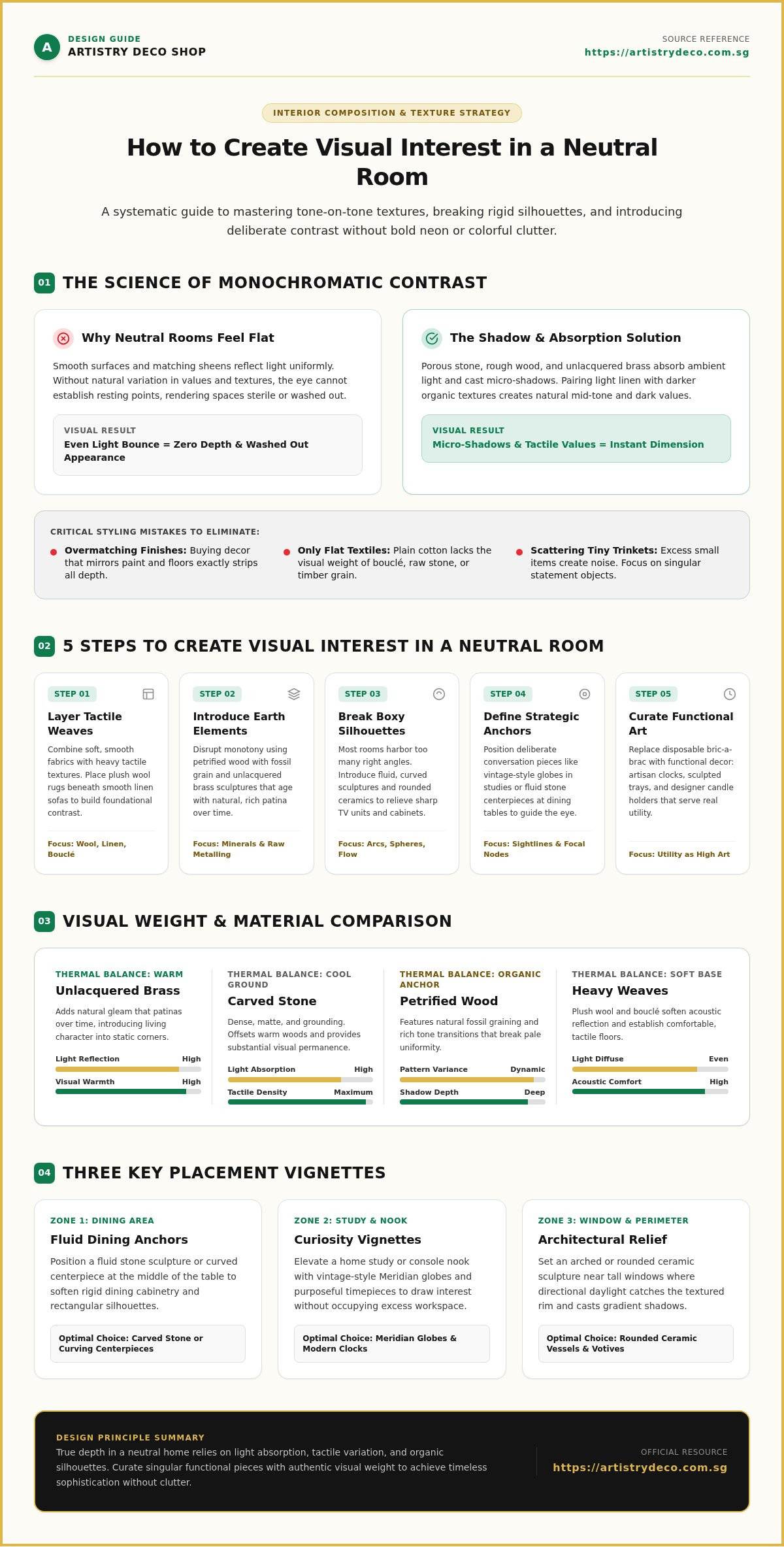
A neutral room lacks visual weight when every surface shares the same smoothness and sheen. While many design blogs claim you need complex wall moulding or costly renovations to fix this, the real issue is simpler. Monochromatic palettes of beige, off-white, or soft grey require intentional contrast to feel dynamic. Without distinct variations in tone and texture, the human eye cannot find natural resting points. Understanding how to create visual interest in a neutral room starts with curating deliberate focal pieces that define the space without architectural reconstruction.
The Science of Contrast in Monochromatic Interiors
Depth relies on how surfaces capture light. Smooth plaster walls reflect light evenly, which can wash out a space. To counter this, you need porous, matte, or sculpted materials that absorb light and create natural shadows. In classical theory, balancing texture, value, and shape represents the core visual elements of art that turn a blank surface into an engaging composition. Pairing light linen with unlacquered metal or rough stone introduces dark and mid-tone values. Placing an artisanal piece, such as a sculpted vessel from the designer vase and candle holder collection, anchors an empty console table and produces subtle shadows across pale surfaces.
Common Mistakes That Wash Out a Pale Room
Achieving a refined neutral interior takes restraint, but subtle styling missteps often leave spaces feeling unfinished or sterile:
- Matching finishes too closely: Buying decor that mirrors your wall paint and flooring exactly strips away all depth.
- Relying entirely on flat textiles: Smooth cotton blends look flat without the tactile counterweight of bouclé, raw stone, or grained wood.
- Scattering tiny trinkets: Spreading meaningless small items across shelves creates visual noise. Instead, curate singular statement objects that draw the eye with purpose.
When you discover how to create visual interest in a neutral room through varied materials rather than bright colors, you keep your serene aesthetic intact while giving every corner genuine character.
5 Steps to Create Visual Interest in a Neutral Room
Most decorating advice suggests adding colorful throw cushions or repainting walls. Real character in a muted palette comes from tactile surfaces, varied silhouettes, and curated objects. If you want to know how to create visual interest in a neutral room without bright paint, follow these five steps to transform your living space into a refined sanctuary.
Step 1 & 2: Layering Textures and Natural Earth Materials
Begin by pairing soft, smooth fabrics with heavy tactile weaves. Lay a plush wool rug beneath a linen sofa, then introduce raw mineral textures to ground the seating area. Authentic geological treasures, like petrified wood sculptures with rich fossil grain, disrupt monochromatic monotony right away. Handcrafted metallic accents, such as the The Aura brass sculpture collection, offer an unlacquered warmth that develops a graceful natural patina over time.
Step 3 & 4: Playing with Organic Shapes and Strategic Focal Points
Standard living rooms often contain too many straight lines and sharp corners. Boxy sofas, rectangular consoles, and flat television screens make a space feel rigid. Designers often discuss how to make a neutral room feel interesting by blending contrasting materials and lighting, and introducing curved, sculptural forms achieves that exact balance. Consider these practical focal points:
- Dining anchors: Place a fluid stone statue or curved centerpiece at the center of the dining table to draw the eye away from square cabinetry.
- Study vignettes: Elevate a home office or study nook with vintage-style Ehaika Meridian globes that spark curiosity.
- Architectural relief: Position an arched or rounded ceramic sculpture near tall windows to catch ambient daylight.
Step 5: Selecting Functional Decor Over Disposable Clutter
Skip tiny knick-knacks that collect dust and crowd small surfaces. Instead, pick purposeful statement decor. Modern clocks, handcrafted stone trays, and artisanal candle holders look like fine art while serving daily needs. If you need personalized guidance on choosing the right proportions for your layout, feel free to reach out to our styling team. Learning how to create visual interest in a neutral room through mindful curation ensures your interior feels calm, layered, and purposeful.
Material Comparison: Choosing the Best Textures for Warmth
Different materials project distinct visual weights within quiet, pale spaces. When walls and floors rely on soft ivory or dove grey, flat synthetic surfaces tend to disappear or feel cheap. Polished metals provide crisp geometry, while unlacquered metals and natural minerals introduce grounding warmth. Learning how to create visual interest in a neutral room comes down to choosing authentic textures that feel balanced, substantial, and tactile.
Marble, Stone, and Petrified Wood vs. Smooth Plastics
Factory-molded plastics and smooth laminates often look hollow in minimalist rooms. Natural geological elements, by contrast, possess organic irregularities that hold the eye without shouting for attention:
- Natural veining: Marble and carved stone statues feature soft grey, cream, or ochre veins that break up flat surfaces with understated elegance.
- Deep mineral depth: Petrified wood sculptures bring ancient amber, charcoal, and cream tones into pale rooms, anchoring low furniture arrangements with raw organic beauty.
- Architectural weight: Solid stone decor adds physical substance to low coffee tables, creating a deliberate visual anchor that synthetic pieces cannot replicate.
Warm Metals vs. Cool Silvers in Neutral Color Palettes
Your choice of metal finish alters the temperature of a room instantly. Polished chrome and brushed nickel reflect cool blue undertones. In an all-white or light grey setting, too much silver can make the space feel cold, clinical, and detached.
Warm metals do the opposite. Hand-finished bronze and unlacquered brass reflect soft golden highlights onto surrounding walls, creating an inviting glow in the evening. These living materials soften modern architecture and look richer as they develop a gentle patina over time. To see how handcrafted metals and stone accents work together, explore The 2026 Buying Guide for Modern Artistic Sculptures.
Balancing porous matte stone with the warm sheen of patinated metal is a proven method for how to create visual interest in a neutral room while preserving its peaceful atmosphere.
Styling Neutral Spaces in Compact Urban Apartments
Decorating a compact condominium or BTO apartment in Singapore brings a unique challenge. In smaller floor plans, visual noise accumulates fast. When every surface holds decor, a calming neutral palette turns chaotic. Mastering how to create visual interest in a neutral room within an urban apartment requires discipline. It relies on the deliberate use of negative space, allowing each piece to stand out without competing for attention.
Preventing Clutter While Adding Character
Visual breathing room makes compact spaces feel open and peaceful. Instead of scattering dozens of small accessories across your living room, follow the classic rule of threes to create balanced vignettes on consoles and coffee tables:
- One tall vertical piece: Use a slender sculpted branch, a distinctive botanical specimen from specialist nurseries such as Rareplants, or an arched statue to draw the eye upward and emphasize ceiling height.
- One low horizontal anchor: Place a carved stone tray or petrified wood platter to catch keys, coasters, or reading glasses.
- One tactile functional object: Add an artisanal candle vessel or an interesting desk timepiece that provides daily utility.
Leaving generous empty space around this trio keeps shelves and tabletops feeling organized. It lets the texture and craftsmanship of each object take center stage.
Light, Shadows, and Atmospheric Scent in Singapore Living
High-rise city apartments often receive intense, direct sunlight. You can use this tropical light to your advantage by placing textured pieces near windows. Ribbed glass, fluted ceramics, and unlacquered brass cast striking shadow patterns against pale walls as the afternoon sun shifts.
As evening falls, warm ambient lighting takes over. A soft lamp placed behind a textured vessel creates subtle backlighting, while a scented candle adds warmth to a quiet night at home. Choosing functional pieces from the Ehaika designer vase and vessel collection allows you to introduce sculptural silhouettes that also hold evening candles and fresh botanicals.
Balancing shadow, negative space, and curated styling shows how to create visual interest in a neutral room without sacrificing precious square footage.
Curating Standout Functional Art for Your Living Room
Art doesn't have to hang flat against a wall or sit untouched behind glass. Functional art bridges the gap between sculptural beauty and daily domestic utility. When considering how to create visual interest in a neutral room, one-of-a-kind sculptures and purposeful objects bring immediate warmth. They create natural conversation points while supporting your daily routines.
The Aesthetic Power of Sculptural Centerpieces
A single hand-carved stone sculpture commands attention without disrupting a soft cream or muted grey palette. Solid natural minerals, such as marble, limestone, and ancient shells, offer authentic textures that tell a timeless geological story. Placing a fossilized sea shell or petrified wood piece on a credenza grounds modern interiors in nature. If you want to build a collection that feels deeply personal, read our guide on curating vintage historical artifacts at home to discover how heritage items enrich calm, contemporary spaces.
Transforming Everyday Living with Functional Decor
Utility and artistic elegance work hand in hand across living room consoles, sideboards, and work desks. Incorporating purposeful decor adds substance to quiet spaces:
- Artistic timepieces: Unique tabletop clocks turn ordinary timekeeping into a sculpted visual statement. Their distinct geometry and metal accents add character to quiet home offices.
- Curated desk globes: Fine desktop globes with sturdy metal armatures inspire curiosity and worldly sophistication, bringing depth to study nooks.
- Multipurpose stone bowls: Deep carved vessels hold keys or small accessories by day and serve as striking textural centerpieces by night.
Selecting decor with genuine purpose keeps your home peaceful and free of unnecessary clutter. If you are exploring how to create visual interest in a neutral room with unique artisanal accents, connect with the team at Artistry Deco Shop for styling guidance tailored to your space.
Elevate Your Neutral Sanctuary with Timeless Artistry
Bringing lasting depth to a quiet room doesn't require bold paint or excessive ornamentation. Mastering how to create visual interest in a neutral room is entirely about embracing deliberate tonal contrast, rich tactile textures, and intentional negative space. Handcrafted bronze, warm brass, and ancient petrified wood centerpieces break up monochromatic monotony effortlessly. When balanced by rare natural stone sculptures, functional art introduces genuine architectural presence and organic warmth to compact Singapore interiors without adding clutter.
Curating a home is a patient, rewarding journey. Take your time choosing purposeful decor that carries timeless craftsmanship and authenticity. With a thoughtful balance of raw geological minerals and soft ambient shadows, your neutral living space will transform into an inviting, layered sanctuary you love coming home to every day.
Frequently Asked Questions
Can I create visual interest in a neutral room without using bright colors?
Yes, you can build dynamic visual depth entirely through tactile surfaces, geometric silhouettes, and organic materials. When discovering how to create visual interest in a neutral room, prioritize textural variation over bright hues. Pair rough stone with soft linen, unlacquered brass, or ribbed glass. These materials catch natural light and create gentle shadows, delivering rich visual variety while preserving a serene, monochromatic aesthetic.
What is the most effective way to layer textures in a neutral living room?
The most effective method is combining at least three distinct surface sheens and tactile weights within the same color family. Start with a woven wool or jute base, set against a soft fabric sofa. Then, introduce hard, organic counterpoints like petrified wood or honed marble statues. The juxtaposition of soft, porous, and solid surfaces creates tactile tension that keeps your eyes engaged without introducing competing color schemes.
How do I choose the right focal point for a monochromatic beige room?
Select a single sculptural piece that offers substantial visual weight, distinct height, and rich material contrast. In a pale room, a focal point should stand out through silhouette rather than loud pigmentation. A dark petrified wood carving or a hand-carved stone statue commands immediate attention on a sideboard or credenza. This anchors the space naturally, giving the gaze a clear destination as soon as anyone enters.
What is functional decor and how does it prevent household clutter?
Functional decor refers to artistic household pieces that serve a practical daily utility while looking like fine sculpture. Everyday items such as unique tabletop clocks, curated world globes, and carved stone catchall bowls belong to this category. Instead of filling your surfaces with purely ornamental bric-a-brac that collects dust, functional decor fulfills everyday domestic routines. This dual purpose keeps surfaces organized, intentional, and visually striking.
How many decorative objects should I place on a coffee table?
Limit your coffee table styling to two or three carefully chosen objects of varying heights. The classic rule of threes prevents flat surfaces from feeling chaotic. Group one tall vertical element, such as an artisanal vessel, with a wide, grounded piece like a sculpted tray, leaving ample empty perimeter space. This negative space provides breathing room, ensuring your tabletop looks curated rather than crowded.
Will dark metal or bronze sculptures overpower a small pale room?
No, dark bronze and brass statues provide necessary grounding contrast that makes small pale rooms look larger and more structured. Without deep mid-tones, an all-white or beige apartment can feel boundless and undefined. A patinated brass or bronze statue creates a deliberate anchor. As ambient light hits the burnished metal edges, it reflects subtle warmth back onto surrounding walls instead of absorbing the room's energy.
How can I make my neutral Singapore condominium interior feel warm and cozy?
Introduce warm metallic accents, natural earthy minerals, and layered ambient lighting to counteract cool tiled floors. Many Singapore apartments feature cool porcelain tiles and recessed ceiling downlights that wash out neutral styling. Knowing how to create visual interest in a neutral room means swapping harsh white bulbs for warm table lamps. Placing petrified wood or unlacquered brass decor nearby reflects inviting golden undertones across your living room.