
Figurative vs Abstract Art: Choosing the Best Style

Does the art on your wall speak in a clear voice, or does it whisper through shapes and textures? Many collectors worry about choosing a piece that feels out of place or lacks the quality their home deserves. It's natural to feel unsure when comparing figurative vs abstract art for home settings, especially when you want to match modern furniture with timeless beauty. You want your space to feel curated, not cluttered.
We believe that every object in your home should tell a story of quality and craft. This guide will help you understand the unique spirit of both figurative and abstract styles. You'll learn how to pick pieces that resonate with your soul and fit your decor perfectly. We'll explore how to mix these styles to create a balanced, premium feel. By the end, you'll have the knowledge to choose a statement piece that makes your home feel like a true sanctuary.
Key Takeaways
- Learn the simple differences between recognizable figurative forms and emotive abstract designs to choose art with confidence.
- Discover how to select figurative vs abstract art for home interiors to either spark conversation or create a peaceful, modern sanctuary.
- Find out how functional art like world globes and sculptural clocks can add style to smaller spaces like Singapore BTO flats.
- Understand why investing in one-of-a-kind sculptures made of marble, brass, or petrified wood adds lasting value and character to your collection.
- Get expert tips on matching art styles to your furniture and layout to create a curated look without any clutter.
Understanding Figurative vs Abstract Art for Home Decor
Choosing figurative vs abstract art for home decor is about more than just filling a gap on a shelf. It's about the energy you bring into your daily life. In the past, fine art felt like something only found in grand museums. Today, modern Singapore living rooms are becoming private galleries. Whether you live in a sleek condo or a cozy BTO flat, the style of art you choose sets the tone for every guest who enters. It defines whether your space feels like a quiet retreat or a bold statement of your taste.
What is Figurative Art?
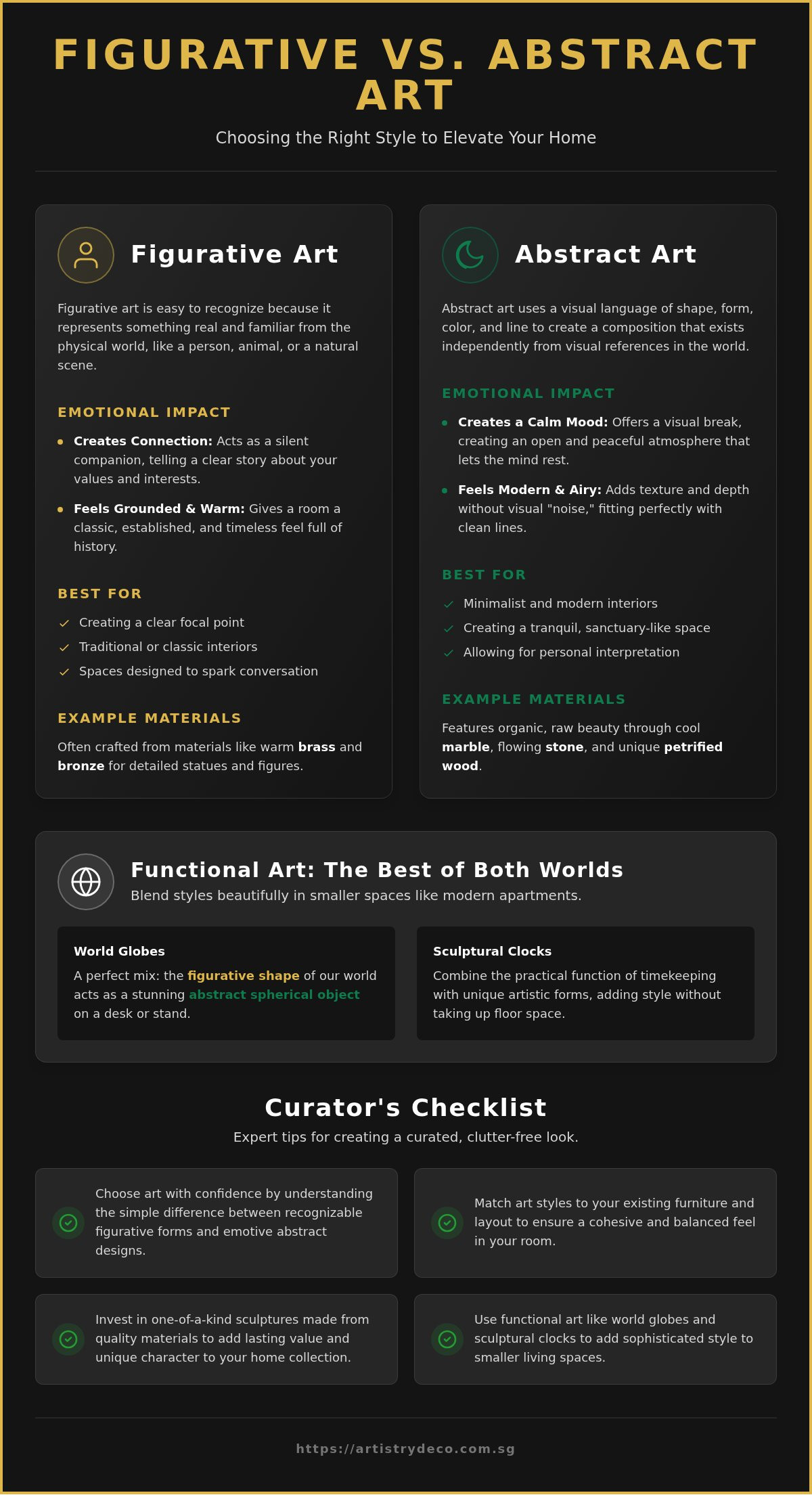
Figurative art is easy to love because it's familiar. When you look at a piece, you instantly see a person, an animal, or a scene from nature. It grounds a room by giving the eye something solid to rest on. Understanding Figurative Art helps us see how artists use real-world subjects to tell a clear story. For example, brass bronze statues of powerful animals or graceful human forms add a classic, timeless feel to a study or console table. These pieces act as anchors, making a home feel established and full of history.
What is Abstract Art?
Abstract art doesn't try to look like a specific object. Instead, it uses lines, colors, and textures to spark a feeling. It's the language of the unspoken. An abstract piece might be a marble sculpture with flowing curves that remind you of the wind or the sea. Because there is no "correct" way to see it, your guests can find their own meaning in the shapes. This makes abstract art a great way to show off your unique personality. It feels light, airy, and fits perfectly with minimalist interiors.
The choice between these two styles changes how a room feels. Figurative art often feels warm and traditional. It invites you to think about a specific narrative or a shared memory. Abstract art feels more open and calm. It works well with the clean lines of modern furniture, providing a visual break from structured layouts. Some items even blend both worlds beautifully. A Zoffoli globe is a perfect mix. It has the figurative shape of our world, yet its perfect spherical form acts as a stunning abstract object on a desk.
The Emotional Impact of Art Styles in Your Living Space
Art changes how you feel the moment you walk through your front door. It isn't just about matching colors with your rug; it's about the emotional impact of art and how it shapes your daily life. When you weigh the benefits of figurative vs abstract art for home interiors, you're really deciding on the "soul" of each room. A lively living area needs a different energy than a quiet, private study. Understanding how these styles affect your mood helps you create a space that feels right.
Creating a Connection with Figurative Pieces
We're naturally wired to look for faces and figures. It's a deep part of how we see the world. When you place brass bronze statues or animal figures in a room, they act like silent companions. These pieces tell a clear story to your visitors about your values and interests. Using historical replicas or detailed sculptures creates an instant focal point. They ground a room and give it a classic, established feel that guests can easily understand and appreciate.
Setting a Mood with Abstract Elements
Sometimes, the best decor is the kind that lets your mind rest. Abstract art is perfect for creating a calm, open atmosphere. It uses color and form to fill a space without crowding your thoughts with specific details. For example, petrified wood sculptures bring organic, raw beauty into a modern home. Their flowing shapes don't demand an instant explanation. This makes them a great backdrop for minimalist furniture, as they add texture and depth without adding "noise."
The materials you choose also play a role in the psychological feel of your home. Cool marble and stone statues feel structured and elegant, bringing a sense of order to a busy space. Warm brass feels bold and passionate, catching the light to create a welcoming glow during evening dinner parties. In a home office, a Zoffoli globe offers a unique balance. It's a functional tool that also serves as a beautiful object of worldliness. If you're finding it hard to balance figurative vs abstract art for home decor, you can always reach out to our team for a curated suggestion that fits your lifestyle.
Comparing Abstract and Figurative Art: Which Fits Your Interior Design?
Selecting the right balance of figurative vs abstract art for home decor is a skill that turns a house into a curated experience. It's not just about what you like; it's about how the art talks to your furniture and walls. If your home has high ceilings and large windows, you have the space for bold, recognizable figures. If your apartment is more compact, like many modern Singapore homes, you might prefer the sleek, flowing lines of abstract forms. These styles work together to guide the eye through your living space.
When to Choose Figurative Art
Figurative art works best when you have a large, empty wall or a desk that feels too plain. These pieces act as a hero object that draws the eye. According to Tate's definition of figurative art, this style represents real things from our world. This makes it ideal for collectors who love history and vintage artifacts. Including Modern Artistic Sculptures, such as those found in The Aura Brass Sculpture Collection, can anchor a living room. It gives your guests a clear topic for conversation and adds a sense of tradition to your shelves.
When to Choose Abstract Art
Abstract art is the best choice for rooms that already have lots of patterns or busy furniture. It creates a sense of luxury and modern mystery without making the room feel cluttered. You don't always need a large painting to achieve this effect. Using unique clocks as abstract functional art is a clever way to save space. These items use geometric forms and rich materials like brass to show time as a work of art. They blend perfectly with minimalist desks and modern shelves, offering a visual break from the structured lines of a room.
The most sophisticated homes often use a hybrid approach. This means choosing pieces that sit right in the middle of both styles. For example, a piece of petrified wood is naturally abstract, yet its history as a living tree makes it feel grounded and real. You can use both styles in the same home by keeping a common theme, such as a shared color palette. A bronze figure and a brass abstract clock will share a warm glow that ties the room together. This expert mixing ensures your collection feels like a single, beautiful narrative rather than a random set of objects. It shows you're part of a belső kör that values both craft and story when deciding on figurative vs abstract art for home settings.
How to Style Sculptural and Functional Art in Modern Homes
Styling three-dimensional art requires a different eye than hanging a simple painting. In the compact, modern interiors of Singapore BTO flats, every object must justify its presence. You shouldn't have to choose between a beautiful statue and a clear, open space. The key to balancing figurative vs abstract art for home collections is finding the perfect spot where the piece can breathe. This often means looking for items that provide both beauty and a specific use.
Functional Art: The Perfect Middle Ground
Functional art bridges the gap between style and utility with elegance. For instance, Zoffoli Globes are a masterclass in this approach. They carry the figurative detail of world geography while serving as a sophisticated desk accessory or a majestic floor-standing bar. You can also look to handcrafted scented candles to add a layer of texture and scent to your shelves. These small details turn a house into a sanctuary. For those who love the raw beauty of nature, a piece of petrified wood acts as a natural, abstract centerpiece. It offers a unique story of time and pressure that no factory-made item can match.
Placement Tips for Sculptures
Placement is just as vital as the piece itself. When you are styling smaller abstract pieces, try the rule of three. Grouping three items of different heights creates a sense of rhythm and visual interest. For figurative vs abstract art for home arrangements, ensure your figurative statues are placed at eye level. This allows the viewer to connect with the subject immediately. By choosing Functional Living Room Decor, you can keep your surfaces tidy while still showing off your artistic taste.
Lighting can change everything. A soft light placed to the side of a sculpture creates deep shadows. This highlights the texture of marble or the glow of polished brass. Mixing materials is another way to add depth. The cool touch of stone against the warmth of brass or the organic grain of wood creates a rich, curated feel. These details show that your home is not just a place to live, but a carefully selected experience. A world-travelled host knows that the right materials make all the difference.
Curating Your Collection: Finding One-of-a-Kind Pieces in Singapore
Building a private collection is a slow, rewarding process that reflects your personal growth and evolving taste. When you invest in one-of-a-kind sculptures, you aren't just buying decor; you're securing pieces that hold their value over time. In a world of mass-produced items, owning something unique is the ultimate luxury. For those deciding between figurative vs abstract art for home galleries, the quality of the materials is often what makes the final choice clear. High-end materials like marble, bronze, and stone carry a physical weight and a long history that you can truly feel.
The Value of Rare Materials
Nature is often the most skilled artist we know. Materials like petrified wood and fossilized sea shells are perfect examples of nature's own abstract art. These pieces have spent millions of years forming underground, resulting in textures and colors that no machine can copy. If you prefer a more classic look, the timelessness of brass and bronze in Aura Brass Sculptures offers a regal touch. To verify quality, look for the heavy weight of the metal and the fine details that only a human hand can create. These unique materials act as a signature for your space, ensuring your home stands out with an air of quiet exclusivity.
Building Your Personal Art Gallery
You don't need to fill your entire home in a single day. The best collections grow with you as you travel, learn, and discover new narratives. It's often best to start small with functional desk accessories. Consider adding world globes or unique timepieces to your study first. These smaller items allow you to test how different styles feel in your space. As you become more confident in your taste, you can gradually add larger statement statues that define the character of your living room.
Finding the right balance of figurative vs abstract art for home interiors can be a challenge in a busy city like Singapore. Artistry Deco Shop helps you by offering a curated selection of premium, functional art that fits the local lifestyle. We focus on one-of-a-kind pieces that bridge the gap between museum-quality craft and daily utility. By choosing handcrafted items, you support the legacy of artisans while creating a home that is truly your own. Whether you're drawn to a realistic bronze figure or a flowing stone curve, the right piece is waiting to become part of your story. You're not just a consumer; you're part of a belső kör that values the narrative behind every object.
Elevate Your Home with Art That Inspires
Choosing between figurative vs abstract art for home decor is a journey of personal discovery. You've learned how figurative pieces anchor a room with clear stories, while abstract forms offer a serene backdrop for modern life. By focusing on premium materials like handcrafted marble, brass, and petrified wood, you ensure your collection feels timeless and sophisticated. Whether you're styling a cozy BTO flat or a grand living space, the right balance of sculptural and functional pieces will turn your house into a true sanctuary. Every item you choose should reflect your taste and the atmosphere you wish to create for your guests.
We invite you to find the pieces that speak to your soul. As a Singapore-based boutique, we offer one-of-a-kind treasures that are ready to become part of your home's unique narrative. Our local stock ensures that your journey toward a more beautiful, curated life can begin today. Let your home be a reflection of your appreciation for fine craft and meaningful design.
Frequently Asked Questions
Is figurative art more expensive than abstract art?
Price is usually determined by the complexity of the production process and the rarity of the raw materials. A detailed brass bronze statue involves intricate casting, while a high-quality abstract marble sculpture requires expert stone-carving skills. Both styles are considered premium investments. The ultimate value depends on the artist's technique and the uniqueness of the piece, rather than whether the subject is a recognizable figure or a conceptual shape.
Can I mix abstract and figurative art in the same room?
Mixing both styles is a wonderful way to create a layered and deeply personal atmosphere. To ensure they don't clash, look for a unifying element like a shared material or a consistent color palette. For example, a bronze human figure can sit beautifully alongside an abstract brass clock because their warm metallic tones tie them together. This curated approach shows a sophisticated understanding of how different artistic expressions can coexist in one home.
Which art style is better for a small Singapore BTO flat?
Abstract art is typically better for smaller spaces like BTO flats because it creates a sense of airy openness. When deciding on figurative vs abstract art for home layouts with limited square footage, abstract forms don't "crowd" the room visually. They provide texture and interest without demanding the viewer focus on a specific narrative. This allows your living area to feel more expansive and calm, which is essential for modern urban living.
What is the best art style for a home office or study desk?
A combination of both styles often works best to inspire productivity and focus. A Zoffoli globe is a perfect choice, as it offers the figurative detail of world maps within a sleek, abstract spherical form. You might also consider a petrified wood sculpture for its grounding, organic energy. These pieces provide a tactile break from digital work, turning your desk into a curated space of worldliness and quiet inspiration.
How do I clean and maintain brass or marble sculptures?
Maintaining high-end materials requires gentle, consistent care to preserve their natural beauty. For brass or bronze, use a dry, soft microfiber cloth to remove dust and fingerprints. Avoid any acidic or abrasive cleaners that could strip the finish. For marble or stone, use a slightly damp cloth to wipe surfaces, then dry them immediately to prevent water spots. Proper care ensures your handcrafted treasures remain as stunning as the day you bought them.
Does abstract art have to have a meaning?
Abstract art does not require a single, fixed meaning; its value lies in how it makes you feel. Unlike figurative art, which often has a clear subject, abstract pieces invite personal discovery. A guest might see a mountain range in a stone carving, while you see a rolling wave. This open-ended nature makes it a perfect conversation starter and allows the piece to evolve with you as your own perspective changes over time.
Why is functional art becoming so popular in Singapore?
Functional art is gaining traction because it addresses the need for space efficiency without sacrificing elegance. Singaporean homeowners increasingly seek a premium lifestyle that values both form and utility. Choosing figurative vs abstract art for home decor becomes simpler when the object serves a daily purpose. Artistry Deco Shop curates items like designer clocks or globe bars that provide the aesthetic impact of a sculpture while remaining useful in a modern apartment.
How do I choose art that matches my existing modern furniture?
Match your art to the dominant lines and accents of your furniture for a balanced look. If your sofa and tables have sharp, geometric legs, choose abstract pieces with similar structural forms. If your decor is softer and more traditional, a figurative bronze statue will feel more at home. You can also match the metal finishes, such as pairing a brass clock with the gold accents on your cabinetry or lighting fixtures.