
Displaying Sculptures at Home: Artistic Styling Guide

Your living room doesn't need more furniture to feel complete; it needs a soul, and nothing breathes life into a space quite like a masterfully placed piece of art. Many homeowners share the same hesitation when researching how to display sculptures at home for the first time. You might worry about creating clutter or feel unsure about how to match a heavy marble statue with your existing decor. It's natural to feel a bit overwhelmed by the technical side of things, especially when it comes to lighting your pieces correctly or finding the right balance between different materials. You want your home to feel like a curated sanctuary, not a crowded showroom.
In this guide, you'll learn the secrets of artistic styling to turn every corner of your house into a private gallery. We'll show you how to create a meaningful dialogue between your furniture and your art, whether you're working with ancient petrified wood, brass statues, or modern marble. You'll gain the confidence to mix styles and materials with ease. We'll cover everything from the best ways to light your collection to the specific rules for indoor and outdoor placement. By the end, you'll have the tools to transform your living space into a sophisticated environment that reflects your unique taste and appreciation for fine craftsmanship.
Key Takeaways
- Discover why three-dimensional art creates a more powerful focal point than flat paintings to guide the eye through your living space.
- Use the "Rule of Three" for small table decor and learn the ideal eye-level height for placing large indoor statues.
- Master how to display sculptures at home and in outdoor gardens using durable materials like brass and stone that withstand the local climate.
- Turn functional items like world globes and unique clocks into sculptural centerpieces that anchor your study or living room design.
- Learn professional lighting techniques to avoid harsh shadows and highlight the natural textures of marble, bronze, and petrified wood.
Why Every Modern Home Needs a Sculpture Focal Point
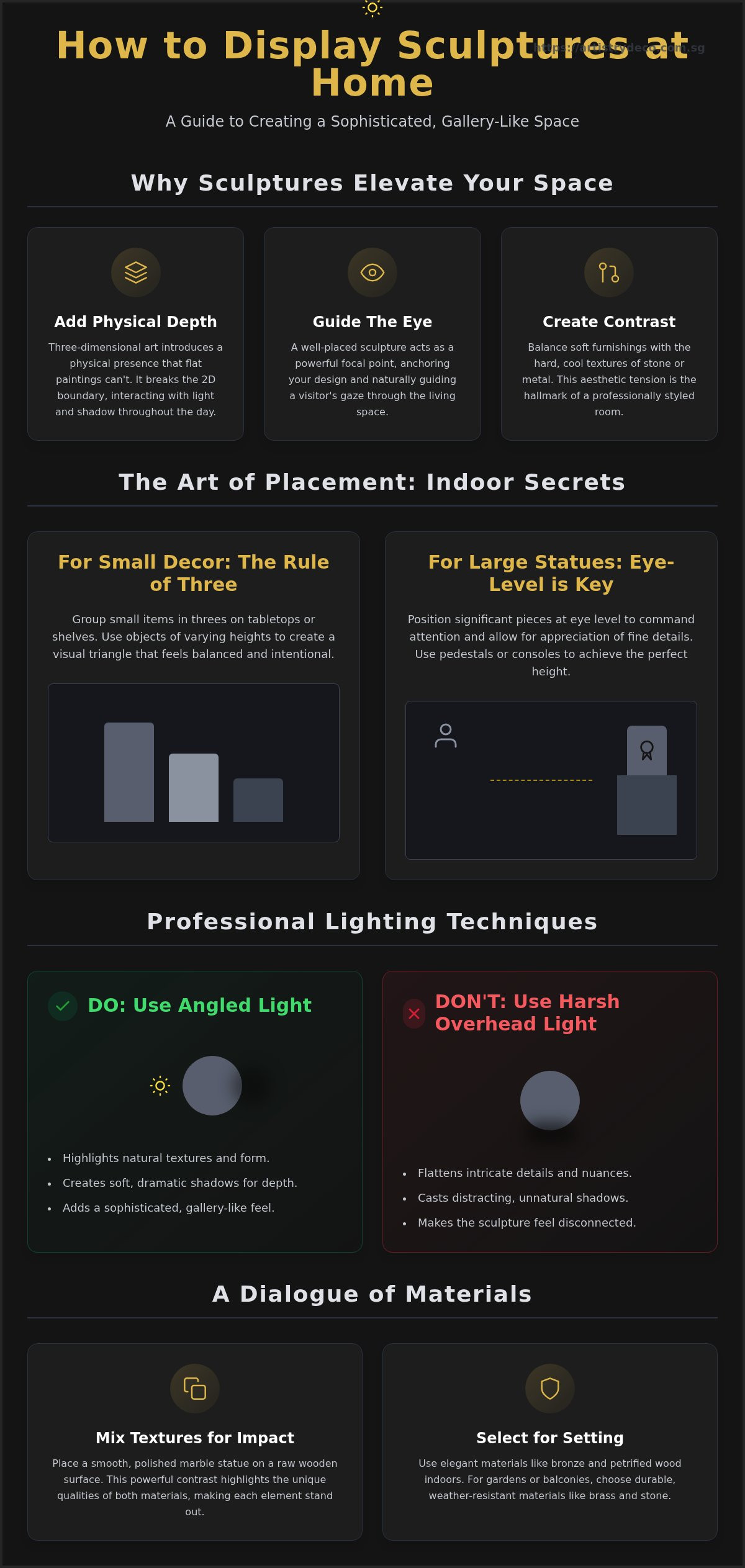
A home should be more than a collection of functional furniture; it's a canvas for your personal narrative. While paintings and prints add color to your walls, they remain trapped in two dimensions. Sculptures, however, break this boundary by introducing a physical presence that flat art simply cannot replicate. When you master how to display sculptures at home, you aren't just decorating. You're curating an environment where every turn of the head reveals a new perspective. These three-dimensional objects act as an anchor, a "focal point" that naturally guides the eye and provides a sense of purpose to an open-plan living area or a quiet study.
Modern Singaporean homes, from sleek BTOs to expansive condos, often feature soft textures like velvet sofas or plush rugs. Sculptures provide a necessary aesthetic tension. The cool touch of a marble statue or the rugged texture of petrified wood offers a "hard" contrast that makes the surrounding soft furnishings feel even more inviting. This balance is the hallmark of a professionally styled space. It's about creating a dialogue between different materials, where the weight of a bronze figure complements the lightness of a glass coffee table.
Breaking the Flatness of Your Interior
Three-dimensional objects are essential for a balanced room because they interact with the environment in real time. Unlike a static print, a sculpture's appearance changes as the sun moves across your windows. Learning how to display sculptures at home allows you to use these shifting shadows to your advantage, adding a layer of depth that evolves from morning to night. You can use these pieces to fill "dead space" that furniture can't reach, such as narrow corners, high ledges, or the center of a large dining table. A well-placed artifact turns a forgotten nook into a deliberate design choice.
The Power of One-of-a-Kind Pieces
There's an undeniable emotional weight to handcrafted items. In a world of mass-produced decor, a one-of-a-kind sculpture tells a story of craftsmanship and heritage. Whether it's a fossilized sea shell that speaks of ancient oceans or a brass statue reflecting timeless artistry, these pieces elevate the room's energy. They represent your journey as a collector and a member of an inner circle that values quality over quantity. If you're looking for pieces that bridge the gap between tradition and contemporary style, exploring Modern Artistic Sculptures can provide the inspiration needed to start your own private gallery.
Choosing the Best Spot for Your Indoor Statues
Once you've selected a piece that resonates with you, the next step is finding its perfect home. Knowing how to display sculptures at home effectively depends on the size of the piece and the furniture it sits upon. For smaller tabletop items, like stone carvings or delicate figurines, the "Rule of Three" is your best friend. Instead of placing a single item in the middle of a coffee table, group it with two other objects of different heights. A tall vase, a medium-sized sculpture, and a small candle holder create a visual triangle that feels balanced and professional. This arrangement keeps the eye moving and prevents the decor from looking like a random collection of items.
Larger statues require a different approach. You should always aim to position these pieces at eye level. If a sculpture is too low, it can feel like a tripping hazard; if it's too high, the intricate details are lost to the viewer. Placing a significant work of art on a pedestal or a sturdy side table ensures it gets the attention it deserves. Don't be afraid to mix textures to create interest. A smooth, polished marble statue looks stunning when placed on a raw wooden surface. This contrast highlights the unique qualities of both materials, making the art pop against the furniture. You can also layer your art by placing a small sculpture in front of a framed mirror or a large photo. The reflection in the mirror adds a new dimension to the piece, while the frame behind it acts as a backdrop that defines the space.
Styling Shelves and Mantels
Shelves often become cluttered with long, flat rows of books. You can use sculptures to break up these lines and add much-needed "white space" to your library. Organic materials like those found in the Fossil & Petrified Wood Collection work beautifully on stone or glass shelves. The ancient, earthy textures of petrified wood provide a grounded feeling that balances the modern, cold look of glass shelving. It's a simple way to bring a piece of history into your daily life.
Creating an Entryway Statement
Your entryway sets the tone for your entire home. It is the first thing guests see, making it the best place to showcase your most impressive piece. A console table serves as a perfect stage for heavy brass or bronze statues. These materials are durable and command respect the moment someone walks through the door. If you explore the Aura Brass Sculpture Collection, you'll find pieces that act as silent greeters, offering a sense of calm and luxury. If you aren't sure which piece fits your specific foyer, you can always contact our curators for a personal recommendation.
Where to Place a Sculpture in a Garden or Balcony
Singapore's tropical climate offers a lush, vibrant backdrop for artistic expression. When you consider how to display sculptures at home, don't limit your vision to the interior walls. Your garden or balcony serves as a natural gallery where art and nature coexist in perfect harmony. However, the high humidity and intense rainfall in our region mean you must choose your materials with care. Brass, bronze, and stone statues are the gold standard for outdoor longevity. These noble materials don't just survive the elements; they embrace them, standing as timeless guardians of your private sanctuary.
To create a sense of movement in a garden, place a significant piece at the end of a path. This acts as a visual reward, drawing guests through the greenery toward a specific destination. You should also think about the "view from within." By using warm LED spotlights, you ensure the sculpture remains a visible part of your home's atmosphere even after the sun sets. When choosing a location, look at the plants around it. A smooth stone carving creates a beautiful contrast against the jagged, textured leaves of a monstera or a fan palm. For safety, always ensure the base is level and stable. A heavy tropical downpour can soften the ground, so a solid foundation is vital to prevent your investment from tipping during a storm.
Creating a Secret Garden Nook
There's a quiet joy in discovering art where you least expect it. You can hide a small statue among tall, feathery ferns to create a "secret" corner that feels like a personal discovery. Placing stone sculptures near water features enhances this zen-like feeling, as the sound of running water complements the stillness of the art. Over time, bronze pieces will develop a rich, green patina. This natural aging process isn't a defect; it's a living narrative that shows the piece has become a permanent, weathered part of the landscape.
Balcony Styling for Singapore Condos
In many Singaporean condos, floor space is a luxury. Mastering how to display sculptures at home on a balcony requires a vertical mindset. Use tall, narrow pedestals to elevate your art, which keeps the floor clear for movement and seating. Tucking a sculpture into a corner can anchor the space without making it feel cramped. It's best to choose pedestals that are lightweight enough to move but sturdy enough to withstand the wind on higher floors. This allows you to enjoy a curated, high-end aesthetic regardless of your home's square footage.
Styling Functional Art: Globes, Clocks, and Artifacts
Art is often viewed as something purely for observation, but the most sophisticated homes integrate beauty into every daily ritual. When you're learning how to display sculptures at home, it's helpful to look at functional decor as a secret weapon. These pieces don't just sit on a shelf; they perform a role while maintaining the elegance of a private gallery. A world globe, for example, is a rotating masterpiece that invites touch and exploration. Similarly, unique clocks can serve as wall sculptures. Instead of a standard frame, a clock made of brass or carved stone provides a strong visual anchor that defines the rhythm of a room. By choosing items that combine utility with high-end aesthetics, you create a space that feels both lived-in and expertly curated.
The Executive Desk: Globes and Artifacts
Your study or home office is the ideal environment for intellectual art. A Zoffoli globe functions as a powerful centerpiece that speaks of worldliness and curiosity. To maximize its impact, position your globe near a desk lamp. The light creates a warm glow on the hand-applied maps, making the intricate details pop against the darker tones of a wooden desk. You can also use smaller artifacts, such as ancient coin replicas, as functional paperweights. These items are excellent conversation starters for visitors and add a mini-museum feel to your workspace. Grouping these vintage-inspired pieces together on a bookshelf creates a dedicated area for reflection. It's about creating a narrative of discovery that guests can admire without feeling like they are in a sterile environment.
Multi-Sensory Decor with BAS Deodorizers
A premium home experience should engage more than just the eyes. The BAS Deodorizer Collection features units designed as scented sculptures that harmonize with a minimalist interior while improving air quality. Their sleek, modern shapes allow them to sit comfortably in a kitchen or bathroom without looking like traditional utility items. When you're considering how to display sculptures at home, think about these multi-sensory pieces for areas where you want to maintain a clean atmosphere. Placing a BAS unit on a marble vanity or a stone countertop turns a functional necessity into a subtle design statement. It's an effortless way to blend high-end aesthetics with the practical needs of a modern Singaporean household, ensuring your home smells as curated as it looks.
Professional Tips for Lighting and Layering Your Art
Lighting is the final, invisible layer of curation that breathes life into a three-dimensional object. When you're deciding how to display sculptures at home, the way you light a piece is just as vital as where you place it. Light has the power to reveal hidden textures in marble or accentuate the polished curves of a bronze statue. To achieve a gallery-like effect, you should avoid lighting your art from directly above. Top-down light often creates harsh, unappealing shadows on the "face" of the sculpture. Instead, aim for angled lighting from the side or below to create a sense of drama and depth.
Warm LED spotlights are the preferred choice for high-end interiors. They highlight the natural richness of brass and stone without emitting the heat that could damage delicate materials. You should also take advantage of natural light sources. Placing a sculpture near a large window allows it to evolve as the sun moves across the sky. In the morning, the piece might look soft and ethereal, while the late afternoon sun could cast long, bold shadows that emphasize its structural strength. Regular maintenance is also key to keeping that premium look. A simple wipe with a soft, dry cloth ensures that dust doesn't dull the shine of your most prized possessions.
The Art of Layering
Layering is about creating a sense of history and depth within a single vignette. You can elevate smaller sculptures by placing them on top of a stack of linen-bound coffee table books. This adds height and creates a "stage" for the piece. A professional tip is to always group objects in odd numbers, such as one, three, or five. This arrangement feels more organic and less forced to the human eye. By mixing different heights, you create a dynamic display that feels active rather than static. A tall vase paired with a medium-sized sculpture and a low candle holder creates a visual rhythm that guides the viewer through the arrangement.
Maintenance for Singapore Homes
Living in Singapore means dealing with high humidity, which can affect certain materials over time. Brass and bronze statues are remarkably durable, but they can tarnish if left neglected in humid air. To protect their luster, you can apply a thin layer of specialized wax or simply keep them in well-ventilated areas. For intricate carvings in stone or petrified wood, a soft-bristled brush is the best tool for removing dust from hard-to-reach crevices. If you're interested in more ways to blend beauty with utility, you might enjoy reading How to Style Functional Living Room Decor. Taking these small steps ensures your collection remains a source of pride for years to come.
Elevate Your Home into a Private Sanctuary
Transforming your living space into a curated gallery is a journey of discovery and personal expression. By mastering the art of how to display sculptures at home, you create a multi-sensory environment that reflects your unique narrative. Remember that the secret lies in the details: use angled lighting to reveal the soul of your pieces and layer different heights to keep the eye moving. Whether you're placing a weather-resistant bronze statue in a lush Singapore garden or positioning an exclusive Zoffoli globe on a study desk, every choice contributes to a sense of refined harmony.
Our collection features one-of-a-kind pieces handcrafted from premium marble, brass, and ancient petrified wood. These items are more than decor; they're stories waiting to be told. To make your curation process even more seamless, we offer free shipping for all Singapore orders, ensuring your selected treasures arrive safely at your doorstep.
Your home deserves the timeless elegance of professional curation. Start your collection today and feel the difference that high-end, handcrafted art brings to your daily life.
Frequently Asked Questions
What is the best height to display a sculpture?
The ideal height for a standalone sculpture is eye level, which typically sits around 145 to 150 centimeters from the ground to the center of the piece. This ensures that the viewer can appreciate the intricate details without straining. For tabletop items, you can create this elevation by using a stack of books or a small pedestal. Knowing how to display sculptures at home at the right height prevents the art from feeling lost or out of place.
Can I put a bronze sculpture in my garden in Singapore?
You can certainly place bronze sculptures in a Singapore garden because this material is incredibly resistant to our tropical humidity and heavy rain. Unlike other metals that might rust, bronze develops a beautiful greenish patina over time that adds character to the piece. This natural aging process makes it a favorite for outdoor courtyards and balconies. Just ensure the base is stable on the soil to prevent tipping during sudden tropical storms.
How do I clean a marble or stone statue without damaging it?
To clean marble or stone statues, you should use only a soft, dry microfiber cloth and avoid all harsh chemical cleaners that can etch the surface. For intricate carvings where dust settles in deep crevices, a soft-bristled brush works best to gently sweep away debris. Maintaining these natural materials doesn't require complex rituals; regular dusting is usually enough to keep the stone's premium luster and prevent long-term staining from environmental pollutants.
How do I choose the right size sculpture for my room?
Choosing the right size depends on the scale of your surrounding furniture and the room's total square footage. A large floor-standing statue works best in an entryway or a spacious living room corner where it won't obstruct movement. For smaller Singaporean condos, focus on medium-sized pieces that fit comfortably on console tables. If a sculpture is too small for a space, it can look like an afterthought; if too large, it overwhelms the room's harmony.
Is it okay to mix different materials like brass and wood in one display?
Mixing different materials like brass, petrified wood, and marble is actually encouraged because it adds a sophisticated layer of texture to your home. The contrast between the warm, metallic glow of brass and the earthy, organic feel of ancient wood creates a dynamic visual story. This approach prevents your display from looking like a flat showroom. When you learn how to display sculptures at home, you'll see that variety often leads to a more curated, expert look.
What kind of lighting is best for showing off sculpture details?
Warm LED spotlights are the best choice for highlighting the three-dimensional form and texture of your art. You should position the light at a slight angle from the side or below rather than directly overhead. This technique creates soft shadows that define the shape and "face" of the sculpture, making it look much more dramatic. Avoid cool blue lights, as they can make natural materials like marble or bronze look sterile and uninviting.
Should I place my sculpture in the center of the room or in a corner?
You should place a sculpture based on its intended role as either a primary focal point or a subtle accent. A large, one-of-a-kind statue often commands the center of a room or a prominent entryway console. Conversely, smaller pieces are perfect for filling empty corners or high ledges that would otherwise feel like "dead space." Tucking a sculpture into a corner can also create a sense of discovery for guests as they move through your home.
How do I make a small sculpture look more important on a large shelf?
You can make a small sculpture look more significant by using the art of layering on your shelves. Place the piece on top of a stack of linen-bound coffee table books to give it a "pedestal" effect and extra height. Grouping the item with two other objects of different sizes also helps it stand out. This "Rule of Three" ensures that even a delicate artifact captures the eye and feels like a deliberate design choice.