
Dinner Party Table Styling: How to Host an Elegant Dinner Party

What if the most elegant dinner party table is the one with the least on it? Dinner party table styling can feel daunting when you’re unsure what to prepare first or how to add atmosphere without crowding the table. Start with guest comfort, then add character through a few thoughtful details.
You don’t need a formal place setting or a collection of decorations to make the evening feel special. A clear plan helps you balance practical dining needs with an elegant look, leaving room for conversation and serving dishes. The result should feel welcoming, not staged.
This guide takes you through the process in a simple order, from choosing a colour palette and setting the table to adding finishing touches. Learn how to use linens, tableware and one focal detail, such as a functional centrepiece, decorative vessel or candle, without letting them take over. With a little restraint and a personal touch, your table can set the mood for a memorable evening.
Key Takeaways
- Start with the occasion, guest count and available dining space to decide what the table needs.
- Match the serving layout to the meal, keeping place settings, shared dishes and conversation in mind.
- Build a cohesive look with a simple colour palette and linens suited to the feel of the evening.
- Follow a dinner party table styling sequence: arrange essentials and accents, then check the view from each seat.
- Choose one personal finishing detail to give the setting character without making the table feel crowded.
Dinner party table styling starts with the guests and the occasion
You don’t need elaborate decorations to make the table feel special, especially if you’re hosting for the first time. Start with the people who’ll gather around it and the kind of evening you want to create. Guest count, menu, occasion and dining space will guide the layout and help you avoid choosing pieces that crowd the table.
Think about how guests will sit, see one another and reach what they need. A compact dining area may call for simple place settings and serving dishes placed nearby. A larger table may have room for shared plates and a central detail. Leave clear sightlines across the table, and make sure chairs can be pulled out comfortably. Each styling choice should have a purpose.
Table decoration is part of the wider setting, but the meal should remain easy to enjoy. Table-setting (tablescaping) describes the arrangement of a dining table. For a dinner party, that arrangement should support both the look of the occasion and the practical needs of your guests.
How do you plan a dinner party table before decorating?
Before choosing linens or a centrepiece, note the guest count, menu style, how long guests are likely to sit at the table and any practical needs, such as space for serving dishes. Separate essentials, including plates, cutlery and glasses, from optional details. Then choose one or two visual cues, perhaps a warm colour and a natural texture, to give the table a clear direction.
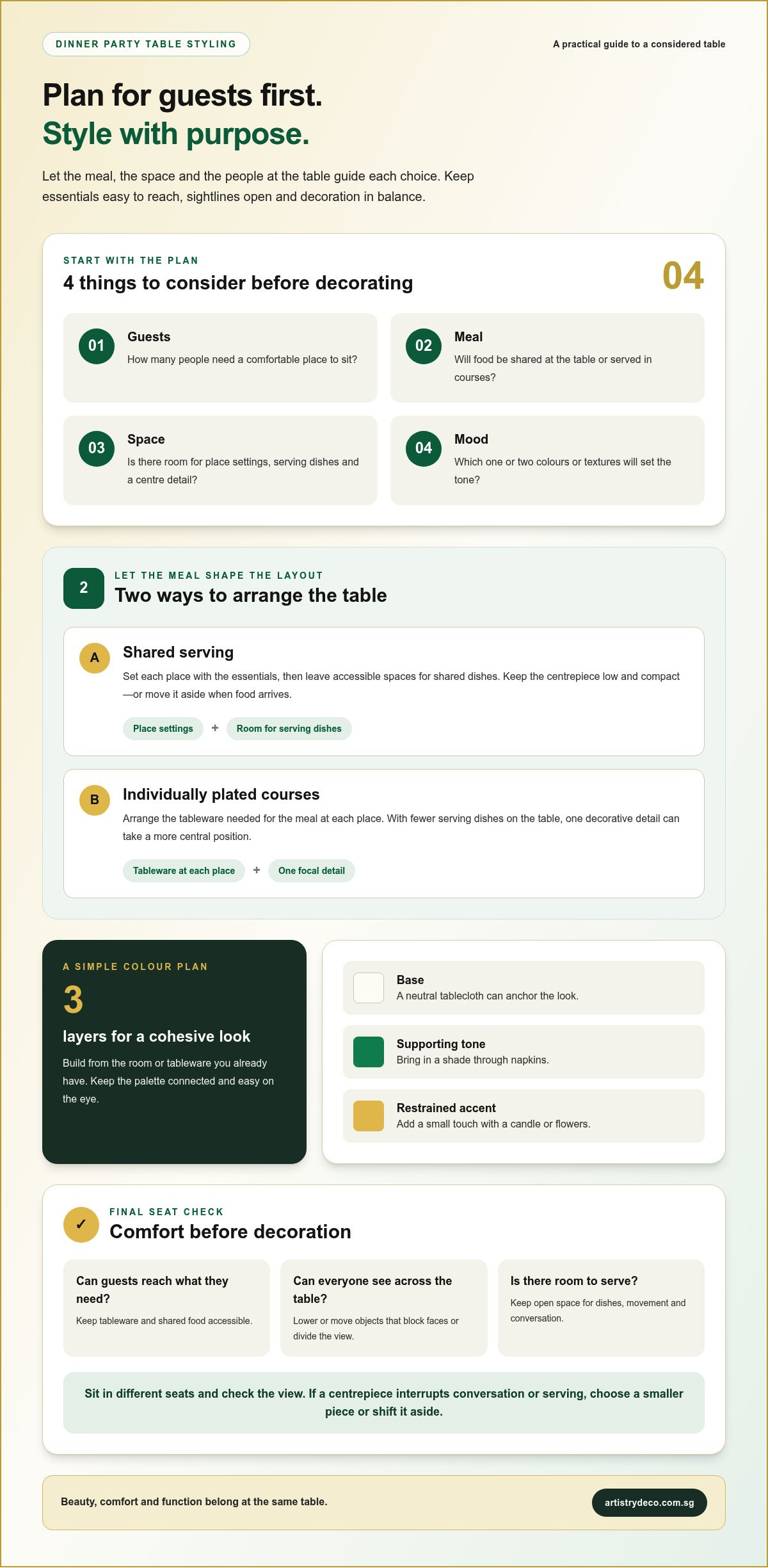
- Guests: How many people need a comfortable place to sit?
- Meal: Will food be shared at the table or served in courses?
- Space: Is there room for settings, serving dishes and a centre detail?
- Mood: What one or two colours or textures will set the tone?
What makes a table feel elegant rather than overly formal?
Elegance comes from balance, thoughtful placement and a welcoming mood, not strict rules. For a relaxed dinner, familiar tableware and a few considered accents can feel just right. A more ceremonial meal may call for more deliberate place settings, but comfort still matters. Leave open space for shared dishes, easy movement and natural conversation.
Elegant table styling balances beauty, comfort and function so guests can enjoy the setting as much as the meal. Use this as your guide before adding decorative pieces.
Build an elegant dinner party table around a practical layout
A polished table works best when each item has a clear place. Let the meal format guide the arrangement. A shared dinner needs space for serving dishes within easy reach, while individually plated courses leave more room for glassware and a central accent. In either case, keep essential tableware accessible and avoid making guests reach across one another.
Use this simple comparison to plan the layout:
- Shared serving: Set each place with the essentials, then reserve accessible spaces for shared dishes. Keep the centrepiece low and compact, or move it aside once the food arrives.
- Individually plated service: Arrange the tableware needed for the meal at each place. With fewer serving dishes on the table, a single decorative detail can take a more central position.
How should you arrange place settings and serving space?
Keep place settings consistent so each guest has the same essentials within reach. Decide in advance whether serving dishes will sit on the table, on a nearby surface or be brought out as needed. Before guests arrive, sit in different seats and look across the table. If an object blocks a face or divides the view, lower it, choose a smaller piece or shift it aside.
Centrepieces need particular care. A tall arrangement may look striking from above but interrupt conversation at seated eye level. Choose a size and height that suit the table, the dishes and the people around it. A functional dining table centrepiece can provide a focal point, but it shouldn’t compete with the meal or make serving awkward.
How can you style a smaller dining table?
In a compact Singapore home, a dining table may also serve as a work surface or share space with the living area. Keep the arrangement adaptable. Clear away extra decorative objects first, rather than sacrificing useful plates, glasses or serving space. One well-chosen accent can bring focus without taking over a small surface.
Leave a clear area for shared dishes, or place them on a nearby counter if that suits the meal and room. A decorative vessel or candle can be moved before serving, while a low, compact accent may stay in place. Let the room’s layout guide the final position, and keep the setting easy to reset after dinner.
For a simple focal detail, consider a decorative vessel or candle holder that can be moved when serving begins. For questions about dining table decor, contact Artistry Deco Shop.
Choose colours, linens, and centrepieces that work together
A cohesive table doesn’t need a long list of colours or decorations. Begin with what’s already in the room: the tone of your plates, a favourite serving bowl or a colour in the dining space. Build a simple palette with a base, one supporting tone and a restrained accent. This gives your dinner party table styling a clear direction while leaving room for personal touches.
For example, use a neutral tablecloth as the base, bring in a supporting shade through napkins, then add a small accent in a candle or flowers. Selective contrast can help each piece stand out. Pale plates on a pale cloth may blend together, while a darker napkin or placemat can define each setting. There’s no fixed colour formula for elegance. Aim for a scheme that feels connected and easy on the eye.
How do you choose a dinner party colour palette?
Let existing tableware or room colours guide your choices, rather than buying a full set to match one occasion. Choose a base that suits the table, repeat a supporting tone in one or two details, then use an accent sparingly. If your plates have a pattern, keep nearby colours quieter so the pattern remains easy to see. A simple palette creates harmony without making every item look identical.
What makes a centrepiece beautiful and practical?
Linens shape the feel of the setting. Crisp, minimal linens give patterned plates or a sculptural object more attention and are easy to pair with different tableware. Layered textures, such as a tablecloth with woven placemats or cloth napkins, add warmth and depth, but can make a compact table feel busy. Choose the amount of layering that leaves enough room for dining.
For the centre, consider fresh flowers, candlelight or one small artistic object. Keep its scale in proportion to the table, and check that seated guests can see one another across it. If the meal includes shared dishes, leave room for serving before settling on the final position. A decorative vessel can hold flowers or stand on its own. A scented candle can add a gentle finishing detail when it suits the occasion. Both are optional, not essentials.
A centrepiece should complement the meal, not compete with it. A single, considered focal point often brings more calm and character than several objects arranged together. For a vessel or candle-holder accent, explore the decorative vessel and candle-holder selection.
Style the table step by step, then prepare for guests
A simple order makes dinner party table styling easier and helps prevent last-minute rearranging. Build the setting from the table surface upwards, adding only what the meal and guests need.
What order should you follow when setting the table?
Work through these steps, adjusting the serving pieces to suit your menu:
- Clear the table. Remove everyday items and check that the surface is clean and ready to use.
- Place the linens. Lay a tablecloth, runner or placemats, smoothing them so they sit neatly and don’t interfere with chairs.
- Set the essentials. Arrange plates, cutlery and glasses consistently at each place. Add only the tableware needed for the planned meal.
- Add serving pieces. For shared dishes, leave practical spaces for platters and bowls. For individually plated courses, place serving pieces elsewhere until needed.
- Finish with accents, then review. Add one or two details, such as a small decorative object or candle. Remove anything that crowds the table or makes serving awkward.
This sequence shows how much usable space remains before you commit to the final arrangement. A runner or placemats can define the setting, while a compact accent adds character without taking the place of a plate or serving dish.
What should you check just before guests arrive?
Take a seat at different places around the table. Check that guests can see one another, reach shared dishes and set down a glass without moving a decoration. If an accent blocks a sightline, shift it aside or remove it. The view from standing above the table can be quite different from the view during dinner.
Then make a final hosting check. Pull out each chair to confirm there’s comfortable space to sit and move. Keep walkways clear, especially if guests need to pass between the dining area and kitchen. Make sure serving dishes can reach the table without knocking into place settings or decorative pieces. These small adjustments can make the evening feel calm and easy.
The table is ready when it looks composed and works smoothly. Keep essentials within reach, and treat every decorative detail as optional. If the arrangement feels busy, take one thing away.
Make dinner party table styling personal with considered finishing details
The final details can make a table feel like it belongs to its host. A small object with a story, a few fresh flowers or the soft glow of candlelight can bring warmth without turning the table into a display. Choose details that feel natural to you and suit the occasion, whether it’s a birthday, a meal with friends or a quiet celebration.
In thoughtful dinner party table styling, function can carry beauty. A decorative vessel can hold flowers, while a small sculptural piece can serve as a focal point when there’s room for it. Keep the table useful for dining, and let each accent earn its place through meaning, shape or practical use.
How can decorative objects add character without clutter?
Choose one accent that connects to the occasion, the menu or your own taste. A vessel with fresh flowers might suit a seasonal meal. A sculptural object may feel more personal if it reflects a place or memory that matters to you. Give the piece space rather than grouping several decorations together. One detail can invite conversation while leaving room for plates and serving dishes.
If you’d like a vessel that can work as both a decorative accent and a flower holder, explore these decorative vessels and candle holders. Treat it as an optional finishing touch, not a must-have.
How do you create a welcoming atmosphere beyond the table?
Look beyond the table for a moment. Make sure the room feels ready for guests: lighting should feel comfortable, seats should be easy to reach, and the path into the dining area should be clear. These small checks help guests settle in while the table remains the main visual focus.
Then return to the setting and ask whether it feels like a place where people can relax. The aim isn’t perfection. It’s a thoughtful welcome, with enough care in the details to make the evening memorable and enough ease for conversation to take its own course.
Explore Artistry Deco Shop’s home accents for a personal finishing detail.
Set the scene for an evening worth sharing
Confident dinner party table styling begins with your guests and the kind of evening you want to host. Plan the layout around the meal, choose a simple palette and add only details that bring warmth without getting in the way. Comfortable seating, clear sightlines and room to serve matter just as much as the finishing touches.
A functional centrepiece can give the table a natural focal point, while a decorative vessel, handcrafted scented candle or meaningful object adds a personal note. These details are optional. The most memorable setting is one where guests feel at ease and conversation comes naturally, not one arranged for perfection.
Explore thoughtful decor for your dinner table and choose a finishing detail that feels right for your gathering.
Trust your eye, keep the table welcoming and enjoy bringing everyone together.
Frequently Asked Questions
How do you style a table for an elegant dinner party?
Start with guest comfort, then add a few details that give the table a clear, welcoming look. Choose linens and tableware that work together, set out what the meal requires, and leave room for serving dishes and conversation. Finish with one focal detail, such as fresh flowers or a small decorative object. Elegant dinner party table styling feels balanced and personal, not crowded or overly formal.
What should be included in a dinner party table setting?
Include the tableware guests need for the meal, such as a plate, cutlery and a drinking glass at each place. Add napkins and any extra glasses or dishes your menu calls for. For shared meals, reserve space for platters and bowls; for plated service, keep the table simpler. A centrepiece is optional. Keep each place setting consistent, with enough clear space for guests to dine comfortably.
How do you make a dinner table look elegant on a budget?
Use what you already own and focus on careful placement rather than buying a complete matching set. A clean table, neatly arranged plates, folded cloth napkins and a few fresh flowers can create a considered setting. Choose one or two colours already present in your room or tableware, then repeat them subtly. Leave out extra decorations if they add clutter. Thoughtful editing often looks more polished than adding more pieces.
How high should a dinner party centrepiece be?
Choose a centrepiece low enough, or place it carefully enough, that guests can see one another across the table while seated. There isn’t one ideal height for every table, since the size and shape of the object matter too. Test the view from several seats before guests arrive. If the piece blocks faces, feels oversized or gets in the way of shared dishes, use a smaller accent or move it aside during the meal.
Can you use candles as a dinner table centrepiece?
Yes, candles can serve as a centrepiece and add a gentle glow, as long as they leave enough room for dining and conversation. Keep them stable and away from anything that could catch fire, and avoid placing tall candles where they block sightlines. A single candle or a small group can work, depending on the table’s available space. Handcrafted scented candles are another optional accent, but the table should remain comfortable and practical.
How do you style a small dining table for a dinner party?
Keep the layout simple and make every item earn its place. Set out the essential plates, cutlery and glasses, then choose one compact focal detail rather than several decorative objects. If the meal includes shared dishes, leave a clear area for them or serve from a nearby surface. This approach can suit smaller dining areas in Singapore, where a table may also need to work for everyday meals or other tasks.
What is the best way to arrange a dinner party table for shared dishes?
Set each place consistently and leave clear, reachable spaces for shared bowls and platters. Put serving dishes where guests can reach them without leaning across someone else’s setting, and keep the centrepiece low, compact or easy to move. Consider the path from the kitchen to the table before placing items. A quick check from each seat can show whether guests have a clear view and enough room to pass food comfortably.
How can you make a dinner party feel elegant but relaxed?
Pair a few polished details with familiar, comfortable tableware and an easy layout. Use a simple colour scheme, keep decorations restrained and make sure guests can sit, serve themselves and talk without effort. The room matters too: provide comfortable seating, pleasant lighting and a clear route to the table. An elegant dinner party doesn’t need strict formality. A thoughtful welcome and a setting that feels natural help guests settle in.