
Art Collecting for Home Decor: A Beginner’s Guide

What if the most beautiful piece in your home was also the most useful? Many people in Singapore feel that the art world is too snobby or complex to enter. You might worry about buying an expensive statue that just doesn't fit your HDB or condo layout. It's common to feel stuck between cheap decor and real art that carries a deep story. You'll find that the best functional art ideas for living room spaces are those that blend daily use with expert craftsmanship. You aren't alone in wanting a home that feels personal and premium without the stress of making a mistake.
This guide will give you the confidence to start your own collection. You'll discover how to find quality pieces that reflect your taste and turn your house into a curated home. We'll share a simple checklist to help you choose items that offer both beauty and purpose. We will explore everything from handcrafted Italian globes to rare petrified wood sculptures. You'll learn how to mix 3D shapes with 2D prints to create a balanced look. By the end, you'll know exactly how to pick pieces you love while ensuring they harmonize with your space and its unique narrative.
Key Takeaways
- Learn how to move beyond random decor by choosing pieces with a real story that anchor your home's high-end design.
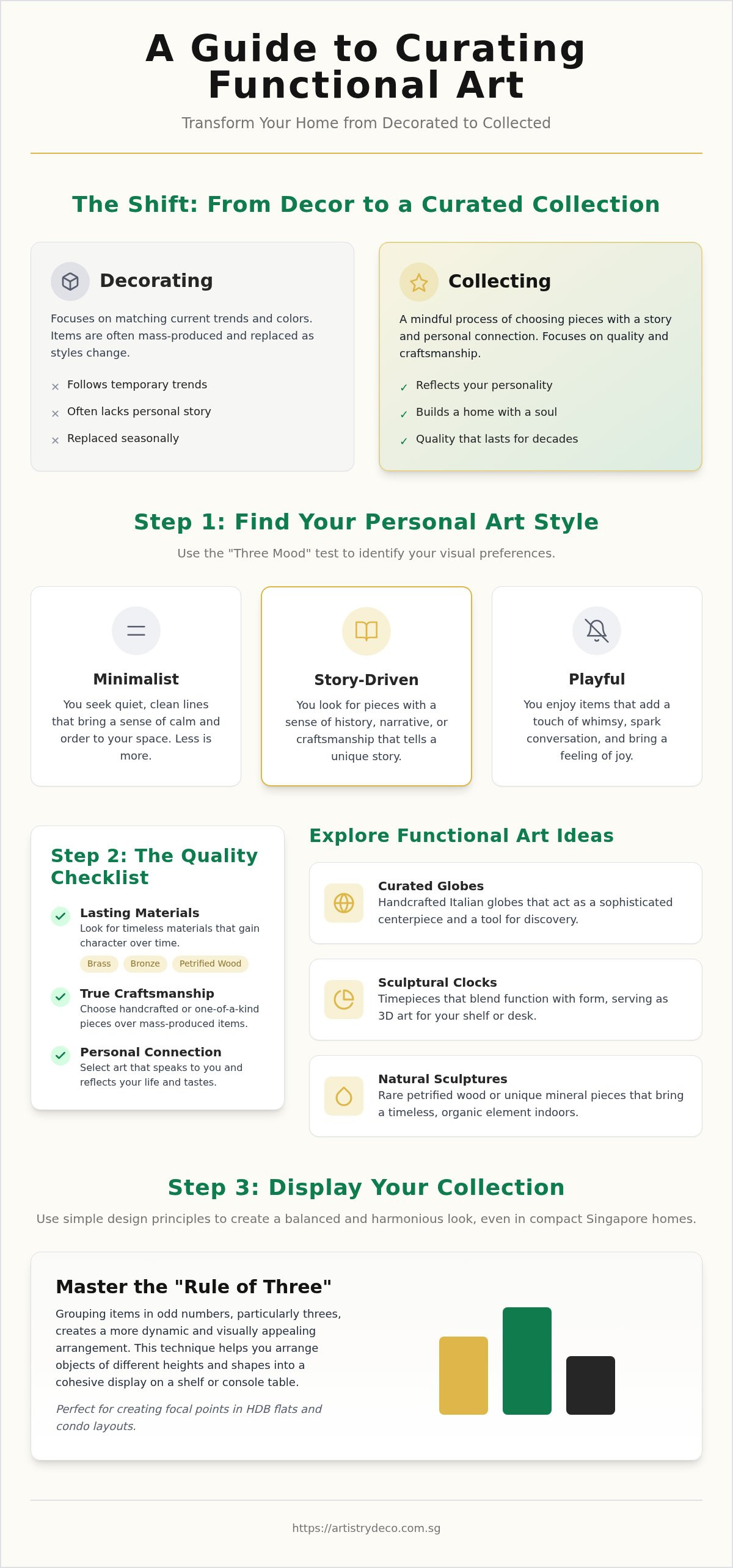
- Identify your personal style using the "Three Mood" test to see if you prefer minimalist, story-driven, or playful aesthetics.
- Evaluate the quality of your collection by looking for lasting materials like brass, bronze, and petrified wood that show true craftsmanship.
- Explore functional art ideas for living room layouts, such as curated globes and clocks that serve a purpose while looking like fine sculpture.
- Master the "Rule of Three" to display your art perfectly within the unique layouts of Singapore BTO flats and condos.
What Does Collecting Art for Home Decor Actually Mean?
Owning art is about more than just filling an empty space on a shelf. It marks a clear shift from buying random objects to choosing pieces with a real story. In a premium home, art acts as the soul of the room. It's the most important part of high-end interior design because it sets the mood and shows your personality. While mass-produced decor is made in thousands, curated art is often one-of-a-kind or handcrafted. This difference is what gives your home its unique character. When you choose a piece because it speaks to you, the emotional value of your living space grows. You aren't just buying a product; you're building a private collection that reflects your life and tastes.
Decorating vs. Collecting: The Big Difference
Decorating is often about matching colors or following a trend. It's easy to buy a cushion that matches a rug, but those items are often replaced when styles change. Collecting is a deeper process. It's about finding a personal connection to an object. As the curator of your own Singapore home, you decide which stories are worth telling. A collection grows with you over time. Each piece you add should have a reason for being there. Whether you live in a new BTO flat or a large condo, your collection turns a standard layout into a space that feels lived-in and loved. It's about quality that lasts for decades rather than decor that only lasts a season.
Why You Do Not Need a Gallery Budget to Start
Many people think that starting an art collection requires thousands of dollars. This is a myth that stops many from enjoying the beauty of real art. You don't need a massive gallery budget to begin. Instead, you can start small with tabletop pieces that serve a purpose. Some of the best functional art ideas for living room spaces include items like brass sculptures or Italian Zoffoli globes. These pieces are useful, but they're also works of art. By focusing on quality over quantity, your first few purchases will carry much more weight. Buying one handcrafted statue made of bronze or petrified wood is better than buying ten plastic trinkets. It's a slower, more mindful way to shop that leads to a much more beautiful home.
Finding Your Personal Art Style: A Simple Guide
Finding your personal art style is a journey of discovery, not a test of art history knowledge. You don't need to know the dates of specific movements to understand what moves you. Instead, focus on how an object makes you feel when you enter a room. A great way to start is the "Three Mood" test. Ask yourself if your ideal space feels Minimalist, Story-driven, or Playful. Minimalist lovers often seek quiet, clean lines that bring a sense of calm. Story-driven collectors look for pieces that carry a sense of history or a specific narrative. Playful collectors enjoy items that add a touch of whimsy and spark joy. Identifying this mood helps you narrow down functional art ideas for living room designs that will actually resonate with your lifestyle.
Your existing furniture serves as the foundation for your collection. Look at your sofa, your dining table, and your shelving. If your home features modern, sleek surfaces, you might find that a textured, organic piece provides the perfect contrast. A sophisticated collection shouldn't be one-note. It's often a mix of different mediums, where 3D sculptures sit alongside 2D prints. This layering creates depth and makes your home feel like a curated gallery rather than a showroom.
Identifying Your Visual Preferences
Take a closer look at the materials you naturally prefer. Are you drawn to the cool, polished feel of marble and stone, or do you find comfort in the warm, golden tones of brass and bronze? These physical traits are clues to your style. You can create a simple mood board by saving photos of objects that catch your eye. Patterns will quickly emerge. You might notice a love for geometric shapes or a preference for the raw, rugged textures found in petrified wood sculptures. These natural elements offer a timeless quality that fits perfectly into the high-density living of Singapore, bringing a piece of the outside world indoors.
Mixing Vintage and Modern Pieces
A home with soul often blends different eras. Integrating vintage historical artifacts into a modern room prevents the space from feeling too sterile. The secret to a successful eclectic style is finding a common thread. This could be a specific color, a similar material, or even a shared level of craftsmanship. Every room needs one statement piece that breaks the rules and acts as an anchor. This could be a bold, modern sculpture or a vintage-inspired globe that commands attention. If you aren't sure how to start your curation, you can reach out to our team for guidance on selecting pieces that tell your unique story.
The Checklist: What to Look for in Art and Emerging Artists
Choosing art is a deliberate act of curation. It's the moment you stop being a shopper and start being a collector. To build a collection that lasts, you need a set of standards to judge every potential piece. The best functional art ideas for living room spaces always start with a focus on material and intent. You shouldn't just look at the surface; you need to understand what lies beneath. Use this checklist to evaluate your next find:
- Material Quality: Does the piece use noble materials like brass, bronze, or petrified wood that gain beauty as they age?
- Evidence of Craft: Can you see the artist's hand in the work, such as hand-carved textures or unique casting marks?
- Narrative Depth: Does the piece have a specific inspiration or a background story that adds meaning to your home?
- Proportion and Scale: Will the size of the piece anchor your room, or will it be lost in the layout of your Singapore condo or HDB?
Evaluating Emerging Artists
When you look at emerging artists, consistency is your best guide. You want to see a clear theme or style that carries across their different works. This shows they've mastered their medium and aren't just experimenting at random. Research their training or the unique techniques they use, as this adds to the piece's pedigree. Emerging artists often redefine luxury by blending raw, earth-born materials with intricate, hand-finished details that mass production simply cannot replicate. Buying from a new artist is an investment in a specific perspective that hasn't yet become common.
The Physical Integrity of the Piece
Physicality is where quality becomes undeniable. Weight is a silent sign of excellence. When you hold a piece crafted from solid brass bronze statues, the density tells you it's meant to last for generations. Texture also plays a huge role in 3D art. A smooth, polished marble surface feels very different from the rugged, ancient grain of petrified wood. In the humid Singapore climate, durability is a must. You need pieces made from materials that won't warp or degrade in high moisture. High-quality metals and fossilized stones are perfect choices because they remain stable and stunning regardless of the weather outside.
Beyond the Wall: Curating 3D and Functional Art Ideas
Art isn't limited to a frame. While paintings and prints are lovely, they only exist on a single plane. To truly elevate a space, you need objects that occupy volume. 3D art is essential for layering a room design because it breaks the flat surfaces of your walls and floors. By introducing different heights and shapes, you create a visual rhythm that keeps the eye moving throughout your living area. These functional art ideas for living room spaces transform a house into a gallery. Whether it's a hand-carved stone piece or a fossilized shell, these items bring a tactile quality that 2D art simply cannot match. They invite you to walk around them and experience the work from every side.
The Power of Sculptural Pieces
Sculptures are the anchors of a curated home. They provide a sense of weight and permanence that light decor lacks. Choosing modern artistic sculptures allows you to play with height on coffee tables or add depth to deep shelving units. Materials like marble or petrified wood create a stunning contrast against soft fabrics and glass surfaces. In a Singapore condo with an open floor plan, exploring functional art ideas for living room layouts helps you find the right balance. Place your sculptures where they can be seen from multiple angles. This 360-degree beauty is what makes 3D art so engaging. The value of one-of-a-kind stone and wood carvings lies in their history. No two pieces are the same, which means your collection will always be unique to you.
Functional Art as a Conversation Starter
Many beginners feel more comfortable starting with art that has a job to do. This is where the beauty of utility comes in. A Zoffoli globe is a perfect example; it's both a detailed map and a handcrafted masterpiece. It invites guests to look closer and touch the surface. Similarly, choosing unique and playful clocks can turn a plain wall into a design statement, acting like wall jewelry for your home. Using functional living room decor makes art feel approachable and less like a museum piece that shouldn't be touched. It blends the ritual of daily life with the joy of fine design. When an object is both useful and beautiful, it earns a permanent place in your home.
How to Display Your Collection in a Singapore Home
Displaying art in a Singapore home requires a thoughtful approach to space and light. Most residents live in BTO flats or condos where every square meter counts. You don't need a sprawling mansion to showcase a premium collection. Instead, you need to understand how to work with your specific layout. Integrating functional art ideas for living room corners allows you to maximize utility without sacrificing style. It's about finding that perfect balance between the piece's story and the room's flow. With Singapore becoming the fifth-largest global art importer in 2024, more homeowners are looking for ways to bring gallery-level curation into their private spaces.
Styling for Small Spaces like BTOs and Condos
In smaller layouts, vertical space is your best friend. Choose slim sculptures or wall-mounted clocks that draw the eye upward. This makes the ceiling feel higher and the room more open. One common mistake is buying too many small items. This often leads to a cluttered look that hides the beauty of your pieces. Instead, invest in one large hero piece that anchors the room. A single, striking statue on a sideboard makes a much stronger statement than ten tiny trinkets. You can also use mirrors strategically. Placing a mirror opposite your art doubles its impact and adds light to the room. This technique is particularly effective in compact condo living rooms where you want to emphasize depth.
Creating a Professional Gallery Feel at Home
To achieve a high-end look, group your pieces by material or theme. For example, you might create a Stone Atelier corner where marble and petrified wood pieces sit together. This creates a cohesive narrative that feels intentional. Always leave white space around your art. Pieces need room to breathe so the eye can focus on the fine details and textures. You can also rotate your collection seasonally. Moving a sculpture from the study to the living room keeps the energy fresh and allows you to rediscover the piece's character in a new light.
Lighting is the final touch that makes sculptures pop. Use warm, directional spotlights to create shadows and highlight intricate textures. The Rule of Three is a classic styling trick; group items in odd numbers to create a natural, pleasing composition. Finally, remember that Singapore's climate is unique. Protect your collection from the high humidity and direct tropical sunlight. Keep sensitive materials away from windows to prevent fading or warping over time. If you need help choosing pieces that suit your specific space, reach out to our curators for personalized advice on building your collection.
Begin Your Curated Life Today
Building a collection is a slow and rewarding process that turns a standard house into a personal sanctuary. You've learned how to identify your style and evaluate quality based on noble materials like brass and petrified wood. By exploring functional art ideas for living room layouts, you can anchor your home with pieces that are both useful and museum-quality. This shift from buying objects to curating stories is what creates a truly premium living experience.
As a Singapore-based boutique with local stock, we specialize in handcrafted Italian Zoffoli globes and a unique range of museum-quality historical replicas. These pieces offer the durability needed for our climate and the sophistication your space deserves. We're here to help you find the items that resonate with your inner circle and reflect your unique journey.
Your home is a canvas that reflects your taste and your world view. Start small, choose only what you love, and enjoy the lifelong journey of discovering fine craftsmanship.
Frequently Asked Questions
How do I know if an emerging artist is a good investment?
Look for a consistent style and a high level of mastery in their chosen materials. A good investment often shows a unique technique that sets the artist apart from others. Check if they use noble materials like bronze or stone that last for decades. In the local market, collectors often value pieces that tell a global story. You don't need to be an expert to see quality; if the craftsmanship is high, the value usually stays.
Can I mix different styles of art in the same living room?
You can definitely mix styles to create a space that feels personal and curated. The secret is to find a common thread like a shared color palette or similar textures. For example, a modern marble statue can sit near a vintage clock if they both share a sense of elegance. Mixing 3D and 2D pieces is one of the best functional art ideas for living room designs because it adds depth to the room.
What is the best way to clean brass or bronze sculptures?
Use a soft, dry microfiber cloth to gently remove dust from your brass or bronze pieces. Avoid using water or harsh household cleaners as these can damage the protective finish. Since our tropical environment is quite damp, it's a good idea to keep your sculptures away from open windows. A light dusting once a week is usually enough to keep the metal's natural glow looking premium and bright for many years to come.
How do I choose the right size sculpture for my dining table?
Choose a piece that is large enough to be a centerpiece but low enough for guests to see over. A good rule is to keep the sculpture's height below eye level when people are seated. This ensures the piece doesn't block conversation. If your table is long, you might place a single hero piece in the center or group several items of varying heights together to create a balanced, gallery-like look.
Is it okay to use functional items as part of an art collection?
Using functional items is a brilliant way to build a collection that feels lived-in and useful. Pieces like Italian Zoffoli globes or unique timepieces bridge the gap between fine art and daily utility. This approach makes your home feel more approachable while still maintaining a high-end aesthetic. It's about finding objects that serve a purpose but are crafted with the same care as a museum-quality sculpture or a rare painting.
Where can I find unique functional art pieces in Singapore?
You can find a curated selection of premium pieces at Artistry Deco Shop, right here in Singapore. We specialize in high-end collectibles like handcrafted globes, brass statues, and petrified wood sculptures. Because we carry local stock, you don't have to wait long for international shipping. Our collection is designed for modern interiors, offering functional art ideas for living room spaces that want to stand out with one-of-a-kind designs and rare materials.
How do I start an art collection with a small budget?
You can start by focusing on quality over quantity and buying just one meaningful piece at a time. Tabletop sculptures or functional decor items are often more affordable than large wall paintings but offer the same artistic impact. Look for handcrafted items that show real skill rather than mass-produced trinkets. Over time, these small but high-quality additions will grow into a valuable private collection that reflects your personal journey and taste.
Should I buy art that matches my sofa or art that I love?
You should always prioritize art that you love over pieces that simply match your furniture. Your sofa might be replaced in five years, but a piece of art that speaks to your soul will stay with you forever. While it's helpful if the colors harmonize, a personal connection is what gives a home its heart. If you love a piece, you'll always find a way to make it work beautifully within your living space.