
Are Scented Candles Bad for Air Quality? Healthy Scents

What if the very ritual you use to unwind at the end of a long day is actually clouding your living space? Many of us love the warm light of a flickering flame, but we often wonder, are scented candles bad for air quality? It's natural to feel concerned about soot and toxins when you want your home to be a safe sanctuary. You shouldn't have to worry about triggering allergies or asthma just to enjoy a pleasant aroma. We agree that your home should feel like a masterpiece of both style and health.
In this guide, you'll learn how scented candles affect your indoor air and how to choose safer, luxury alternatives for a fresh home. We'll help you understand the clear difference between mass-market paraffin and natural waxes like soy or beeswax. You'll also discover clever, non-burning scent solutions, such as BAS Deodorizers, that act as functional art. We'll explore the latest 2026 standards for indoor air to ensure your space remains a pure and elegant retreat for you and your guests.
Key Takeaways
- Discover the science behind combustion and find a clear answer to the question: are scented candles bad for air quality?
- Learn why mass-market paraffin wax may release toxins and how switching to natural waxes creates a cleaner, safer environment for your family.
- Understand the specific challenges of using home scents in air-conditioned Singapore apartments and how to maintain healthy air flow.
- Get expert tips on selecting premium handcrafted scented candles that prioritize pure ingredients and clean-burning wicks.
- Explore innovative non-burning alternatives like BAS Deodorizers that offer fresh scents and act as beautiful functional decor.
Are Scented Candles Bad for Air Quality? The Basic Facts
Lighting a candle is a timeless ritual. It creates a mood that is both intimate and elegant, turning a simple room into a sanctuary. However, many discerning homeowners are now asking, are scented candles bad for air quality? To answer this, we need to look at the science behind the flame. When you light a wick, a chemical reaction called combustion begins. This process transforms solid wax into heat, light, and various byproducts. Understanding Candle composition and combustion is the first step in creating a healthy home environment that feels as good as it looks.
Indoor Air Quality, or IAQ, refers to the condition of the air inside your living spaces. Since we spend the majority of our time indoors, the purity of this air is vital for our long term comfort and health. When we burn items in our homes, we introduce new elements into the atmosphere. While a single candle might seem small, its impact depends entirely on the materials used. High quality items release fewer pollutants, while mass produced options often compromise your IAQ. Truly premium scents are designed to enhance your life, not clutter your air with unwanted particles.
What is Particulate Matter (PM2.5)?
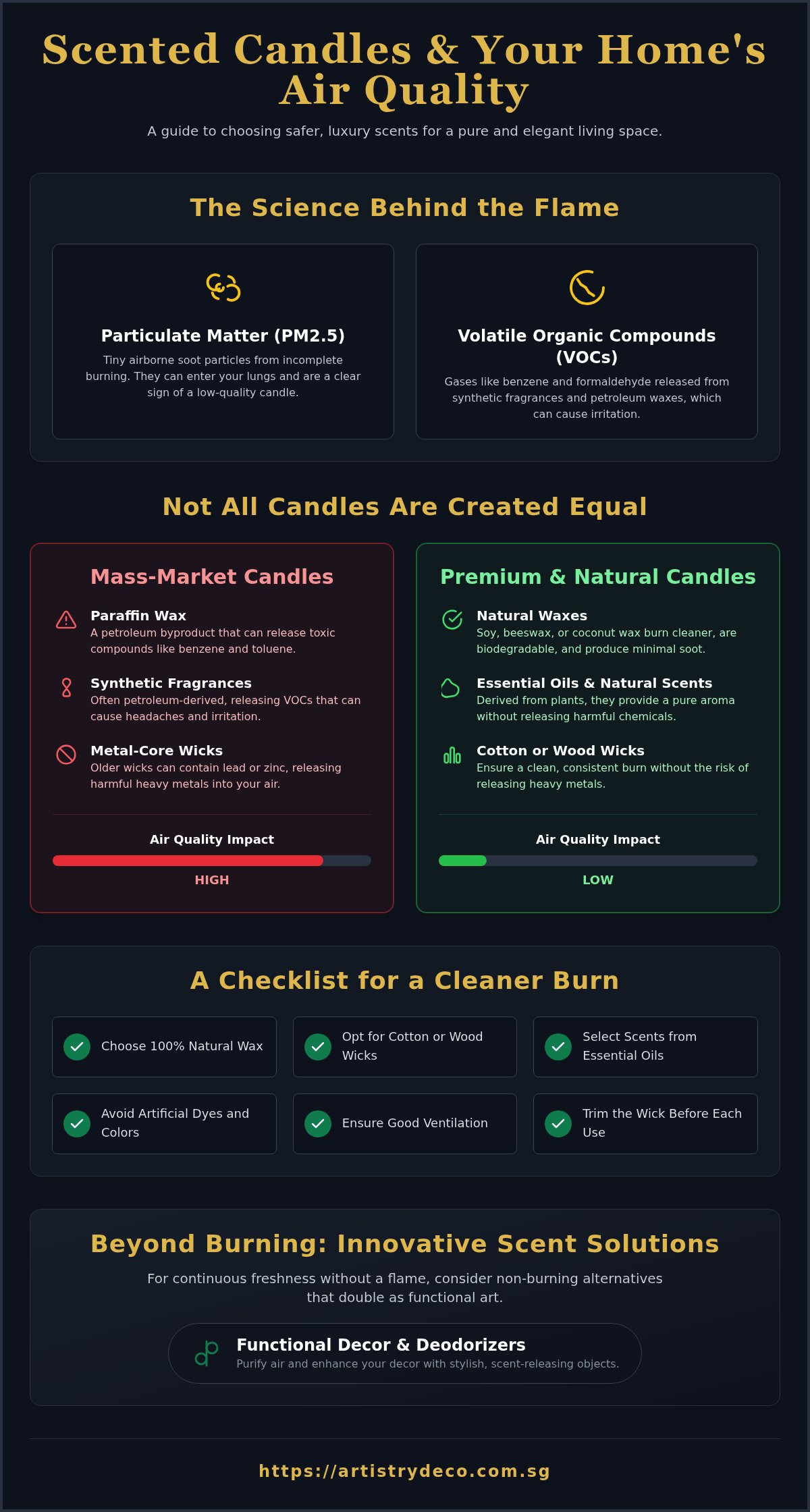
Particulate matter consists of tiny solid or liquid droplets floating in the air. PM2.5 is especially small, measuring less than 2.5 micrometers. These particles are so fine they can easily enter your lungs and even reach your bloodstream. If you see black soot on the glass of your candle jar or near your walls, it's a clear sign of poor air quality. This soot often comes from cheap, mass produced candles with improper wicks or low grade wax that doesn't burn completely. Choosing handcrafted items helps ensure a cleaner burn with minimal particle release. A steady, calm flame is always the hallmark of a well made product.
Understanding Volatile Organic Compounds (VOCs)
VOCs are gases that certain solids or liquids release into the air. Many everyday items, from wall paint to cleaning supplies, emit these gases over time. In the world of home scents, synthetic fragrances are a common source. Cheap candles often use petroleum based scents that release VOCs like formaldehyde or benzene when heated. This is why people often wonder, are scented candles bad for air quality when they experience headaches or throat irritation after burning a candle for too long. Luxury brands prioritize your well being by selecting ingredients that burn cleanly and safely.
Premium brands focus on pure ingredients to solve this problem. By using natural scent oils and high end materials, the risk of harmful gas release is greatly reduced. It's not just about the scent; it's about the integrity of the air you breathe. Not all candles are created equal. The difference between a luxury, handcrafted piece and a generic store bought candle is found in the quality of the raw materials. When you choose wisely, you can enjoy a beautiful aroma without sacrificing the freshness of your home.
Why Some Scented Candles Are Bad for Your Home
Not all home scents are crafted with the same level of care. When people ask, are scented candles bad for air quality, the answer usually depends on the specific ingredients used by the maker. Mass-market brands often rely on paraffin wax because it's cheap and easy to produce. However, this material is a byproduct of the oil industry. Burning it is much like running a small engine in your living room. It releases soot and chemicals that can linger in your home for days, affecting the purity of your sanctuary.
The Problem with Paraffin Wax
Paraffin wax comes from petroleum or coal. Because of its origin, it releases substances like benzene and toluene when it burns. A recent scientific study on candle emissions found that burning candles can increase the levels of fine particles in the air quite quickly. These particles stay in the air long after the flame is out. This is a major reason why the question are scented candles bad for air quality is so common when referring to low-quality paraffin options. Natural waxes like soy or beeswax offer a much cleaner experience for your home.
Hidden Dangers in Wicks and Dyes
The wick is just as important as the wax. Older or low-quality candles sometimes use metal-core wicks to keep the string upright. These can release lead or zinc into your air. Modern luxury candles use cotton or wood wicks which are far safer. Beyond the wick, artificial dyes and heavy synthetic perfumes add more chemicals to the mix. These dyes don't help the scent; they only add to the chemical load in your room. You can spot a high-quality candle by looking for a natural, un-dyed appearance and a simple cotton wick.
Even a good candle needs care. If you don't trim the wick, the flame becomes too large and creates excessive smoke. This incomplete combustion is a common cause of black soot on your walls. By choosing premium handcrafted items and maintaining them well, you protect your indoor air. If you want to learn more about our curated selection of safe home scents, feel free to get in touch with our experts today. We believe that true luxury should never come at the cost of your well-being.
Air Quality and Scented Candles in Singapore Homes
Living in a modern Singapore home often feels like being in a beautifully designed, airtight box. Whether you reside in a sleek condo or a well-planned HDB flat, our buildings are built to keep the tropical heat out and the cool air in. This efficiency is great for energy, but it creates a unique challenge for home fragrance. People often ask, are scented candles bad for air quality in such enclosed spaces? In our specific climate, the answer depends on how we manage our indoor air. Without proper airflow, even the most expensive scent can become overwhelming and trap unwanted particles inside your living room.
Ventilation in High-Rise Living
Many of us forget to open our windows because we rely so much on climate control. Modern Singapore apartments are very airtight. When you burn a candle, the particles it releases have nowhere to go. This trapping effect means that pollutants can build up faster than they would in a house with more natural drafts. To enjoy your scents safely, try to create a cross-breeze. Open a window in the kitchen and one in the living area for just ten minutes. This simple act flushes out old air and keeps your home feeling light and airy while you enjoy your favorite aromas.
The Aircon Factor
Air conditioning is a staple of Singapore life, but it changes how we should use home scents. When residents ask, are scented candles bad for air quality, they must consider how their AC unit recirculates the air. If you burn a candle, tiny soot particles get sucked into the aircon filters. Over time, this can clog the system and even lead to a faint smell of smoke every time you turn on the cool air. It's best to avoid burning candles directly under an AC vent. The moving air causes the flame to flicker, which leads to more smoke and soot. Regular aircon servicing is also a must for anyone who loves frequent home fragrance.
High humidity also plays a role in how scents behave. In Singapore, moisture in the air can make smoke and heavy perfumes linger longer than they would in drier climates. Even flameless options require some caution. A recent study on the risks of wax melts suggests that even these can release particles into the air. If you want a clean air solution that fits our local lifestyle, consider our BAS Deodorizers. They offer a fresh scent without any heat or combustion, making them perfect for the unique conditions of Singapore homes.
How to Choose Safer Scented Candles for Your Family
Selecting the right scent is a true art form. While many people ask, are scented candles bad for air quality, the answer lies in the materials you bring into your home. Luxury home fragrance should be a gift to your senses, not a burden on your lungs. By choosing wisely, you can enjoy a warm glow and a clean atmosphere at the same time. If you are passionate about exploring luxury scent profiles, you can discover GemNi Fragrances Essentials for a curated selection of fragrance decants that allow you to experience premium aromas. It's about finding the perfect balance between style and well-being. A carefully selected candle becomes a piece of functional art that respects your living space.
Natural waxes like soy, beeswax, and coconut wax are the gold standard for healthy homes. Unlike petroleum-based paraffin, these materials are biodegradable and sustainable. As of January 2026, new EU rules require mass-market candles to contain at least 70% bio-based wax. This shows a global shift toward cleaner options. Natural waxes burn at a lower temperature, which means they release significantly less soot into your room. This lower heat also helps your candle last much longer. You get more value and a cleaner burn for your living space, making them a superior choice for any modern interior.
Identifying Quality Fragrance Oils
The soul of a candle is its scent. Many mass-produced items use synthetic perfumes that can be harsh. Instead, look for handcrafted scented candles that prioritize pure essential oils or phthalate-free fragrance oils. These are much gentler on your respiratory system. When you read a label, look for transparency. A high-quality brand will be proud to share its ingredient list. If a candle has an aggressive, chemical smell even when it's unlit, it might have too many synthetic boosters. A light, natural scent is usually a sign of a safer product.
Don't overlook the wick. A 100% cotton wick or an FSC-certified wood wick ensures a steady, clean flame. Avoid anything with a shiny metal core, as these can release unwanted minerals into the air. These small details are what separate a premium product from a generic household item. When you combine the right wax, the right oil, and the right wick, the question of are scented candles bad for air quality becomes a worry of the past. You can breathe easy while your home feels inviting and elegant.
Beyond Burning: Exploring Functional Decor and BAS Deodorizers
Home fragrance is a journey that doesn't always need a flame. While we have explored how to choose the best wax, some people still ask, are scented candles bad for air quality when used every single day. For those who want a constant, subtle aroma without the need for matches, the world of Functional Decor offers a brilliant path forward. This concept, curated by Artistry Deco Shop, blends artistic beauty with everyday use. It ensures your home stays fresh and healthy at all times without any effort. It's about surrounding yourself with items that serve a purpose while looking like a masterpiece.
What are BAS Deodorizers?
A premier choice for modern living is the Bad Air Solution. These BAS Deodorizers are crafted in Korea and use advanced technology to neutralize odors instead of just masking them. Unlike traditional sprays or candles, they don't rely on heat or combustion. This makes them the safest choice for homes with curious children or playful pets. You don't have to worry about smoke, soot, or open flames. Beyond their utility, they serve as stunning functional art home accessories. They look like small, modern sculptures that sit perfectly on a study desk or a marble coffee table. They add a touch of elegance while silently cleaning the air around you.
Comparing Candles to Modern Air Solutions
When you compare these to burning scents, the benefits for air quality are clear. While candles offer an unmatched evening ritual, they do release particles. Modern air solutions provide a different set of advantages for your living space:
- Safety: No open flames or heat, making them ideal for high-traffic areas or homes with pets.
- Consistency: They provide a steady scent throw throughout the day without any monitoring.
- Air Purity: Zero emissions of soot or VOCs, preserving your indoor air quality effortlessly.
The future of decor is found in this balance. You can enjoy the ritual of a candle on special occasions while using safe air solutions for daily freshness. It's not about choosing one over the other, but about using both with wisdom. Mixing these methods allows you to create a layered scent experience. Use a handcrafted candle for a dinner party to create an intimate vibe. Use a BAS Deodorizer for your bedroom or workspace to keep the air crisp. This approach ensures you never have to wonder, are scented candles bad for air quality, because you are managing your environment with expert care. By choosing artistic, non-burning solutions from Artistry Deco Shop, you treat your home as a curated gallery. The air becomes as pure as the decor is beautiful, creating a truly premium living experience.
Elevate Your Home with Pure Scent and Style
You have discovered that the answer to are scented candles bad for air quality depends entirely on the quality of materials you bring into your space. By moving away from mass-market paraffin and embracing handcrafted natural waxes, you protect the purity of your sanctuary. Good airflow remains essential in our unique Singapore climate. Combining traditional rituals with modern air solutions ensures a home that's both healthy and elegant.
Artistry Deco Shop is redefining home decor with functional art pieces that serve your well-being. As Singapore's leading source for BAS Deodorizer technology, we offer a curated selection of premium, non-toxic home scents that neutralize odors safely. These artistic solutions work without any heat or smoke, acting as modern sculptures that enhance any desk or table. Your home deserves a fragrance that's as clean as it's beautiful. We invite you to explore a world where art and health meet in perfect harmony.
Frequently Asked Questions
Are soy candles better for air quality than paraffin?
Soy candles are a superior choice for maintaining a healthy home atmosphere. Since soy wax is a natural plant based material, it burns at a lower temperature and releases far less soot than paraffin. Paraffin is a byproduct of petroleum and can release chemicals like benzene into your room. Choosing handcrafted soy options ensures your living space remains a clean sanctuary while you enjoy your favorite scents.
Can scented candles cause headaches or allergies?
Yes, synthetic perfumes and dyes in low quality candles are common triggers for headaches and respiratory issues. These candles release gases that can irritate the nose and throat. If you often wonder, are scented candles bad for air quality after feeling unwell, it's likely due to these artificial additives. Switching to premium candles with pure essential oils often solves this problem for many sensitive individuals.
How can I tell if my candle is releasing soot?
You can identify soot by looking for a flickering flame or black smoke rising from the wick. If you notice dark stains on your candle jar or near your walls, your candle is releasing particulate matter. This often happens with cheap wicks or when you don't trim the wick before lighting. A clean burning candle should have a steady, calm flame that produces no visible smoke.
Is it safe to burn candles every day in a condo?
Burning candles every day in a Singapore condo requires careful attention to ventilation. Since modern apartments are designed to be airtight for air conditioning, particles can build up quickly. It's safe if you use natural waxes and open your windows for a short time to refresh the air. When people ask, are scented candles bad for air quality in high rise buildings, the answer is always linked to proper airflow.
What are the best non-toxic alternatives to scented candles?
The best non toxic alternatives are BAS Deodorizers and artistic diffusers that don't use heat. These products act as functional living room decor while keeping your air crisp and clean. They neutralize odors without releasing any smoke or soot into your home. This makes them perfect for busy households where you want a constant, subtle aroma without the need to monitor an open flame or worry about air purity.
Do air purifiers help with candle smoke and VOCs?
Air purifiers can help, but they aren't a perfect fix for poor quality candles. A HEPA filter captures fine particles like soot, while a carbon filter handles some chemical gases. However, it's much better to prevent pollution at the source by choosing clean burning products. If you enjoy scents often, running a purifier alongside a premium candle can help maintain a balanced and healthy indoor environment in your home.
Should I stop burning candles if I have a baby or pets?
Should I stop burning candles if I have a baby or pets?
You don't necessarily need to stop, but you should switch to safer materials. Babies and pets are more sensitive to airborne particles and strong synthetic scents. To ensure their safety, prioritize phthalate free scents and natural waxes. Many families find that non burning deodorizers are the safest way to enjoy a fresh home while protecting the health of their little ones and furry friends from unwanted smoke; to further support your animal's well-being, you can visit McPet for a curated selection of healthy food and supplies.
To keep your air as clean as possible, burn your candle for one to four hours at a time. This allows the wax to melt evenly without creating excessive heat or smoke. Always trim the wick to about five millimeters before each use. This simple ritual ensures a complete burn and prevents the flame from becoming too large, which helps keep your indoor air quality at its best during your relaxation time.